

Best Small Dog Beds: How to Choose by Sleep Style and Age
The best small dog bed matches how your dog sleeps: a round bolster bed for dogs that curl up, a flat cushion or mat for dogs that stretch out, a covered cave bed for burrowers and a supportive foam bed for older dogs. Measure your dog before you buy, compare the inside sleeping area rather than the outer size, and choose a removable cover you can wash every week.
Small breeds are usually considered senior from about 10 to 12 years old. From that age, firm support and a low, easy entry matter as much as softness.
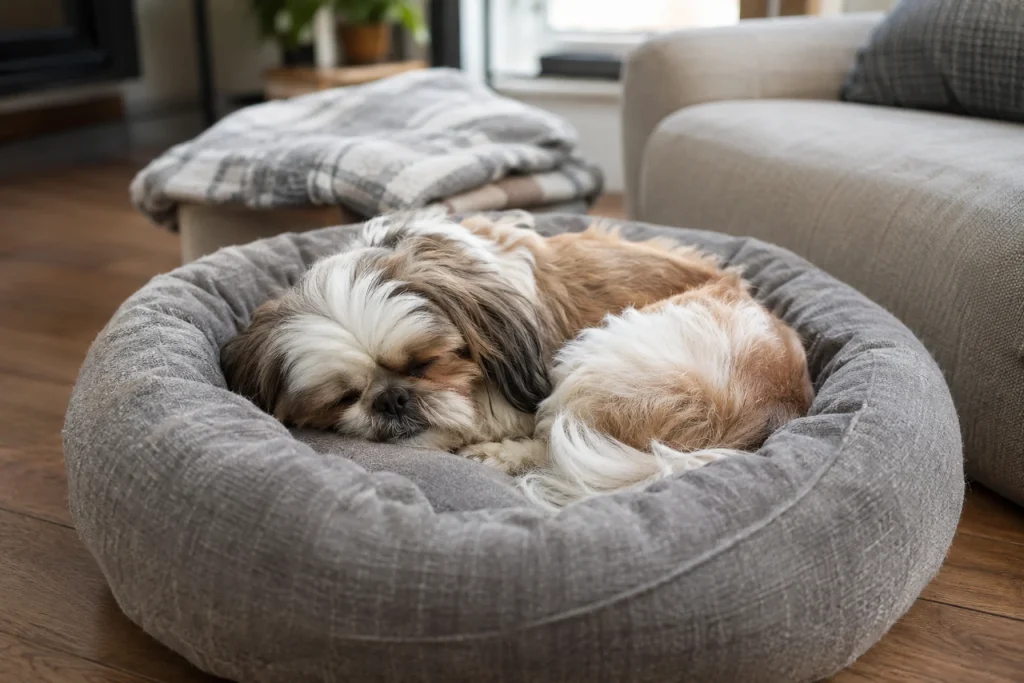
How to Choose the Right Size Bed for a Small Dog
A bed that is too small makes your dog hang off the edge or sleep half on the floor. A bed that is too big can feel less snug to a tiny dog and loses heat faster. Size labels such as XS or S mean different things from one maker to the next, so always compare measurements instead of labels.
Measure Your Dog Two Ways
- Stretched out: while your dog lies on their side, measure in inches from the tip of the nose to the base of the tail. This is the length a sprawler needs.
- Curled up: when your dog is curled in a ball, measure across the widest point. This is the inside width a curler needs.
- Write down the larger number and use it when you compare beds. If your dog sometimes curls and sometimes stretches out, size the bed for stretching out.
Shopping on a UK, Canadian or Australian site? Beds are often listed in centimetres. Multiply inches by 2.54 to get centimetres (for example, 16 inches is about 41 cm).
Check the Inside Sleeping Area, Not the Outer Size
Bolsters and raised edges take up space. A bolster bed sold as 20 inches across can have a much smaller flat sleeping area inside. Look for the inside or sleeping-area measurement in the product details. If it is not listed, ask the seller before you buy.
For a crate, measure the inside floor of the crate. The bed should lie flat from wall to wall without bunching up at the edges.
Best Bed Types for Tiny Dogs
Most small dogs sleep best in a bed that feels warm and enclosed, but there is no single right type. Use this table to narrow down the shape before you look at brands.
| Bed type | Best for | Watch out for |
|---|---|---|
| Bolster or donut bed | Dogs that curl up or rest their chin on an edge | Small inside area once the bolsters are counted |
| Covered cave or burrow bed | Dogs that dig under blankets, nervous dogs, cold homes | Can get too warm in hot weather |
| Flat cushion or mat | Sprawlers, crates, travel | Little support for older joints if it is thin |
| Orthopedic or memory foam bed | Senior dogs, dogs with stiff joints, recovery after injury | Choose one with a low edge so your dog can step on |
| Couch-style bed | Dogs that like to lean against a backrest | High sides can be hard for older dogs to climb over |
| Elevated cot bed | Hot climates, dogs that run warm | Too high for some tiny or older dogs; check the step-up height |
| Self-warming bed | Short-coated or very small dogs that feel the cold | Check that it is machine washable |
Covered beds suit many anxious dogs because they feel snug and protected, like a small den. If your dog already sleeps under your blankets or in a pile of laundry, a cave bed is a good first choice.
Best Small Dog Beds by Sleep Style and Age
Watch your dog sleep for a few nights before you buy. Most small dogs fall into one or two of these groups.
- Curlers sleep in a tight ball, often with their nose tucked in. They feel safest with raised sides all round: a bolster, donut or cave bed.
- Sprawlers stretch out on their side or belly. They need a flat sleeping area at least as long as their stretched-out measurement: a cushion, mat or orthopedic bed with low sides.
- Burrowers dig under blankets or cushions. A covered cave bed, or a bolster bed with a washable blanket, gives them somewhere to tunnel.
- Leaners sleep with their head or back pressed against something. A bolster or couch-style bed gives them an edge to lean on.
- Crate sleepers need a flat bed or pad cut to the crate floor, with no loose filling a chewing puppy can pull out.
- Seniors need firm, even support and a low entry. See the support section below.
Not sure how big your puppy will get? Check the adult size in your breed’s guide in our small dog breed directory before you buy, so the bed still fits in a year.
How Much Support Does a Small Dog Need?
Dogs sleep a lot: between 12 and 18 hours a day, depending on age. Because they spend so long lying down, the filling matters. A thin layer of loose fiber flattens quickly and lets your dog’s hips and shoulders press into the floor.
- Supportive foam: egg-crate foam or memory foam keeps its shape and spreads your dog’s weight. Many dogs benefit from this, not only seniors.
- Loose fiber or polyfill: soft and cozy, good inside bolsters. It clumps over time, so it suits young, healthy dogs better than older ones.
- A mix of both: a foam base with a fiber-filled bolster gives curlers support underneath and softness to lean on.
Beds for Senior Small Dogs
As dogs age they can develop arthritis and other joint problems. A senior small dog does best with a warm bed in a quiet spot, on a firm foam base, with a low or recessed entry so they do not have to climb over a high edge. A removable waterproof liner helps if your dog has the occasional accident.
If your dog is slow to get up, hesitates before lying down, limps or stops jumping onto furniture, book a check with your vet. These can be signs of pain that a better bed will not fix on its own.
Long-Backed Breeds and Dogs That Jump
Long-bodied, short-legged breeds such as the Dachshund are at higher risk of intervertebral disc disease, a spine problem linked to jumping and hard landings. Give these dogs a low bed on the floor rather than a raised one, and keep them at a healthy weight.
If your small dog sleeps on your bed or the sofa, dog stairs or a ramp stop them from taking a running leap up and jumping down. Stairs take up less floor space next to a bed; ramps are gentler on sore joints and suit dogs that are nervous on steps.
Should You Use a Heated Bed?
Very small and short-coated dogs feel the cold, and a warm bed can help older dogs with stiff joints. A self-warming bed reflects your dog’s own body heat and has no cord, so it is the safer choice for chewers. If you choose an electric heated bed, pick one with a thermostat and a chew-resistant cord, keep the cord out of reach, and do not use it for a dog that cannot get up and move away from the heat.
Washable Covers, Bolsters and Nesting Options
Small dogs shed, drool, track in mud and have accidents, especially puppies and seniors. A bed you cannot wash will not stay pleasant for long. Check these points before you buy:
- Removable, machine-washable cover with a zip you can open fully. Ideally the whole bed is machine washable too.
- Waterproof inner liner between the cover and the filling, for puppies in potty training and older dogs.
- Tough fabric and reinforced seams for chewers and diggers. Rip-stop nylon and tightly woven canvas last longer than loose plush.
- Non-slip base so the bed does not slide on hard floors when your dog jumps in.
- Removable bolsters or inserts so you can wash the bolster cover separately and replace flattened filling.
- A washable blanket for burrowers. Washing a blanket is quicker than washing the whole bed.
How to Keep a Small Dog Bed Clean
- Vacuum the bed, including the seams and under the bolsters, between washes.
- Wash the cover and blankets every week to keep hair, dander, germs and parasites down. Bulky beds can be washed a little less often. Follow the care label for temperature.
- Air-dry the bed where you can, because some fillings clump in a tumble dryer.
- Let thick, fiber-filled beds dry all the way through before your dog uses them again.
If your dog has fleas, ask your vet for treatment and wash all the bedding at the same time.
Where to Put Your Small Dog’s Bed
Put the bed in a quiet corner away from heavy foot traffic and loud noise, but in a room where your dog can still see or hear the family. Many small dogs settle better in the bedroom than alone in another room.
- Keep it out of drafts and off cold tile in winter. Tiny dogs feel the cold more than big ones.
- Keep it out of direct sun and away from radiators in summer. In hot weather or a warm climate, choose a breathable or elevated bed and skip the covered cave.
- Think about two beds if your dog spends the day in the living room and the night in your bedroom. A second bed saves carrying one around.
When to Replace an Old Dog Bed
There is no fixed date to replace a dog bed. Check it every few months and replace it when you see any of these signs:
- Your dog sinks through to the floor when they lie down, or the foam stays dented.
- The filling has clumped into lumps or gone flat in the middle.
- The cover or liner is torn and filling is coming out, which is a choking risk for chewers.
- The bed still smells after a full wash and dry.
- Your dog has started sleeping somewhere else, such as on the floor next to the bed.
An older dog also needs a different bed than they did as a puppy. If your dog is reaching their senior years, it is worth moving to a supportive foam bed with a low entry before their joints start to hurt.
Small Dog Beds: Frequently Asked Questions
What is the best type of bed for a small dog?
The best bed is the one that matches how your dog sleeps. Dogs that curl up usually prefer a round bolster or donut bed, sprawlers need a flat cushion long enough to stretch out on, and burrowers love a covered cave bed. Older dogs do best on supportive foam with a low entry. Whatever the shape, choose a removable cover you can wash weekly.
How do I know if my dog’s bed is too small?
A bed is too small if your dog’s head, legs or tail hang over the edge, or if they only use it curled up when they would rather stretch out. Measure your dog lying on their side from nose to base of tail, then check that the inside sleeping area, not the outer size, is at least that long. Bolsters take up more room than you expect.
Why does my dog choose a small bed over a bigger one?
Many dogs pick the smallest bed because it feels snug and secure, and because curling up in a tight space keeps them warm. That is normal and not a problem as long as your dog can lie comfortably. If your dog squeezes into a small bed but sleeps stretched out elsewhere, offer a bed with raised sides that is big enough for both positions.
Do small dogs need orthopedic beds?
Not every small dog needs one, but many benefit. Orthopedic beds use egg-crate or memory foam that keeps its shape, so hips and shoulders do not press into the floor. They are most useful for senior dogs, dogs with arthritis or joint problems, and long-backed breeds. For a young, healthy dog, a well-filled bolster bed is usually enough.
What bed is best for a senior small dog?
A senior small dog does best on a firm, supportive foam bed with a low or recessed entry, so they can step on instead of climbing over a high edge. Add a waterproof liner in case of accidents and keep the bed somewhere warm and quiet. If your dog struggles to get up or lie down, ask your vet to check for pain or arthritis.
Is a covered or cave bed good for an anxious small dog?
Yes, often. Covered and cave beds give nervous dogs a snug, den-like space where they feel protected, and they suit dogs that already burrow under blankets. A couch-style bed with a backrest can help too. A bed will not fix anxiety on its own, so if your dog panics when left alone, talk to your vet or a qualified trainer.
How often should I wash my dog’s bed?
Wash the cover and any blankets once a week to keep hair, dander, germs and parasites under control. Bulky beds can be washed a little less often, with a vacuum of the surface and seams in between. Air-dry where possible, because some fillings clump in a dryer, and make sure thick beds are fully dry before your dog uses them again.
What kind of bed do Chihuahuas like?
Many Chihuahuas like a warm bed they can burrow into, such as a covered cave bed or a bolster bed with a soft blanket. Small dogs, especially short-coated ones, often feel the cold, so keep the bed away from drafts. Choose a bed sized to their curled-up width so it stays snug. Read more about the breed in our Chihuahua guide.
Start with your dog: measure them, watch how they sleep and think about their age. Then pick the shape, support and cover that fit. For breed-specific care, from coat to size to common health problems, find your dog in our A to Z guide to small dog breeds. Browse more small dog gear guides.