

Bichon Frise: Breed Profile, Size, Temperament and Care
The Bichon Frise is a cheerful white companion dog that usually weighs 12 to 18 lb (5.4 to 8.2 kg) and stands 9.5 to 11.5 inches (24 to 29 cm) at the shoulder. Most live 12 to 15 years. Bichons are gentle, playful and people-focused, with a low-shedding curly coat that needs daily brushing and regular professional trims.
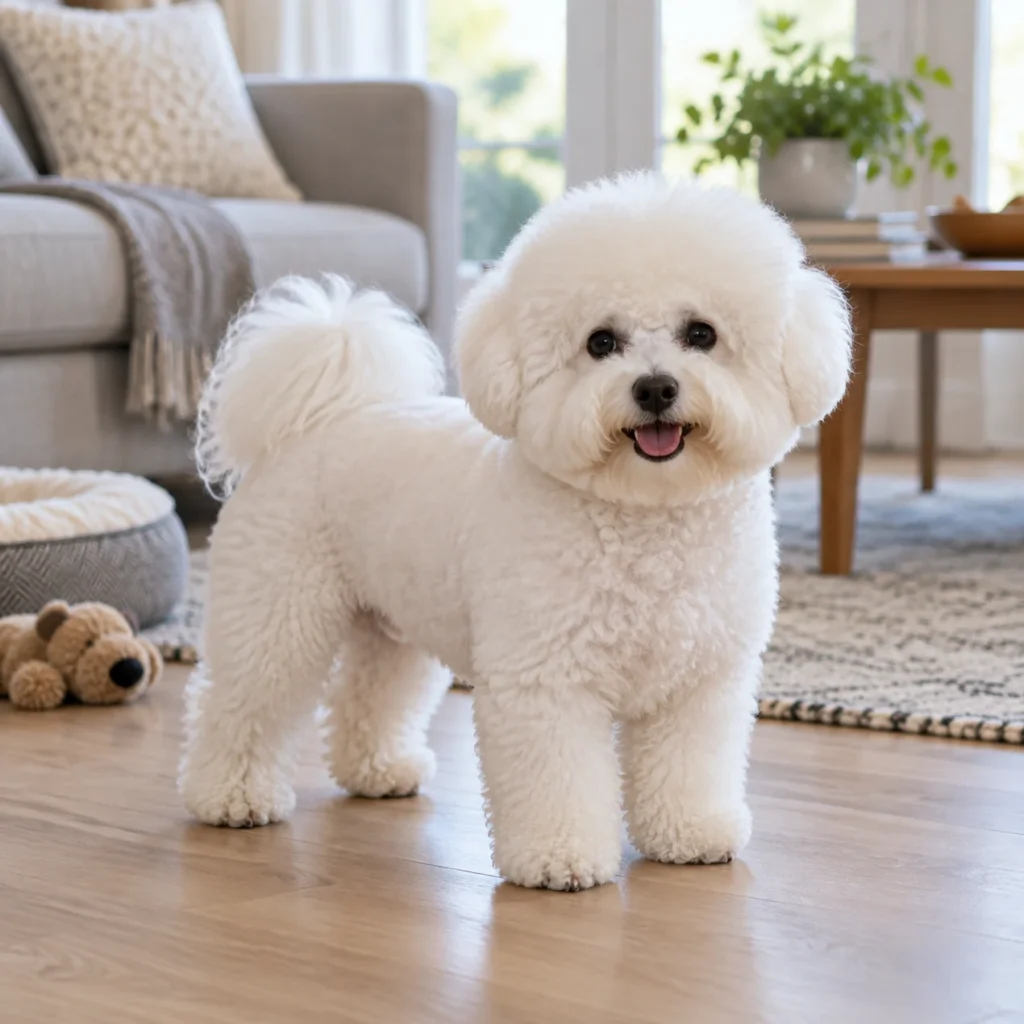
Bichon Frise at a Glance
| Trait | Bichon Frise |
|---|---|
| Height | 9.5 to 11.5 in (24 to 29 cm) |
| Weight | 12 to 18 lb (5.4 to 8.2 kg) |
| Lifespan | 12 to 15 years |
| Coat | Curly, white, low shedding; brush daily |
| Exercise | Up to 30 minutes a day, plus indoor play |
| Temperament | Gentle, playful, sensitive, affectionate |
| Good with | Children (with supervision) and other pets |
| Barking | Moderate; more when bored or left alone |
| Breed group | Non-Sporting (AKC, US); Toy (The Kennel Club, UK) |
| Origin | Mediterranean; standardized in France and Belgium |
Breed characteristics
Adaptability
Barking Tendency
Dog Friendly
Health Issues
Shedding Level
Territorial
🟢🟢🟢🟢⚪
🟢🟢🟢⚪⚪
🟢🟢🟢🟢🟢
🟢🟢🟢⚪⚪
🟢⚪⚪⚪⚪
🟢⚪⚪⚪⚪
Affectionate
Cat Friendly
Exercise Needs
Intelligence
Social Needs
Trainability
🟢🟢🟢🟢🟢
🟢🟢🟢🟢🟢
🟢🟢⚪⚪⚪
🟢🟢🟢🟢🟢
🟢🟢🟢🟢⚪
🟢🟢🟢🟢⚪
App. Friendly
Child Friendly
Grooming
Energy Level
Stranger Friendly
Watchdog Instincts
🟢🟢🟢🟢🟢
🟢🟢🟢🟢🟢
🟢🟢🟢🟢🟢
🟢🟢🟢⚪⚪
🟢🟢🟢🟢🟢
🟢🟢⚪⚪⚪
What a Bichon Frise Looks Like
A Bichon Frise is a sturdy little dog with a rounded, powder-puff outline. When the coat is bathed and brushed it stands off the body, and the dark eyes and nose stand out against the white. The name is French and usually translated as “curly lapdog”. Say it “BEE-shon free-ZAY”.
How Big Do Bichon Frises Get?
Adult Bichons stand 9.5 to 11.5 inches (24 to 29 cm) at the shoulder, the range the US breed standard prefers, and usually weigh 12 to 18 lb (5.4 to 8.2 kg). Males and females are about the same size. At the top of that weight range a Bichon is a little over the 15 lb mark often used for tiny dogs, but it is compact, easy to carry and happy in a small home.
Be careful with puppies sold as “teacup” or “mini” Bichons. They are not recognized varieties. A very small puppy may be a mix, the result of breeding undersized dogs, or simply underweight, and extra-small dogs can have more health problems. Ask to meet both parents.
Coat and Colors: Is a Bichon Always White?
Yes. The US breed standard calls for a white coat, with shadings of buff, cream or apricot allowed around the ears or on the body. A dog sold as a brown, black or chocolate Bichon Frise is not a standard color, so ask for registration papers: it may be a cross with a Poodle, Shih Tzu or another breed.
The coat has a soft, dense undercoat under a curlier outer coat. It sheds very little onto your floor, but loose hair stays in the coat and turns into mats unless you brush it out.
Bichon Frise Temperament: What They Are Like at Home
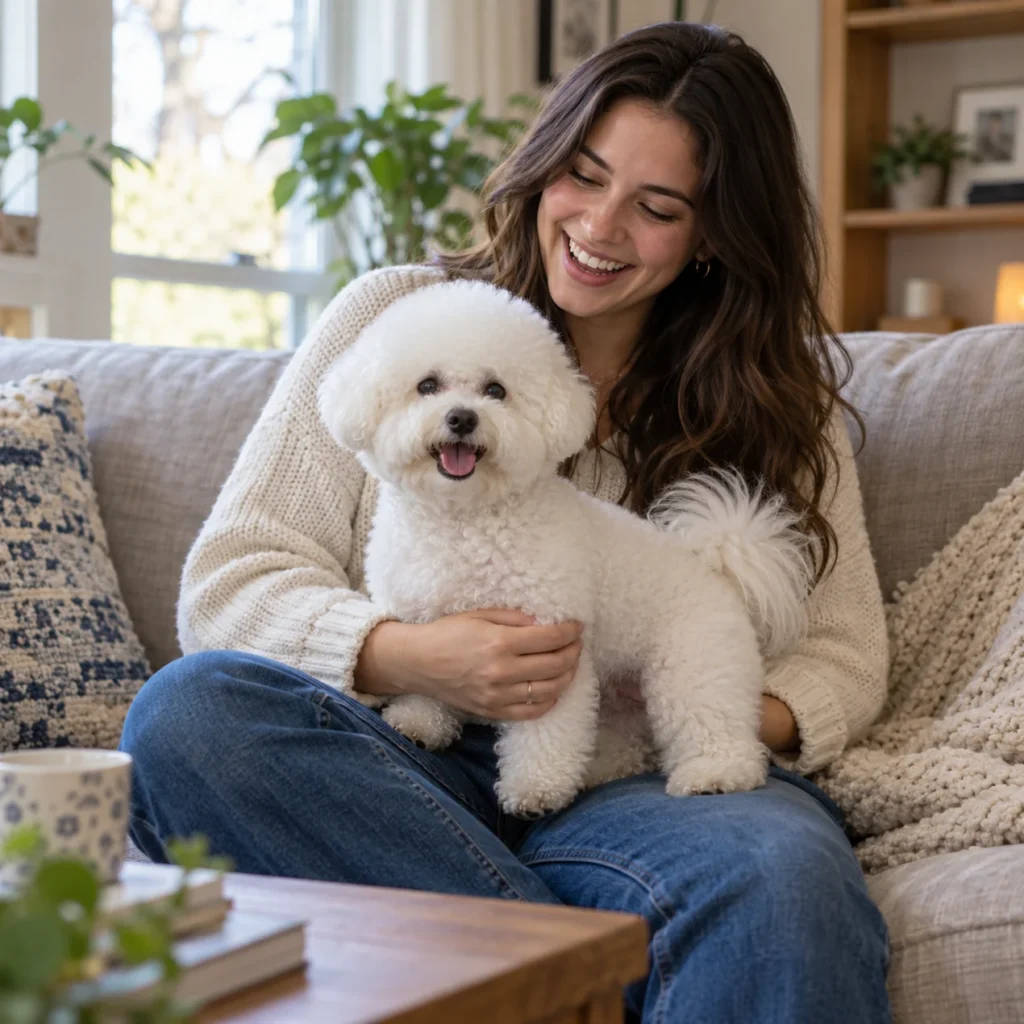
The US breed standard describes the Bichon as “gentle mannered, sensitive, playful and affectionate”, with a cheerful attitude as its hallmark. In daily life that means a dog that follows you from room to room, greets visitors as friends and loves short bursts of play.
Bichons are companion dogs first. They are not guard dogs, and they do best in homes where someone is around for much of the day.
Bichons With Kids, Other Pets and Older Owners
Bichons are generally good with children and usually get along with other dogs and pets after a calm introduction. Supervise young children, because a small dog can be hurt if it is dropped or squeezed. Their size, moderate exercise needs and love of company also suit many older owners and apartment homes, as long as someone can keep up with the grooming.
Barking and Time Alone
Bichons bark a moderate amount. Most of it comes from boredom or being left alone, not from guarding. They do not cope well with long hours alone, and some develop separation anxiety. Build up alone time slowly from puppyhood, leave a safe chew or food puzzle, and ask your vet or a qualified behaviorist for help if your dog panics when you leave.
Are Bichon Frises Smart and Easy to Train?
Yes. Bichons are bright, social and responsive, and they learn readily with reward-based training. They are also sensitive, so harsh corrections backfire. Keep sessions to a few minutes, use tiny treats or play as rewards, and practice a little every day. Many Bichons enjoy obedience, agility and trick training.
A Simple Training Plan
- Start with the name, “sit” and a release word such as “okay”. Lure with a treat, say “yes” the moment your dog does it, then reward.
- Teach “stay” one step at a time: step back, return and reward, then add distance and time slowly.
- Practice “come” indoors and on a leash or long line before you try it outside.
- Introduce a harness gradually: let your dog sniff it, put it on for a few seconds with treats, wear it indoors, then take short walks. A harness keeps pressure off a small dog’s neck.
- Teach “quiet”: wait for a pause in the barking, say “quiet” and reward the silence.
Keep house rules the same for everyone in the family. If one person allows the sofa and another does not, your dog cannot learn the rule.
House Training a Bichon
House training is the part many Bichon owners find slowest, so plan for patience. Take your puppy to the same spot first thing in the morning, after meals, after naps and play, and before bed. Reward within a second or two of finishing. Sniffing, circling and whining usually mean your dog needs to go. In an apartment or in bad weather, potty pads in one fixed place work too.
If you catch an accident, interrupt calmly and carry your dog to the right spot. Never punish afterward. Clean up with an enzyme cleaner so the smell does not draw your dog back. A correctly sized crate helps, because most dogs avoid soiling where they sleep. If an adult dog starts having accidents, see your vet: bladder stones and urinary problems can be the cause.
Socialization
Early socialization helps a sensitive Bichon grow into a confident adult. Once your vet says your puppy can go out, introduce new people, calm vaccinated dogs, everyday sounds and new places in short, positive sessions. Start somewhere quiet, pair each new thing with a treat, and let your puppy retreat if it is unsure. A reward-based puppy class with a small group gives safe practice.
Keep a simple list of what your puppy has met and how it reacted, and keep socializing through adulthood. If fear or reactivity gets worse instead of better, ask a qualified trainer or behaviorist.
Grooming, Exercise and Daily Care
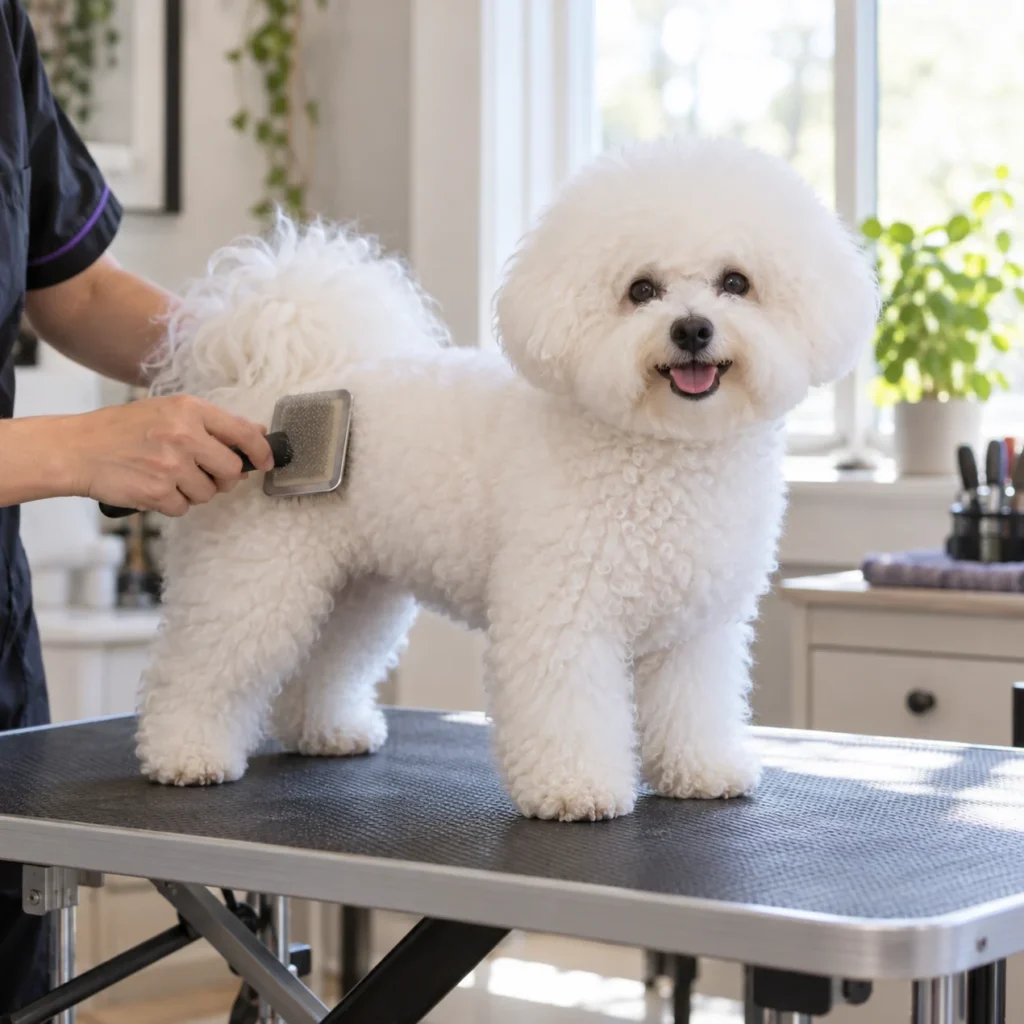
The coat is the biggest commitment with this breed. Brush and comb right down to the skin every day to stop mats forming, especially behind the ears, under the legs and on the chest. Plan on regular baths and professional trims to keep the coat in shape; your groomer will suggest a schedule for the clip you choose.
Wipe around the eyes to limit tear staining, check the ears weekly, trim the nails, and brush the teeth daily if you can. For step-by-step help, see our Bichon Frise grooming guide.
Up to 30 minutes of exercise a day, split between walks and indoor play, keeps most adult Bichons fit. Feed a complete diet made for small breeds, measure every meal and count treats, because extra weight strains small joints. Your vet can tell you your dog’s ideal weight.
Bichon Frise Health and Lifespan
Bichons are generally healthy, and most live 12 to 15 years. These are the conditions vets see most often in the breed:
- Skin allergies: itching, licking, red skin and ear infections. Allergies are a common reason a Bichon scratches constantly.
- Bladder stones: straining, frequent small pees or blood in the urine. See your vet promptly.
- Dental disease: small mouths need daily brushing and regular dental checks.
- Patellar luxation: a kneecap that slips out of place, often seen as skipping or holding up a back leg.
- Deafness from birth: ask the breeder whether the puppies had their hearing checked.
- Eye problems, including cataracts: in the UK, The Kennel Club recommends breeders eye-test under the BVA/KC/ISDS Eye Scheme.
- In older dogs: arthritis, cataracts and diabetes.
See your vet if you notice any of these signs. For a fuller picture of aging and care, read how long Bichon Frises live.
Where the Bichon Frise Comes From
The Bichon belongs to an old family of small white Mediterranean dogs that also includes the Maltese, the Bolognese and the Havanese. Its ancestor is usually traced to the Bichon Tenerife of the Canary Islands, which sailors are thought to have carried back to mainland Europe.
The dogs became favorites at the French court in the 1500s under Francis I and Henry III. They later fell out of fashion and by the early 1900s were street dogs and performers at circuses and fairs. French and Belgian breeders adopted the first official standard in 1933. The first Bichons reached the United States in 1956, and the American Kennel Club fully recognized the breed in 1973 in the Non-Sporting Group. In the UK, The Kennel Club places it in the Toy Group.
So what were Bichons bred for? Companionship. They have always been lap dogs and entertainers, not working dogs.
Bichon Frise Pros and Cons
Pros
- Cheerful, affectionate and usually good with children and other pets
- Sheds very little
- Small, adaptable and fine in an apartment
- Moderate exercise needs
- Learns quickly with reward-based training
- Long-lived for a dog
Cons
- Daily brushing plus the ongoing cost of professional grooming
- Does not like being left alone for long
- House training can take a while
- Prone to skin allergies and bladder stones
- Barks when bored
- The white coat shows tear stains and dirt
Still deciding? Compare the Bichon with other small, low-shedding dogs in our tiny dog breeds directory.
Bichon Frise vs Shih Tzu, Maltese and Toy Poodle
These four breeds often end up on the same shortlist because they are small, affectionate and low-shedding. The biggest differences are size and coat care.
| Breed | Weight | Height | Lifespan | Coat care |
|---|---|---|---|---|
| Bichon Frise | 12 to 18 lb (5.4 to 8.2 kg) | 9.5 to 11.5 in (24 to 29 cm) | 12 to 15 years | Curly white coat; brush daily, regular trims |
| Shih Tzu | 9 to 16 lb (4.1 to 7.3 kg) | 8 to 11 in (20 to 28 cm) | 11 to 14 years | Long coat; brush and comb every other day |
| Maltese | Under 7 lb (under 3.2 kg) | 7 to 9 in (18 to 23 cm) | 12 to 15 years | Long white coat; brush daily |
| Toy Poodle | 4 to 8 lb (1.8 to 3.6 kg) | About 10 in (25 cm) | 12 to 14 years | Dense curly coat; brush every other day, clip about every six weeks |
Choose a Maltese or Toy Poodle if you want a much lighter dog. Choose a Bichon or a Shih Tzu if you want a sturdier small dog. If you like the Poodle coat but want a bit more size, look at the Miniature Poodle. Crosses such as the Bichon x Maltese and Bichon x Poodle are popular too, and their size and coat can land anywhere between the two parents. If you want a sturdy, low-shedding dog with a terrier streak, see our Miniature Schnauzer breed guide.
Adopting a Bichon Frise: Rescue and Next Steps
Tiny Loving Canines is not a rescue and does not rehome or sell dogs. Here is how to find a Bichon responsibly.
- Start with rescue. Check local shelters and small-dog and breed rescues. National breed clubs in the US, UK, Canada and Australia can point you to rescue contacts.
- Test for allergies first. No dog is allergen-free. If anyone at home has allergies, spend time with an adult Bichon before you commit.
- If you buy, vet the breeder. A good breeder health-tests the parents (eyes and knees), lets you meet the mother where the puppies were raised, and keeps in touch after you take your puppy home. Walk away from sellers who offer “teacup” puppies, ship puppies sight unseen, or will not show you where they keep their dogs. These are common signs of a puppy mill or a scam.
- Get ready at home. You will need a slicker brush and comb, a harness and leash, a crate or bed, an enzyme cleaner and a vet appointment in the first week.
Ready for the daily routine? Read our Bichon Frise grooming guide before you bring your dog home, or browse more tiny dog breeds to compare.
Bichon Frise FAQs
How big do Bichon Frises get?
Adult Bichon Frises usually weigh 12 to 18 lb (5.4 to 8.2 kg) and stand 9.5 to 11.5 inches (24 to 29 cm) at the shoulder. Males and females are about the same size. Be wary of “teacup” or “mini” Bichons: they are not recognized varieties, and very small puppies are often mixes or underweight.
Do Bichon Frises bark a lot?
Bichon Frises bark a moderate amount, usually when they are bored, excited or left alone rather than to guard. Daily play, enough company and a taught “quiet” cue keep it manageable. A Bichon that barks or howls whenever you leave may have separation anxiety, which is worth raising with your vet or a qualified trainer.
Are Bichon Frises smart and easy to train?
Yes. Bichon Frises are bright and eager to work with you, and they learn quickly with treats, praise and play. They are sensitive, so harsh corrections slow them down. House training is the hardest part for many owners: a fixed routine, quick rewards and a crate make it easier.
Do Bichons get attached to one person?
Bichons often bond closely with the person who spends the most time with them, but they are usually friendly with the whole family and with visitors. Because they love company, they can struggle when that person leaves. Practicing short absences from puppyhood helps your Bichon stay calm when you go out.
Are Bichon Frises hypoallergenic?
No dog is truly hypoallergenic. Bichon Frises shed very little, and some people with mild allergies react less to them, but allergens are also in saliva and skin flakes. If you have allergies, spend time with an adult Bichon before you commit, and talk to your doctor or allergist.
How often should a Bichon Frise be groomed?
Brush and comb a Bichon Frise every day, right down to the skin, or the curly coat will mat. Add regular baths and professional trims on the schedule your groomer recommends for your dog’s clip. Our Bichon Frise grooming guide walks you through the routine step by step.
Are Bichon Frises good with kids and other pets?
Yes, Bichon Frises are generally good with children and usually get on with other dogs and pets after a calm introduction. Always supervise young children, because a small dog can be hurt if it is dropped or squeezed. Teach kids to sit on the floor to cuddle the dog.
Are Bichon Frises good apartment dogs?
Yes. A Bichon Frise is small, sheds little and needs only up to 30 minutes of exercise a day plus indoor play, so it suits apartment life well. The main things to manage are barking when bored and time alone, so a home where someone is around for much of the day works best.
What were Bichon Frises bred for?
Bichon Frises were bred as companion dogs. Their ancestors were small white Mediterranean dogs, and the breed was a favorite of the French court in the 1500s before later working as a circus and street performer. They have never been working dogs, which is why they are so people-focused today.
What is the downside of a Bichon Frise?
The main downsides are grooming and company. A Bichon needs daily brushing plus regular professional trims, does not like being alone for long, can be slow to house train, and is prone to skin allergies and bladder stones. If you can handle those, most owners find it an easy, cheerful dog to live with.