

Miniature Dachshund: Breed Guide, Size, Temperament & Care
A Miniature Dachshund is the small size of the Dachshund: an adult weighs 11 lb (5 kg) or less and stands about 5 to 6 inches (13 to 15 cm) tall, and most live 12 to 16 years. This tiny hound is bold, loyal and loud for its size, with a long back that needs protecting every day. Below you will find its size, temperament, coat types, care, training and how to adopt one.
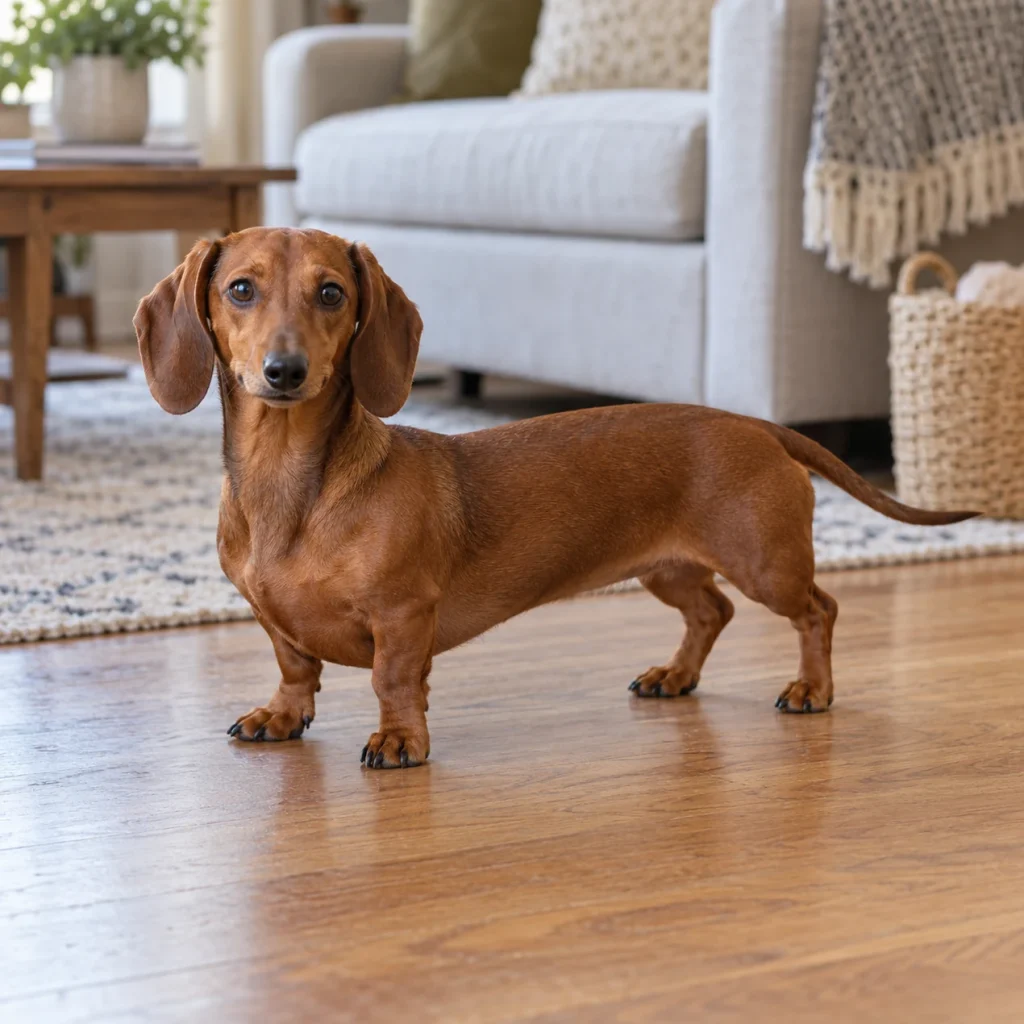
Miniature Dachshund Quick Facts
| Fact | Miniature Dachshund |
|---|---|
| Adult weight | 11 lb (5 kg) or less at 12 months and older (US standard). The UK’s Royal Kennel Club prefers miniatures under 5 kg (11 lb) |
| Height at the shoulder | About 5 to 6 inches (13 to 15 cm) |
| Lifespan | 12 to 16 years |
| Breed group | Hound |
| Coat types | Smooth, long-haired, wire-haired |
| Exercise | Up to 1 hour a day, split into walks and play |
| Origin | Germany, where the name means “badger dog” |
| Good to know | Long back, high risk of disc disease, big bark, strong digging and chasing instincts |
What Is a Miniature Dachshund?
The Dachshund is a hound from Germany. Its name means “badger dog” in German, and it was developed to follow badgers into their burrows. That job explains the long body, short legs, deep chest, loud bark and fearless attitude that owners still see today.
The Miniature Dachshund is the same breed in a smaller size, not a separate breed. In the US and UK it is shown as a size variety of the Dachshund, in the same three coats as the Standard. The FCI, which sets breed standards in much of Europe, also recognizes an even smaller “Kaninchen” (rabbit) size, which US and UK clubs do not.
The breed is a national favorite in Germany: a Dachshund called Waldi was the first official Olympic mascot, at the 1972 Munich Games. Today most Mini Dachshunds are companions rather than hunters, but the hunting instincts are still there.
Size, Weight and Full-Grown Look
A full-grown Miniature Dachshund weighs 11 lb (5 kg) or less and stands about 5 to 6 inches (13 to 15 cm) at the shoulder. US breed standards judge the miniature size at 12 months of age and older, so a Mini is close to its adult size by its first birthday.
The look is unmistakable: a long, low body, short sturdy legs, a deep chest, a long head with a tapering muzzle and soft, hanging ears. A fit Mini has a visible waist when you look down from above and ribs you can feel under a thin layer of fat.
Weight matters more for this breed than for most tiny dogs. Extra pounds put strain on a long spine, so ask your vet what your dog’s ideal weight is and check it every month. Dogs that grow to between 11 and 16 lb are often called “tweenies”. That is an informal label, not an official size.
Mini vs Standard Dachshund
Minis and Standards are the same breed with the same coats, colors and temperament. The real differences are size and how much dog you are carrying up the stairs. A Standard Dachshund is well over our 15 lb tiny-dog range, so it appears here only for comparison.
| Miniature Dachshund | Standard Dachshund | |
|---|---|---|
| Adult weight | 11 lb (5 kg) or less | 16 to 32 lb (7.3 to 14.5 kg) |
| Height at the shoulder | About 5 to 6 in (13 to 15 cm) | About 8 to 9 in (20 to 23 cm) |
| Lifespan | 12 to 16 years | 12 to 16 years |
| Coats | Smooth, long-haired, wire-haired | Smooth, long-haired, wire-haired |
| Best fit | Apartments, smaller homes, owners who can lift and carry a small dog | Homes with more space and owners who want a sturdier dog |
Temperament, Barking and Family Fit
Mini Dachshunds are bold, curious and devoted. Most bond closely with their people, often with one person in particular, and many like to burrow under blankets and follow you from room to room. They were bred to work underground on their own, so they also think for themselves, which can look like stubbornness.
Barking: expect a big bark from a small dog. Dachshunds are alert watchdogs and will announce visitors, noises and passing dogs. Teaching a calm “quiet” cue early makes apartment life easier.
Digging and chasing: the hunting instincts are strong. Many Minis dig in gardens and chase squirrels, cats and small pets, so keep them on a leash or in a secure yard.
Children: a Mini can be a loving family dog, but it is small and its back is easily hurt. Homes with older, calm children who can follow handling rules suit it best. Always supervise young children and never let them carry the dog.
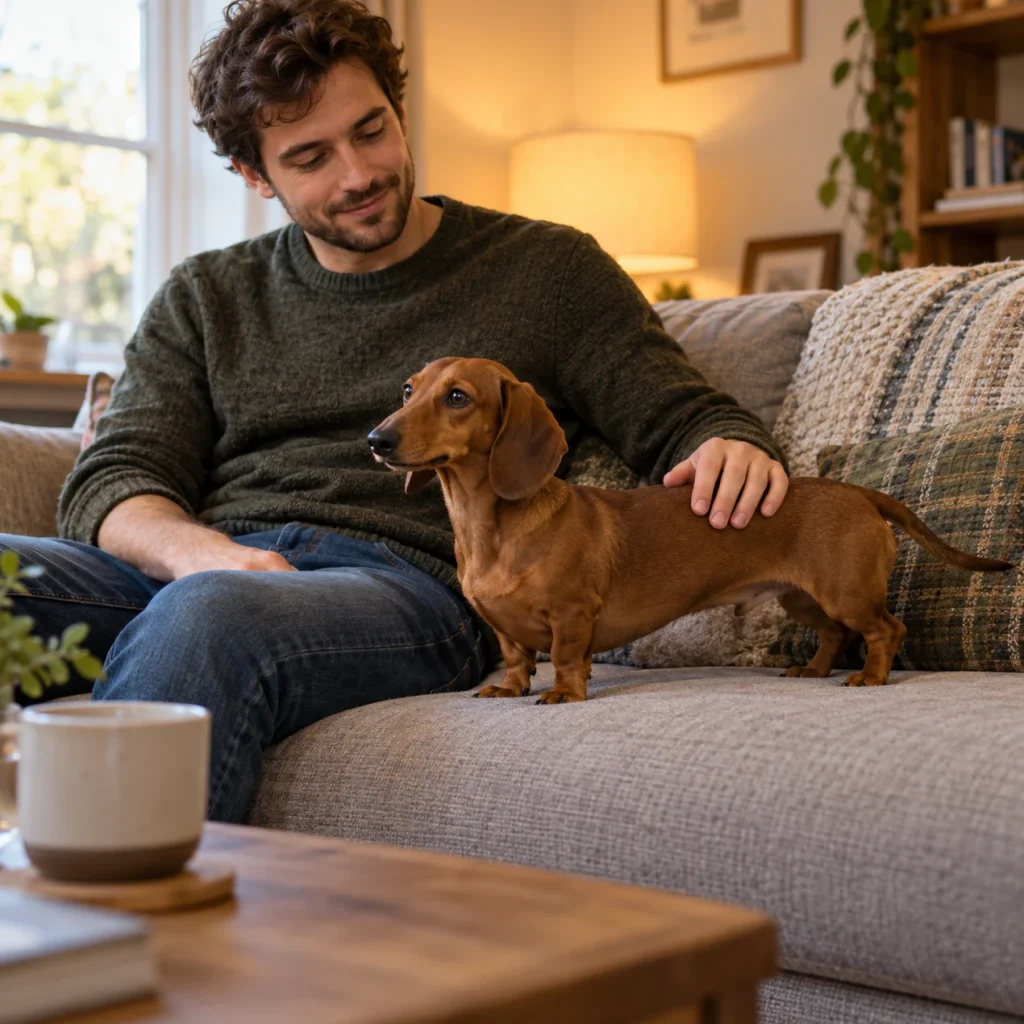
Other pets: most get along with other dogs, especially when raised together. Introduce cats slowly, and keep pet rodents, rabbits and birds out of reach.
Strangers: many are wary at first. Early, gentle socialization helps them stay friendly rather than snappy.
A Mini Dachshund suits someone who is home a good part of the day, enjoys a dog with opinions and is happy to manage barking and back care for the next 12 to 16 years.
Not sure a Mini Dachshund is the right match? Compare other tiny breeds by size, energy and grooming needs before you decide.
Coat Types and Dachshund Colors
Miniature Dachshunds come in three coats. The coat changes how much grooming you do, but none of them is hypoallergenic, so allergy sufferers should spend time with the dog before committing.
Smooth Coat
Short, shiny and close-lying. It is the easiest to keep: a weekly rub with a grooming mitt or soft brush and an occasional bath.
Long-Haired Coat
Silky, slightly wavy hair with feathering on the ears, chest, legs and tail. Brush it several times a week, and daily behind the ears and under the legs where mats form first.
Wire-Haired Coat
A tight, rough outer coat with a beard and bushy eyebrows. Brush it several times a week and have it hand-stripped a few times a year to keep its texture.
Common colors include red, cream, black and tan, chocolate, wild boar, blue and Isabella. Patterns include dapple (a merle pattern), brindle and sable.
A word on dapples: a puppy from two dapple parents (a “double dapple”) has a high risk of eye problems, blindness and deafness. The UK’s Royal Kennel Club (formerly The Kennel Club) has refused to register puppies from dapple-to-dapple matings since 2010. A breeder who mates two dapples on purpose is putting color ahead of health, so walk away.
For brushing, bathing and nail care by coat type, see our Dachshund grooming guide.
Care Basics: Exercise, Grooming and Feeding
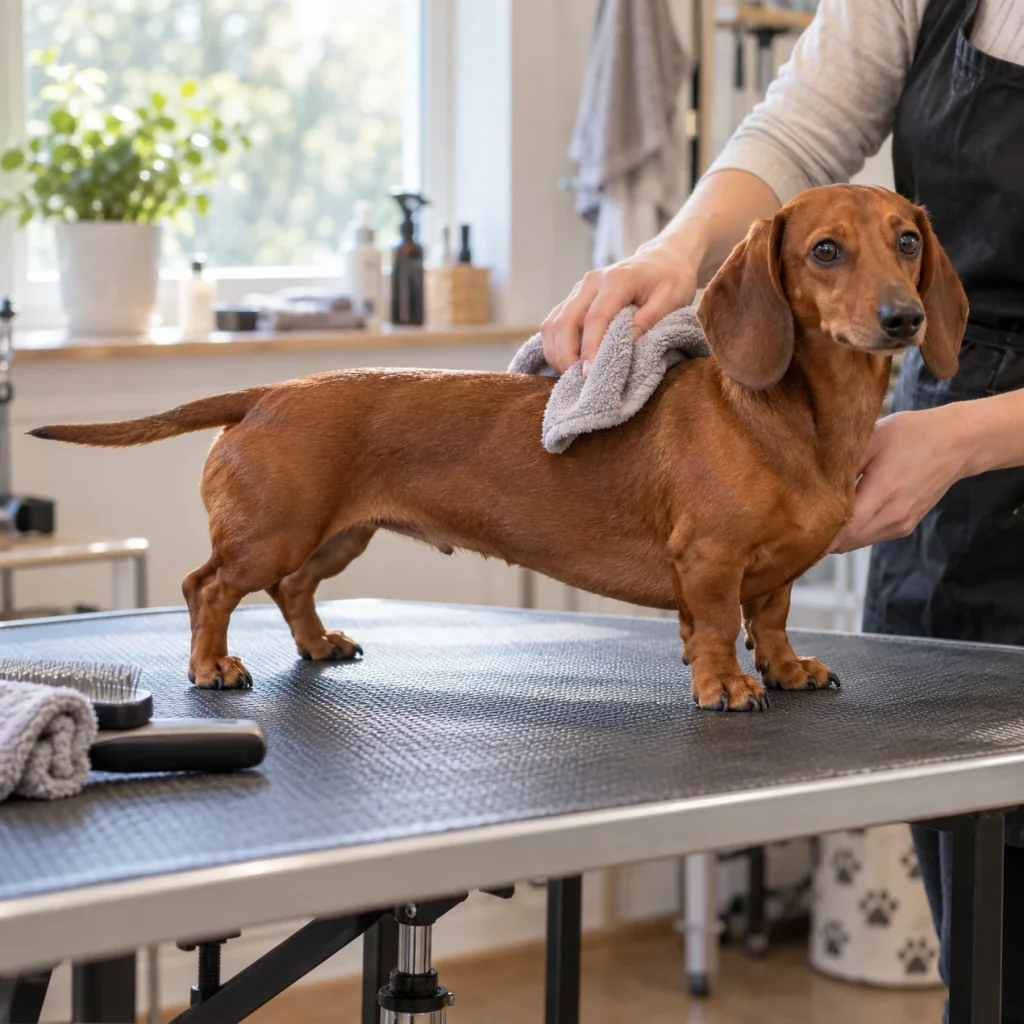
Exercise: up to 1 hour a day, split into two or three walks plus play. Sniffing games and short training sessions tire a Dachshund’s busy brain as much as walking does. Avoid long jumps, rough play and stairs at speed.
Digging: if you have a yard, a small dig box or a corner where digging is allowed saves your flower beds.
Grooming: brush once a week (smooth) to several times a week (long-haired and wire-haired). Trim nails every few weeks, check ears weekly, and brush teeth often, as small dogs are prone to dental disease.
Feeding: feed a complete food made for small breeds and weigh every meal. Count treats as part of the daily amount. Ask your vet for a target weight and adjust portions if your dog loses its waist.
Cold weather: smooth-coated Minis feel the cold. A well-fitted coat helps on winter walks.
Walking gear: use a harness that fits around the chest rather than a collar, so a pull on the leash does not jerk the neck and spine.
Training, Potty Training and Socialization
Dachshunds are clever but independent, so they learn fastest when training feels like a game with a payoff. Use treats, praise and play, keep sessions short, and end on a success. Harsh corrections make a Dachshund dig in its heels.
Training Basics
- Start with sit, down, stay and come, using a small food reward the moment your dog gets it right.
- Practice recall on a long line in a safe area. Strong prey drive means a Dachshund may ignore you when it spots a squirrel, so only let it off leash in fenced spaces.
- Teach a “quiet” cue: let one or two barks happen, say “quiet”, and reward the second the barking stops.
- Teach loose-leash walking on a harness. Stop when the leash goes tight and move on when your dog comes back to your side.
- Give a bored Dachshund a job: puzzle feeders, scent games and short trick sessions reduce barking and digging.
Potty Training
Potty training is where many Dachshund owners struggle, so plan for consistency rather than speed.
- Take your puppy out after every meal, nap and play session, first thing in the morning and last thing at night.
- Use the same spot every time, and reward with a treat and praise the moment your dog finishes.
- Watch for sniffing, circling, whining or restlessness, and head outside straight away.
- Never scold accidents. Interrupt calmly, take your dog to the right spot, and clean the area with an enzyme cleaner so the smell does not draw it back.
- A crate sized for your dog helps, because most dogs avoid soiling where they sleep. Build up crate time slowly.
- If cold or rain is the problem, an indoor pee pad or a covered potty area can be a useful backup.
Socialization
Socialization starts in puppyhood and carries on for life. Once your vet says your puppy’s vaccinations allow it, introduce new people, calm dogs, sounds, surfaces and places a little at a time.
- Begin in quiet places and short sessions, and move to busier ones only when your dog is relaxed.
- Reward calm, curious behavior, and let your dog retreat if it feels unsure.
- A small puppy class with a positive-methods trainer gives safe practice with other dogs.
- Keep a simple log of new experiences so you can spot gaps, such as children, bikes or car rides.
- If fear or snapping gets worse instead of better, talk to your vet or a qualified behaviorist early.
Health, Lifespan and Back Safety
Most Miniature Dachshunds live 12 to 16 years. The biggest health risk is intervertebral disc disease (IVDD), where a disc in the spine degenerates and can bulge or burst. Dachshunds are at much higher risk than most breeds: UK figures suggest roughly 1 in 5 to 1 in 4 Dachshunds show signs of IVDD during their life.
Call your vet straight away if your Dachshund:
- cries when picked up, or does not want to jump, walk or be touched
- walks with a hunched back or holds its head low
- wobbles, knuckles over or drags its back paws
- suddenly cannot use its back legs
Early treatment gives the best outcome, so do not wait to see if it passes.
Everyday back safety:
- Keep your dog lean. Extra weight adds strain to the spine.
- Use ramps or steps for the sofa and bed, and block stairs when you are out.
- Lift with one hand under the chest and one under the rear, keeping the back level.
- Build muscle with regular walks rather than bursts of jumping.
In the UK, the Royal Kennel Club and Dachshund Health UK run an IVDD screening scheme for Dachshunds used for breeding. If you buy a puppy, ask whether the parents were screened. Read more in Dachshund lifespan and health.
Find a Miniature Dachshund Rescue
Many Mini Dachshunds and Dachshund mixes need new homes, including adults whose owners could no longer care for them. Adopting gives one of them a second chance, and an adult dog’s size and character are already known.
Tiny Loving Canines is not a rescue and does not rehome dogs. To find a Dachshund near you:
- Check your local shelters and humane societies, and set an alert on their websites for Dachshunds and Dachshund mixes.
- Search for Dachshund breed rescues in your state, province or region. Many are run by volunteers and place dogs through foster homes.
- Ask about the dog’s history, any back problems, house training and how it reacts to children, cats and other dogs.
- Meet the dog more than once if you can, and ask the rescue what support it offers after adoption.
- Prepare your home first: ramps or steps, a harness, a crate and a quiet bed away from busy areas.
Buying a puppy instead? Meet the puppy with its mother, ask to see health screening for the parents, and never buy from a seller who will not let you visit, ships puppies unseen or offers “teacup” or double dapple puppies. These are common signs of puppy mills and scams.
Miniature Dachshund FAQs
How big is a Mini Dachshund full grown?
A full-grown Miniature Dachshund weighs 11 lb (5 kg) or less and stands about 5 to 6 inches (13 to 15 cm) at the shoulder. Breed standards judge the miniature size from 12 months of age, so most are close to adult size by their first birthday. Dogs that end up between 11 and 16 lb are informally called tweenies.
Are Miniature Dachshunds good family dogs?
Yes, for the right family. Mini Dachshunds are loyal, playful and affectionate, but their small size and long back make them easy to injure. They suit homes with older, calm children best. Supervise young children, teach everyone to lift the dog with the back level, and give the dog a quiet place to retreat.
Do Mini Dachshunds bark a lot?
Many do. Dachshunds are alert watchdogs with a big bark for their size, and they will announce visitors, noises and passing dogs. Plenty of exercise, puzzle toys and a well-taught “quiet” cue keep barking manageable. If barking starts suddenly or happens when your dog is left alone, look at boredom or stress as the cause.
Do Mini Dachshunds shed a lot?
They shed a moderate amount, and the coat type changes how it shows. Smooth coats drop short hairs that stick to fabric, long-haired coats leave longer hairs and tangles, and wire-haired coats shed least if they are hand-stripped. No Dachshund is hypoallergenic, so regular brushing is the best way to keep hair under control.
Are Dachshunds difficult to train?
They are smart but independent, which makes them trickier to train than many small breeds. Dachshunds respond best to short, upbeat sessions with treats and play. Potty training and reliable recall usually take the longest, so be consistent and patient. Harsh corrections tend to backfire with this breed. See our training tips above for step-by-step help.
Can Dachshunds be left alone all day?
Not for a full working day without a break. Dachshunds are social dogs that bond closely with their people, and long hours alone can lead to barking, chewing and house-training accidents. If you work away from home, arrange a midday visit from a friend, dog walker or daycare, and build up time alone slowly from puppyhood.
What were Dachshunds bred for?
Dachshunds were bred in Germany to hunt badgers. Their name means “badger dog” in German, and their long body, short legs and deep chest let them follow badgers and other burrowing animals underground. Today most Mini Dachshunds are companions, but the urge to dig and chase remains.
Is a Dachshund the same as a wiener dog?
Yes. “Wiener dog” and “sausage dog” are nicknames for the Dachshund, inspired by its long, low body. “Doxie” is another common nickname. They all describe the same breed, which comes in miniature and standard sizes and in smooth, long-haired and wire-haired coats.
What is a dapple Dachshund?
A dapple Dachshund has a merle pattern: lighter patches or spots over a darker base color, for example a red or chocolate dapple. One dapple parent is fine. Two dapple parents can produce double dapple puppies, which are at high risk of blindness and deafness. Avoid any breeder who mates two dapples.
How much exercise does a Mini Dachshund need?
Up to about 1 hour a day, split into two or three walks plus play and sniffing games. Regular, moderate exercise keeps weight down and builds the muscles that support the spine. Avoid jumping off furniture, rough play and long runs on stairs. Older dogs or dogs with back trouble may need shorter walks; ask your vet.
Ready to welcome a Mini Dachshund? Start with your local shelter or a Dachshund breed rescue, and browse our tiny breed guides for more small dogs that might fit your home.