

Best Small Dog Harness: How to Choose One That Fits and Stays On
The best small dog harness is the one that matches your dog’s chest measurement, cannot be backed out of, and keeps pressure off the throat. For toy breeds that often means a soft step-in or Y-front harness with adjustable straps, and a no-pull front clip if your dog pulls. Below: the main styles, how to measure a tiny dog, picks by use case and the fit mistakes that let small dogs slip free.
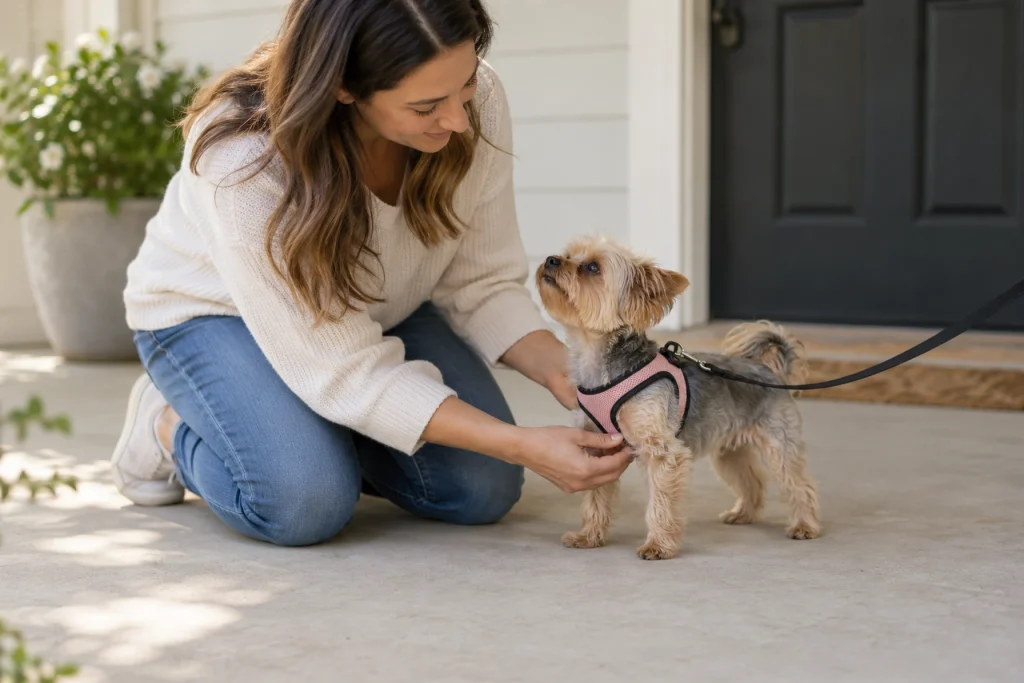
Why Small Dogs Need a Different Harness Fit
A 5 lb dog is not a scaled-down Labrador. Three things make harness choice harder for tiny dogs:
- A delicate windpipe. Toy breeds such as Chihuahuas, Pomeranians, Shih Tzus, Lhasa Apsos, Toy Poodles and Yorkshire Terriers are prone to tracheal collapse, a weakening of the windpipe. Veterinary guidance for these dogs is to walk them on a harness rather than a collar, because pressure on the neck can set off the typical honking cough. If your dog coughs like a goose honk, see your vet.
- An escape-friendly shape. Many small dogs have narrow shoulders, deep chests or a head barely wider than the neck. If they back up hard, a loose collar or harness slides straight off.
- Very little weight to spread the load. Straps that suit a 30 lb dog can rub, cover the shoulder joints or press into the armpits of a 6 lb dog. Look for lightweight, padded straps and buckles sized for small frames.
A harness spreads the pull of the leash across the chest and shoulders instead of the throat. That is why most owners of toy breeds use one for every walk. Collars still have a job, which is carrying ID.
Does a small dog still need a collar?
Yes, for ID. A light flat collar or a harness with a tag ring keeps your phone number on the dog at all times. Clip the leash to the harness, not the collar. In the UK, the Control of Dogs Order 1992 says a dog in a public place must wear a collar with the owner’s name and address on it or on a tag attached, so UK owners should use a collar with a tag alongside the harness. Martingale collars, which tighten a little when pulled, can help dogs that back out of flat collars, but they still put pressure on the neck and are not a substitute for a harness on a toy breed with a sensitive windpipe.
Small Dog Harness Types: Step-In, Y-Front, Vest and No-Pull
Most harnesses for small dogs fall into four styles. Many dogs do fine in more than one, so start from how your dog behaves on walks.
| Type | How it goes on | Best for | Watch out for |
|---|---|---|---|
| Step-in | Dog steps into two loops, you clip it on the back | Dogs that hate things going over the head; quick everyday walks | Can loosen and slip off backwards on dogs that pull back hard |
| Y-front (overhead) | Loop over the head, buckle around the chest | Most small dogs; leaves the shoulders free to move | Neck loop must be adjustable so it sits on the breastbone, not the throat |
| Vest (soft mesh) | Over the head or step-in, fastens with a buckle or hook-and-loop | Very small or short-coated dogs; cooler-weather walks | Can be hot in summer; covers more coat, so check for rubbing and matting |
| No-pull (front clip) | Like a Y-front, with a leash ring on the chest | Dogs that pull; the front clip turns the dog toward you when it pulls | Not a training fix on its own; pair it with loose-leash practice |
Escape-resistant designs add a second strap around the belly or waist, behind the ribcage. They suit nervous dogs, newly adopted rescues and breeds that back out of everything. Harnesses with a top handle help you lift a small dog out of trouble, but never use the handle to carry the dog for long.
How to Measure a Small Dog for a Harness
Weight is a poor guide to harness size. Two 8 lb dogs can have very different chests. Measure instead, with a soft tape measure, while your dog stands square.
- Chest (girth): wrap the tape around the widest part of the ribcage, just behind the front legs. This is the most important number.
- Neck: measure around the base of the neck, from just in front of the shoulder blades round to the front of the chest, where the harness neck loop will sit, not high up where a collar sits.
- Allow room: keep two fingers flat between the tape and your dog’s body while you measure. On a very tiny dog, one finger may be all the room there is; the strap should never press into the skin.
- Compare with the brand’s chart. Some brands size by the dog’s measurements, others by the harness itself. If your dog falls between sizes, choose the model with the most adjustment rather than guessing.
Write the numbers down in inches and centimeters. UK, Canadian and Australian sellers often list sizes in centimeters only.
Which material to choose
- Nylon webbing: light, cheap and quick to dry. Choose soft, narrow webbing for tiny dogs.
- Padded mesh: gentle on short coats and thin skin; dries more slowly.
- Leather: long-lasting but stiffer and heavier, so it suits bigger small breeds better than a 4 lb dog.
Whatever the material, check the buckles. Small plastic clips should snap shut firmly, and metal rings should be welded, not split.
Best Harness for Your Small Dog, by Use Case
Use the type table above, then match it to your dog:
- Escape artists and new rescue dogs: a harness with a second strap behind the ribcage, fully adjustable at neck and chest. Anxious, newly adopted dogs often back out in the first weeks, so use this style until your dog is settled.
- Dogs that pull: a no-pull harness with a front chest ring, fitted so the chest strap sits below the throat. Clip the leash at the front, practice loose-leash walking and keep sessions short.
- Long-backed breeds: for a Dachshund or similar, choose a harness with a chest piece that spreads the load across the breastbone and a long, adjustable girth strap. Lifting by a top handle is fine for a moment, but support the back end when you pick the dog up.
- Toy breeds with a sensitive windpipe: for a Chihuahua or similar, choose a soft Y-front or vest harness with nothing touching the throat. Avoid neck-loop designs that ride up when the dog pulls.
- Puppies: a light, adjustable step-in or vest. Puppies grow fast, so check the fit every week and size up as soon as you lose the two-finger gap.
- Senior dogs: a padded harness with a handle on the back helps you steady a dog on steps. Choose one that goes on without lifting stiff legs high.
Not sure your dog’s chest fits a standard small size? Measure first (section above), then compare the size charts of two or three models before you buy. Check the return policy before you buy, and try the harness on indoors with the price tags still attached so you can send it back if it does not fit.
How to Put a Harness on a Small Dog
Put the harness on in a quiet spot, with a few small treats ready. Sit or kneel so you are not leaning over your dog.
Step-in harness
- Lay the harness flat on the floor, straps up, with the two leg loops side by side.
- Place each front paw into a loop. Lift gently at the elbow; do not pull the leg out sideways.
- Bring both ends up over the shoulders and clip them together on the back.
- Check the fit: two fingers under every strap, and the loops sitting behind the elbows without rubbing the armpits.
Overhead (Y-front or vest) harness
- Open the buckle. Hold the neck loop in front of your dog’s nose with a treat on the other side so the dog pushes its head through.
- Lift one front leg through the gap if the design has one, then wrap the chest strap behind the front legs.
- Clip the buckle at the side or on the back, then adjust the neck and chest straps.
- Check that the Y of the straps sits on the breastbone, not on the throat.
Getting a nervous dog used to it
Let your dog sniff the harness and give a treat. Next session, touch it to their back and treat. Then put it on for a minute indoors and feed treats while it is on. Build up to short walks over a few days. Shaking off, freezing or scratching at first is normal; if it goes on, check the fit before you blame the dog.
Fit Problems to Avoid on Tiny Breeds
Check the fit every time you buy a new harness, after grooming, and whenever your dog gains or loses weight.
- Too loose: if you can slide more than two fingers under the straps, or the harness turns sideways when the leash is pulled, your dog can back out of it. Tighten the chest strap first.
- Too tight: red skin, hair loss or rubbing behind the elbows means the straps are too tight or in the wrong place.
- Neck strap on the throat: on a toy breed this puts pressure on the windpipe. The neck loop should sit low, on the breastbone.
- Straps across the shoulder joints: a chest strap that runs straight across the front of the shoulders shortens the stride. A Y-front shape leaves the shoulders free.
- Chafing under the legs: look for padding and a girth strap that sits a finger or two behind the elbows.
- Leaving it on unsupervised: straps can catch on crate wire or furniture. Take the harness off at home and in the crate, and check the skin underneath. For rest time at home, see our guide to the best small dog beds.
If your dog suddenly starts coughing, gagging or breathing noisily on walks, stop using any neck pressure and see your vet.
Want a calmer walk too? Our guide to training techniques for small dogs covers the basics, and the small dog breeds directory has breed-by-breed size and care notes.
Small Dog Harness FAQ
What type of harness is best for a small dog?
For most small dogs, an adjustable Y-front harness is the best all-round choice, because it keeps pressure off the throat and leaves the shoulders free. Dogs that dislike things over the head often do better in a step-in. Pullers need a front-clip no-pull harness, and escape artists need one with a second strap behind the ribcage. Measure the chest first and pick the style second.
How do you put a harness on a small dog?
Kneel beside your dog with treats ready. For a step-in, lay it flat, place each front paw in a loop, then clip it on the back. For an overhead harness, lure the head through the neck loop with a treat, wrap the chest strap behind the front legs and buckle it. Check for a two-finger gap under every strap. Full steps are in the section above.
Is a harness better than a collar for a small dog?
For walking, usually yes. A harness spreads the pull across the chest instead of the throat, which matters for toy breeds prone to tracheal collapse, such as Chihuahuas, Pomeranians and Yorkshire Terriers. Keep a light collar or tag ring for ID. In the UK a dog in a public place must wear a collar with the owner’s name and address, so use both.
How tight should a small dog harness be?
Snug enough that it cannot slip over your dog’s head or shoulders, loose enough to slide two fingers flat under each strap. On a very tiny dog the gap may only fit one finger, but the straps should never dig in. If the harness twists sideways when the leash tightens, it is too loose; red or bald patches mean it is too tight.
What size harness does a 10 lb dog need?
There is no single size for a 10 lb dog, because chest shape varies so much between breeds. A 10 lb Dachshund and a 10 lb Shih Tzu can need different sizes. Measure the widest part of the ribcage just behind the front legs, then use that brand’s size chart. Between sizes, choose the model with the most adjustment.
Should a small dog wear a harness all day?
No. Take the harness off once you are home. Straps can catch on crate wire, furniture or another dog’s teeth, and constant wear can rub the skin and mat longer coats. Put it on for walks, car rides and outings, and use that moment to check under the straps for redness. A light collar can stay on for ID.
What is the best harness for a Miniature Dachshund?
Look for a harness with a wide chest piece that spreads the load across the breastbone and a long, adjustable girth strap, because Dachshunds have deep chests and long bodies. Many standard small sizes fit the neck but not the chest, so measure both. Lift your Dachshund with one hand under the chest and one under the rear, not by the harness handle alone.
What is the best no-pull harness for small dogs?
The best no-pull harness for a small dog has a front leash ring on the chest, padded straps and adjustment at the neck and girth so the chest strap sits below the throat. When your dog pulls, the front clip turns it back toward you. It works best alongside short loose-leash training sessions, not as a fix on its own.
Where do my small dog’s ID tags go if it wears a harness?
Many harnesses have a separate small ring for tags; use that rather than the leash ring. Alternatively, keep a light flat collar on just for ID, or use a slide-on tag that sits flat against the strap so it does not jingle. Keep your microchip details up to date as well, because tags and harnesses can come off.
New to tiny dogs? Our first-time small dog owner guide covers the rest of the starter kit, and the small dog breeds directory explains the size and coat of each breed, which helps when you shop for gear. Browse more small dog gear guides.