

Italian Greyhound: Breed Guide, Size, Temperament, Care
The Italian Greyhound is the smallest sighthound: an adult stands 13 to 15 inches (33 to 38 cm) at the shoulder, usually weighs 7 to 14 lb (3.2 to 6.4 kg) and typically lives 12 to 15 years. It is a gentle, affectionate lap dog with a real chase instinct, fine bones and very little tolerance for cold. This guide covers size, temperament, grooming, health, training and how to find one through rescue.
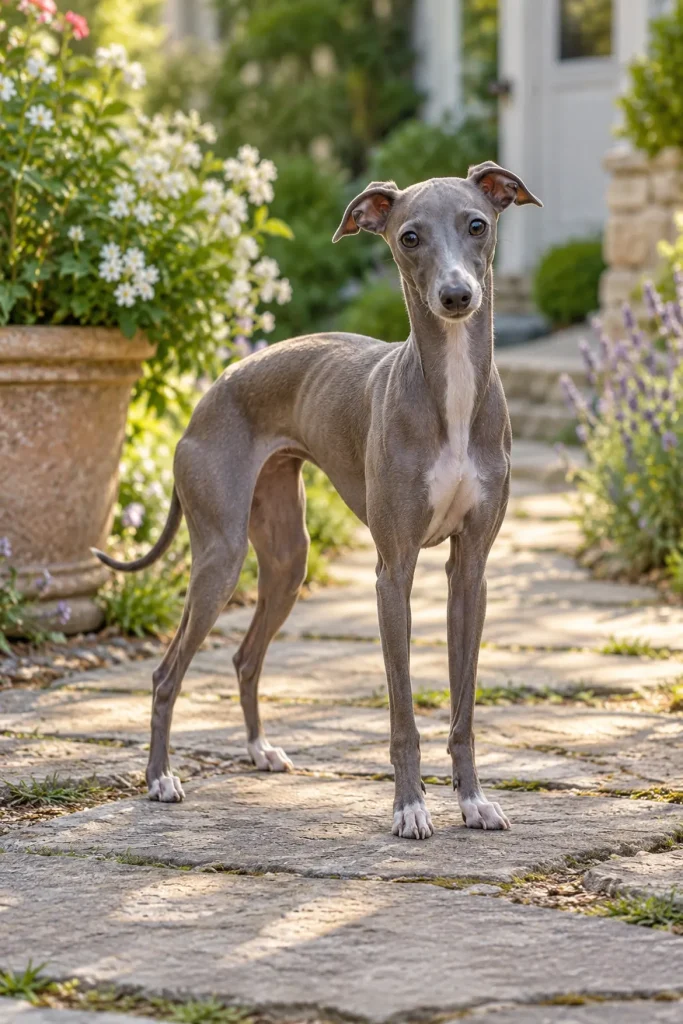
Italian Greyhound Quick Facts: Size, Lifespan and Traits
| Height | 13 to 15 inches (33 to 38 cm) at the shoulder |
|---|---|
| Weight | 7 to 14 lb (3.2 to 6.4 kg); UK dogs often sit at the lighter end |
| Lifespan | 12 to 15 years |
| Coat | short, fine and smooth; sheds lightly |
| Grooming | about once a week, plus regular tooth brushing and nail trims |
| Exercise | up to about 1 hour a day, including a safe sprint in a fenced area |
| Group | Toy Group (AKC and The Kennel Club) |
| Best for | adults or families with older, gentle children, in a warm home with someone around most of the day |
| Watch out for | leg fractures, dental disease, cold sensitivity, slow house training |
What Is an Italian Greyhound Like?
Think of a Greyhound shrunk to lap size. The Italian Greyhound, or IG, has the same deep chest, long legs and sprinting build as its big cousins, but it lives as a companion dog. Archaeological evidence suggests dogs like it existed about 2,000 years ago, and the breed has been a favorite of European royalty since at least the 16th century.
Day to day, most IGs are quiet, clingy and happiest under a blanket next to their person. Then, outdoors, the hound switches on: a squirrel or a blowing leaf can trigger a full-speed chase. Living well with one means planning for both sides.
Is an Italian Greyhound Right for You?
- Good fit if you want a gentle, affectionate small dog, are home a lot, keep your home warm and can offer a fenced area for running.
- Think twice if you have toddlers or rough-playing dogs, need a dog that is easy to house train, or want an off-leash hiking partner.
- Main downsides: fragile legs, a high risk of dental disease, dislike of cold and wet weather, slow house training and a strong urge to chase.
Italian Greyhound Size, Weight and Growth
A full-grown Italian Greyhound stands 13 to 15 inches (33 to 38 cm) at the shoulder, the ideal height in both the AKC and UKC breed standards. Most adults weigh 7 to 14 lb (3.2 to 6.4 kg). In the UK, the PDSA lists 3 to 4.5 kg (about 7 to 10 lb), so British dogs tend to be lighter. Among toy breeds the IG is on the larger side, but its fine bones keep it light.
Puppies have especially fragile bones while they grow. Lift them on and off sofas and beds, use steps or a ramp, and stop games that involve jumping from a height.
Is There a Miniature or Teacup Italian Greyhound?
No. There is no recognized miniature or teacup Italian Greyhound. The breed standard calls for 13 to 15 inches, and an IG is already a toy breed. Sellers who advertise “mini” or “teacup” IGs are breeding for undersized dogs, which can mean even thinner bones and more health problems. Treat these labels as a warning sign, not a feature.
Temperament, Character and Energy
Italian Greyhounds are affectionate, people-focused dogs that like to stay close to their owners and often choose a lap over a dog bed. Many are shy or aloof with strangers and slow to warm up, so a calm, confident puppy or adult is a better choice for a first-time owner than the most timid dog in a litter or kennel.
Energy comes in bursts. An IG may sleep much of the day, then sprint laps of the yard at remarkable speed. Plan on up to about an hour of activity a day: two or three leash walks plus a chance to run in a securely fenced area. Puzzle feeders and short training games help on cold or wet days when your dog refuses to go out.

Italian Greyhounds With Kids, Cats and Other Dogs
IGs suit homes with older, gentle children best. Toddlers who grab, squeeze or drop a small dog can easily break its legs. Teach children to sit on the floor to cuddle the dog and never to pick it up.
Many IGs live happily with cats and other dogs they are raised with. The chase instinct is real, though, so introduce a cat slowly and on a leash, and keep play with bigger, boisterous dogs short and supervised.
Apartment Living
An Italian Greyhound can be a good apartment dog: it is small, often quiet indoors and happy to nap. Two things matter more than floor space: someone home for much of the day, since many IGs dislike being alone, and a reliable potty plan for bad weather, such as a balcony grass patch or pads. Rugs on slippery floors also help prevent falls.
Coat Colors, Shedding and Grooming
The IG’s coat is short, fine and close to the skin. The AKC standard accepts any color and markings except brindle and the tan pattern seen on black-and-tan breeds, so you will meet fawn, blue (gray), black, red, cream and white dogs, solid or with white markings.
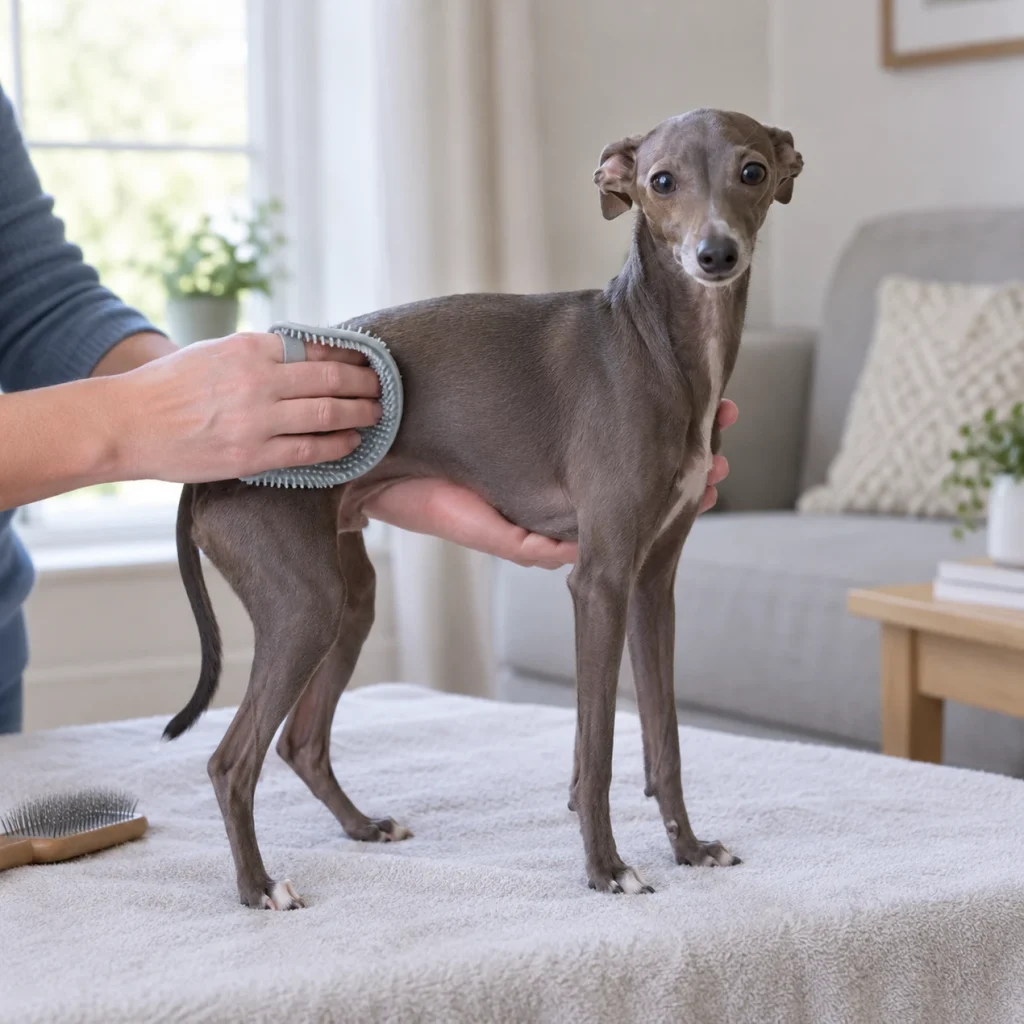
It sheds lightly, and the hairs are so short and fine that most owners barely notice them. No dog is guaranteed allergy-free, but some people with mild dog allergies cope better with an IG than with a heavy shedder. Spend time with one before you commit.
- Brushing: once a week with a soft bristle brush or rubber grooming mitt, going gently over the hips, ribs and spine where there is little padding.
- Bathing: only when dirty, with a mild dog shampoo and lukewarm water. Dry your dog fully and keep it warm afterwards.
- Nails: trim or grind regularly, taking a little at a time and keeping styptic powder nearby in case you nick the quick. If you hear nails clicking on the floor, they are too long.
- Teeth: IGs are prone to dental disease. Brush their teeth often, ideally daily, with a dog toothpaste, and ask your vet to check their mouth at every visit.
- Skin: the thin skin scrapes and tears easily. Check for nicks after rough play and running.
Because the coat gives almost no insulation, most IGs need a sweater or coat outdoors in cool, wet or windy weather, and a warm, draft-free bed with a blanket to burrow under.
Italian Greyhound Health and Lifespan
Italian Greyhounds typically live 12 to 15 years. Many stay active well into their teens, but the breed has a few health risks every owner should know.
- Leg fractures: the slim leg bones can break from a jump off furniture, a fall from arms or a collision during play. Young dogs are most at risk.
- Dental disease: gum disease and tooth loss are common. Daily brushing and regular dental checks make a big difference.
- Luxating patella: the kneecap can slip out of place, causing skipping or limping.
- Eye disease: progressive retinal atrophy (PRA), which leads to gradual vision loss, and primary closed angle glaucoma.
- Epilepsy and hypothyroidism: both are reported in the breed and are usually manageable with veterinary care.
- Low blood sugar in puppies: tiny puppies that miss meals can become weak or wobbly.
If you buy from a breeder, ask for proof of the tests the breed’s parent club recommends: a patella evaluation, eye exams, thyroid testing and DNA tests for PRA, glaucoma and enamel problems. See your vet promptly if your IG limps, cries when touched, has a seizure, bumps into things or seems weak.
For more detail, read our Italian Greyhound lifespan guide.
Training, Potty Training and Socialization
IGs are smart but sensitive and can be stubborn. They learn best from short, fun sessions of a few minutes with small treats and praise. Harsh corrections backfire and can make a shy dog shut down. Teach the basics early (name, sit, come, settle on a mat) and keep house rules the same for everyone in the home.
Walk an IG on a well-fitted harness rather than a collar. The neck is long and delicate, and a harness spreads pressure across the chest instead.
Potty Training
House training is often the hardest part of living with this breed, and it can take longer than with many other dogs. The biggest reason is weather: an IG that hates rain and cold will hold it outside and go indoors later.
- Take your dog out on a fixed schedule: after waking, after meals, after play and before bed.
- Go to the same spot every time, and reward with a treat the moment your dog finishes.
- Watch for sniffing, circling and restlessness, and head out straight away.
- Use a crate or small pen when you cannot supervise, building up time in it slowly.
- Clean accidents with an enzyme cleaner and never punish. Punishment teaches a dog to hide, not to go outside.
- For cold or wet weather, put a coat on before going out, or set up an indoor backup such as pads or a grass patch.
Socialization and Confidence
Many IGs are naturally cautious, so early, gentle socialization matters. Once your vet says your puppy is protected, introduce new people, sounds and places a little at a time, pairing each with treats. Start with calm, small dogs and quiet settings before busier ones. A small puppy class that uses reward-based methods is ideal. Practice short absences from day one so your dog learns that being alone is safe, and talk to your vet or a qualified behaviorist if fear or distress gets worse.
Recall and Off-Leash Safety
Even a well-trained IG may not come back when it spots something to chase. Let it run only in a securely fenced area, check fences for gaps, and keep it on a leash near roads.
Italian Greyhound vs Whippet vs Greyhound
All three are sighthounds with the same sleek shape, but only the Italian Greyhound is a tiny dog. The Whippet and the Greyhound are far bigger, and that changes everything from bone strength to how much space they need.
| Italian Greyhound | Whippet | Greyhound | |
|---|---|---|---|
| Typical weight | 7 to 14 lb (3.2 to 6.4 kg) | 25 to 40 lb (11 to 18 kg) | 60 to 70 lb (27 to 32 kg) |
| Size class | Toy | Medium | Large |
| Best for | Lap-dog homes, apartments, older kids | Active owners who want a sturdier sighthound | Calm homes with room for a big dog |
| Main care point | Fragile legs, cold sensitivity, slow house training | Needs a safe place to sprint | Needs space and a safe place to sprint |
If you love the look but worry about broken legs, a Whippet is sturdier, but at three or more times the weight it is no longer a small dog. Still comparing tiny breeds? Browse all small dog breeds.
Gear an Italian Greyhound Needs
Tiny Loving Canines may earn a commission when you buy through links on this page. It does not change what we recommend.
A few items make life much easier for an IG and its owner:
- Sweater or coat: look for a cut made for deep-chested, narrow-waisted dogs that covers the chest and belly, with a high neck and no tight leg holes.
- Harness: choose a lightweight, escape-resistant style that sits on the chest, not the throat, and fits a narrow body. Measure the chest at its widest point.
- Bed: a soft, raised or bolstered bed, ideally a cave style or one with a blanket to burrow into, kept out of drafts.
- Crate or pen: a small crate or pen for house training and safe rest, with soft bedding.
- Steps or ramp: to protect legs when getting on and off the sofa or bed.
Find an Italian Greyhound Rescue
Adopting an adult Italian Greyhound is a great way to start. An adult’s size, temperament and house-training habits are already known, which makes matching easier, especially for a first-time owner.
- Start with your national breed club in the US, UK, Canada or Australia and ask about breed rescue contacts. Foster-based rescues can tell you how each dog behaves with kids, cats and being left alone.
- Check local shelters and adoption listing sites, and set alerts for “Italian Greyhound” and IG mixes.
- Ask about house training, medical history, past fractures and dental treatment before you commit.
If you buy a puppy, choose a breeder who health tests, lets you meet the mother and raises puppies in the home. Walk away from “mini” or “teacup” IGs, sellers with several breeds always available, or anyone who wants a deposit before you have seen the puppy. These are classic signs of puppy mills and online scams.
Tiny Loving Canines is not a rescue and does not rehome or sell dogs. We help you find the right dog and the right place to look.
Ready to look for your Italian Greyhound? Start with a breed rescue and an adult dog whose temperament you already know, and read our Italian Greyhound lifespan guide so you know what care to plan for. Still deciding? Compare all small dog breeds.
Italian Greyhound FAQs
Are Italian Greyhounds good house dogs?
Yes, for the right home. Italian Greyhounds are affectionate, usually calm indoors and small enough for apartments. They do best with someone home much of the day, a warm house and a fenced place to run. Be ready for slow house training and to protect their fragile legs. If that fits your life, an IG is a loving, low-shedding companion.
How big is a full grown Italian Greyhound?
A full grown Italian Greyhound stands 13 to 15 inches (33 to 38 cm) at the shoulder and usually weighs 7 to 14 lb (3.2 to 6.4 kg). UK dogs often weigh less, around 3 to 4.5 kg. That makes the IG one of the taller toy breeds, but its fine bones keep it light. See the size section above for growth and puppy safety tips.
Is there a miniature Italian Greyhound?
No. There is no recognized miniature or teacup Italian Greyhound, and small IGs have no separate name. The breed is already a toy breed with an ideal height of 13 to 15 inches. Dogs sold as “mini” or “teacup” are simply undersized and may have even more fragile bones and health problems. Treat these labels as a red flag when you look for a puppy.
Are Italian Greyhounds low maintenance?
Their coat is. A weekly brush and the odd bath are enough. The rest of their care takes more effort: daily tooth brushing, regular nail trims, coats in cold weather, careful handling to avoid fractures and patient house training. Most IGs also want a lot of company. Think of them as easy to groom but not hands-off.
How much exercise does an Italian Greyhound need?
Plan on up to about an hour a day, split into two or three leash walks plus a chance to sprint in a securely fenced area. IGs run in short bursts and then sleep for hours. Never let one off leash near roads, because the chase instinct can override recall. On cold or wet days, indoor games and puzzle feeders help.
Are Italian Greyhounds good with kids and cats?
They are best with older, gentle children. Toddlers can easily injure an IG by grabbing, squeezing or dropping it, so children should cuddle it sitting on the floor. Many IGs live happily with cats they grew up with, but the chase instinct is strong. Introduce a cat slowly, on a leash, and supervise until both are relaxed together.
Are Italian Greyhounds hypoallergenic?
No dog is truly hypoallergenic, and the Italian Greyhound is no exception. Its short, fine coat sheds lightly and needs little grooming, so some people with mild dog allergies find it easier to live with than a heavy shedder. Allergies vary from person to person, so spend time with an IG before you bring one home.
What are the cons of an Italian Greyhound?
The main downsides are fragile legs that can break in a fall or jump, a high risk of dental disease, poor tolerance of cold and wet weather, and house training that can be slow. Many IGs also dislike being left alone and will chase small animals. None of these are deal breakers, but plan for them before you commit.
Are Italian Greyhounds good apartment dogs?
Yes, often. They are small, usually quiet indoors and happy to nap for much of the day. What matters more than space is company, because many IGs dislike being left alone, and a potty plan for bad weather, such as a balcony grass patch. Add rugs on slippery floors and steps to the sofa to protect their legs.