

How Long Do Pugs Live? Pug Lifespan, Healthy Weight and Health Problems
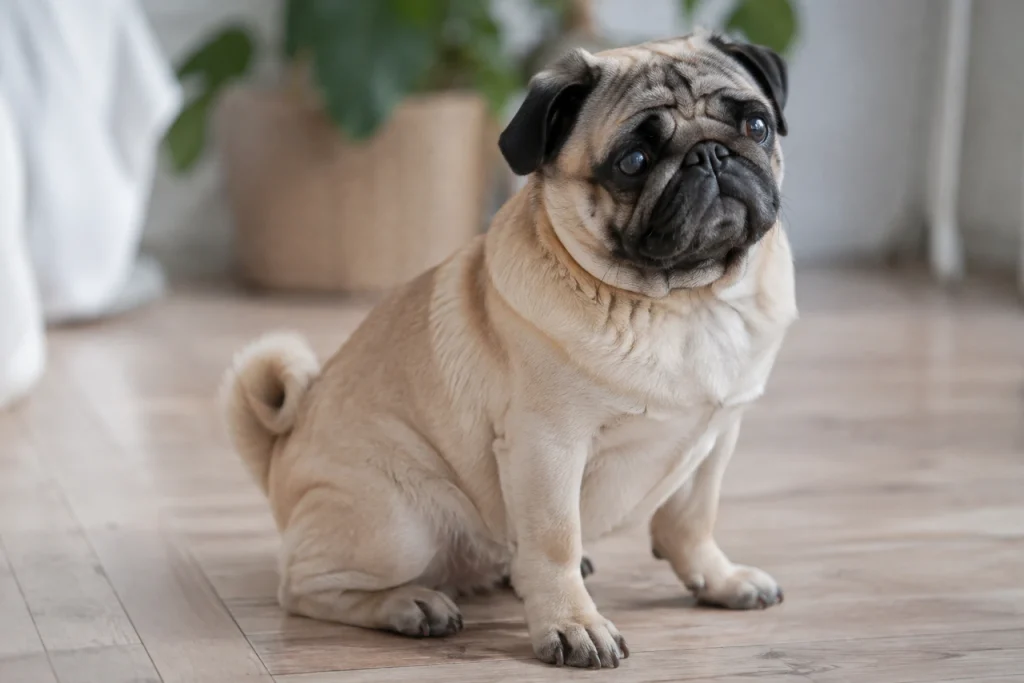
Most breed bodies put the Pug lifespan at about 10 to 14 years, but a large UK study of vet records found that Pugs live 7.7 years on average from birth, well below the 11.2-year average for all dogs. Adult Pugs weigh 14 to 18 lb (6.4 to 8.2 kg), so they sit at the top edge of the small-dog range. Most of the gap in lifespan comes from their flat face, which affects breathing, eyes and skin, and much of that risk can be managed with a lean weight, a good breeder or rescue, and early vet care.
Pug lifespan at a glance
- Typical lifespan quoted by breed bodies: about 10 to 14 years (Dogs Victoria, Australia). The Royal Kennel Club (UK) lists “over 10 years”.
- Average life expectancy from vet records: 7.7 years from birth, in a UK study of 30,563 dogs that died between 2016 and 2020. The average for all dogs in the same study was 11.2 years.
- Adult weight: 14 to 18 lb (6.4 to 8.2 kg) for males and females, per the breed standard.
- Height: about 10 to 13 inches (25 to 33 cm) at the shoulder.
- Senior age: small dogs are usually considered senior from about 9 to 11 years.
Why do the figures differ so much? Breed ranges describe what a healthy, well-bred Pug can reach. Vet-record studies count every Pug, including dogs with severe breathing or neurological disease that die young. Your own Pug’s odds depend heavily on its build, its weight and the health of its parents.
Why Pugs often live shorter lives than other small dogs
The Pug is a brachycephalic (flat-faced) breed. Its skull is short and wide, so the same soft tissue that fits in a longer nose is packed into a much smaller space. That shape is behind most Pug health problems.
A 2022 Royal Veterinary College study compared 4,308 Pugs with 21,835 other dogs over one year. Pugs were 1.9 times as likely to have at least one disorder recorded. They were about 54 times as likely to be diagnosed with brachycephalic obstructive airway syndrome (BOAS), 13 times as likely to have eye ulcers, 11 times as likely to have skin fold infections and 3.4 times as likely to be obese.
It is not all bad news. The same study found Pugs had a lower risk of some problems, including heart murmurs and aggression. And many Pug problems can be spotted early, treated or kept milder with good care.
Healthy Pug weight and body shape
A healthy adult Pug weighs about 14 to 18 lb (6.4 to 8.2 kg). Pugs are meant to look solid and compact, but solid is not the same as fat. In a study of Pugs seen by vets in England, being overweight was the most common problem recorded, affecting about 13 in every 100 Pugs in a single year.
Extra weight matters more for a Pug than for most dogs. Fat around the neck and chest makes breathing harder, raises the risk of overheating and puts more strain on knees, hips and the spine.
Check your Pug’s shape every few weeks:
- Ribs: you should feel them easily under a thin layer of fat, without pressing hard.
- Waist: looking down from above, there should be a visible tuck behind the ribs.
- Belly: from the side, the belly should rise slightly toward the back legs, not hang level or sag.
- Breathing: a Pug that gets noticeably noisier or tires faster as it gains weight needs a vet check, not just a diet.
Weigh food rather than scooping it, count treats as part of the daily amount, and ask your vet for a target weight and calorie goal. A dog’s ideal weight depends on its frame, so the vet’s number for your Pug is the one to follow.
Common Pug health problems
These are the problems vets see most often in Pugs, or the ones most worth knowing about before you bring a Pug home.
Breathing problems (BOAS)
Brachycephalic obstructive airway syndrome is a mix of narrow nostrils, a soft palate that is too long for the mouth, extra tissue near the voice box and, in some dogs, a narrow windpipe. Together they reduce how much air reaches the lungs.
Signs include loud breathing or snoring, heavy panting, tiring quickly on walks, gagging, and in severe cases blue gums or collapse. Being overweight makes it worse. Not every Pug is badly affected, but signs can develop or worsen with age. Surgery to widen the nostrils and shorten the soft palate can help many dogs, so ask your vet if your Pug struggles.
Eye problems
Pugs have shallow eye sockets and large, prominent eyes, so the surface of the eye is exposed and easy to scratch. Corneal ulcers are common and can get deep fast. Watch for squinting, a cloudy or red eye, pawing at the face or heavy tearing, and see a vet the same day. A hard knock or rough handling can even push an eye out of its socket, which is an emergency.
Skin folds, ears and teeth
The nose fold and facial wrinkles trap moisture, which leads to skin fold infections. Clean and fully dry the folds as often as your vet suggests, and look for redness, odor or discharge. Pugs are also more prone to ear infections, allergic skin disease and retained baby teeth. Their crowded mouths make regular tooth brushing and dental checks worth the effort.
Brain and spine: Pug dog encephalitis and Pug myelopathy
Pug dog encephalitis (PDE, also called necrotizing meningoencephalitis) is an inflammatory brain disease that is fatal. Signs can include seizures, circling, wobbliness or blindness. A DNA test can show whether a dog carries the genetic risk, so ask any breeder for results.
Pug myelopathy is the most common cause of wobbly, weak back legs in the breed. It can progress over one to four years, but many affected Pugs live good lives with nursing care. Other spine problems, such as malformed vertebrae and disc disease, can look similar, so sudden weakness needs a vet exam.
Knees and hips
Luxating patella, where the kneecap slips out of place, is common in small breeds including Pugs. You may see your Pug skip or hold up a back leg for a few steps. Hip dysplasia also occurs, though many affected dogs live normal lives. Keeping your Pug lean is the best thing you can do for its joints.
Exercise and heat safety for Pugs
Pugs need daily exercise to stay lean, but not much: the Royal Kennel Club suggests up to an hour a day. Split it into short, easy walks and indoor play rather than one long outing.
- Walk in the cool parts of the day in warm weather, and skip walks in heat and humidity.
- Use a harness instead of a collar so nothing presses on the throat. Our small dog harness guide explains how to get a good fit.
- Stop and rest if breathing gets loud or ragged, and carry water.
- Never leave a Pug in a parked car, even for a few minutes.
Flat-faced dogs cool themselves poorly by panting, so they overheat faster than most dogs. Heavy panting that does not settle with rest, drooling, stumbling or collapse are signs of heatstroke: move your Pug somewhere cool and call a vet straight away.
Senior Pugs: what changes with age
Small dogs are usually considered senior from about 9 to 11 years. Because many Pugs have a shorter life expectancy, ask your vet when to start senior checkups for your dog.
Changes to watch for in an older Pug:
- Slower walks, stiffness or trouble with stairs and jumping.
- Back legs that wobble, cross or scuff, which can point to a spine problem.
- Louder breathing, more coughing or tiring sooner than before.
- Cloudy eyes, bumping into things or reluctance in dim light.
- Weight gain from lower activity, or weight loss without a diet change.
Many vets recommend checkups every six months for senior dogs instead of once a year. Ramps, non-slip rugs and a lower bed make daily life easier for an older Pug.
How to help your Pug live a longer, healthier life
- Start with healthy parents. If you buy a puppy, ask the breeder for health results. The Royal Kennel Club recommends Respiratory Function Grading for breathing, and the breed club in the US asks for a PDE DNA test, an eye exam and a kneecap check. A breeder who cannot show results, or who sells “teacup” or rare-color Pugs, is a red flag.
- Consider a rescue Pug. Adult Pugs in shelters and breed rescues often come with a known health history and a vet check.
- Keep your Pug lean. This is the single most useful thing an owner can do for breathing, joints and the spine.
- Protect the airway. Use a harness, avoid heat and stop exercise before breathing gets labored.
- Clean folds, eyes and teeth. A few minutes a day prevents many skin, eye and dental problems.
- See the vet early. Yearly checkups for adults, every six months for seniors, and the same day for any eye problem or breathing change.
- Keep the mind busy. Pugs enjoy short training sessions, puzzle toys and sniffing games, which also burn calories without overheating.
When to call the vet
This page is general information. If you are worried about your Pug, call your vet. Go to a vet or emergency clinic straight away if your Pug:
- Struggles to breathe, has blue or gray gums, or collapses.
- Shows signs of heatstroke: heavy panting that does not settle, drooling, stumbling.
- Has an eye that bulges out of its socket, or a painful, cloudy or squinting eye.
- Has a seizure, starts circling or seems suddenly blind or confused.
- Suddenly cannot use its back legs or cries when touched along the back.
Book a regular appointment for slower changes, such as weight gain, louder snoring, itchy or smelly skin folds, ear discharge, or a Pug that skips on a back leg.
Pug lifespan and health FAQs
What is the lifespan of a Pug?
Breed bodies usually quote about 10 to 14 years for a Pug. A large UK study of vet records found a lower average of 7.7 years from birth, because it includes Pugs with serious breathing and neurological disease. A Pug from health-tested parents that is kept lean and gets early vet care has a better chance of reaching the upper end.
Can a Pug live 15 or 20 years?
Some Pugs do reach 15, but it is uncommon, and 20 years would be exceptional for any small breed. Most breed sources top out at about 14 years. The best ways to tilt the odds are a lean weight, protection from heat, prompt treatment of breathing and eye problems, and regular checkups as your Pug ages.
What is the leading cause of death in Pugs?
There is no single cause for every Pug, but many serious Pug problems trace back to the flat face. Breathing disease (BOAS) can cause collapse and heatstroke, and Pug dog encephalitis is a fatal brain disease. Pug myelopathy and other spine conditions can also lead to paralysis in older dogs. Ask your vet which risks apply to your dog.
What are common health issues for Pugs?
The most common are obesity, breathing problems (BOAS), eye ulcers and other corneal problems, skin fold infections, ear infections and allergic skin disease. Pugs can also have kneecap problems, hip dysplasia, Pug dog encephalitis and spine disease. Many of these are easier to manage when caught early, so regular checks matter.
At what age is a Pug considered old?
Small dogs are usually considered senior from about 9 to 11 years. Because many Pugs have a shorter life expectancy than other small breeds, your vet may suggest starting senior care earlier. Senior checkups every six months help catch breathing, eye, joint and spine changes early.
How much should a Pug weigh?
An adult Pug should weigh about 14 to 18 lb (6.4 to 8.2 kg), for males and females alike. More important than the number is the shape: you should feel the ribs easily and see a waist from above. Ask your vet for a target weight, since even a pound or two extra can make breathing harder for a Pug.
Do Pugs have breathing problems?
Yes, many do. Their short skull leaves narrow nostrils and a long soft palate, a condition called brachycephalic obstructive airway syndrome. Signs include snoring, heavy panting and tiring quickly. Not every Pug is badly affected, and surgery helps many dogs, so ask your vet if your Pug’s breathing is noisy or labored.
Can a Pug’s eyes pop out?
Yes, it can happen. Pugs have shallow eye sockets and prominent eyes, so a knock to the head, a dog bite or pressure on the neck can push an eye out of its socket. This is an emergency: keep the eye moist and get to a vet at once. Using a harness instead of a collar reduces pressure on the neck.
A Pug with a lean body, a clear airway and a vet who knows it well has the best chance of reaching its teens. For temperament, colors, grooming and care basics, see our full Pug breed guide.
Still deciding whether a Pug is right for you? Compare sizes, lifespans and care needs across all small dog breeds before you commit, and look at rescue Pugs as well as breeders.