

Home › Breeds › Pomeranian › Grooming
Pomeranian Grooming Guide: Shedding, Haircuts and Coat Care
A Pomeranian needs brushing about twice a week, more often during a heavy shed, a bath only when it is dirty, and a nail trim about once a month. This 3 to 7 lb (1.4 to 3.2 kg) toy breed has a thick double coat that sheds more than most small dogs, so steady brushing matters more than which of the Pomeranian haircuts you choose. Light trims are fine, but shaving or clipping close to the skin can leave the coat patchy for months.
New to the breed? Start with our Pomeranian breed guide for size, colors and temperament.
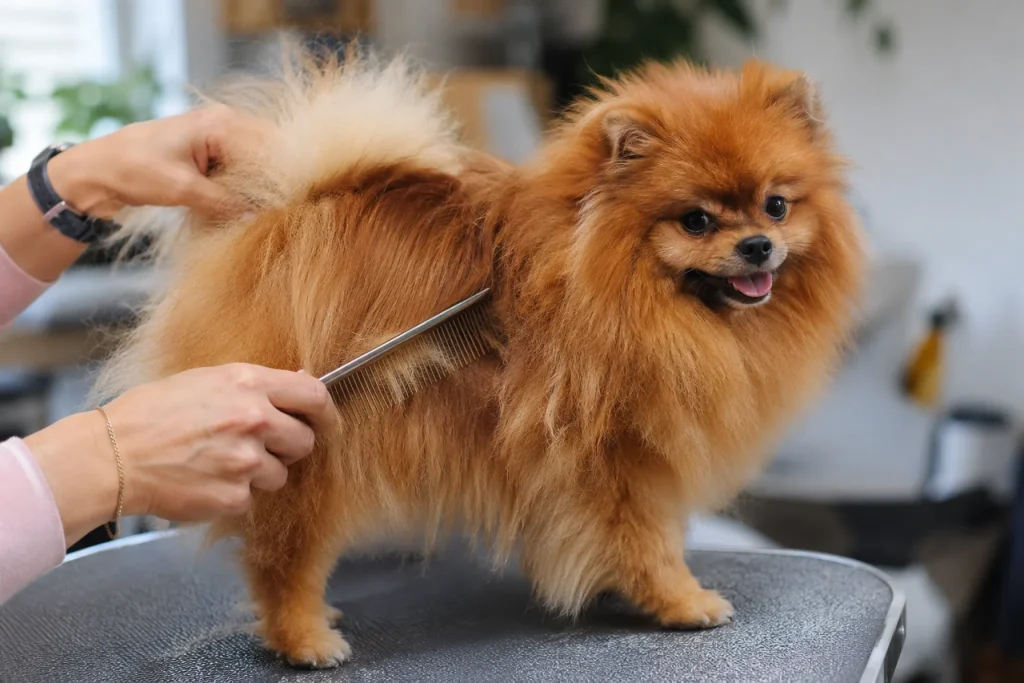
Pomeranian Coat Type and Shedding
A Pomeranian has a double coat: a soft, thick undercoat next to the skin and a longer, harsher outer coat on top. The undercoat traps air and insulates the dog against heat and cold, and the outer coat protects the skin from dirt and sunburn. Poms come in orange, black, chocolate, blue, sable, cream and other colors, and color does not change how you groom.
Poms shed more than most toy breeds. Expect a light shed all year and heavier sheds when the undercoat comes out in clumps. Dogs in cold climates often drop the undercoat mainly in spring and fall, while dogs in warm climates or warm homes can shed more evenly through the year.
During a heavy shed, brush more often, with a slicker brush followed by a comb, until the comb glides through without pulling out loose fluff. Shedding cannot be stopped, but regular brushing keeps it off your floors and stops the loose undercoat from felting into mats.
Is a Pomeranian Hypoallergenic?
No. No dog breed is 100% hypoallergenic, and the Pomeranian sheds enough that it is a poor match for most people with dog allergies. Most dog allergies are triggered by dander, the tiny skin flakes that cling to shed hair. Brushing outdoors and washing bedding often reduce how much ends up in your home, but they do not remove it. If allergies are a concern, spend time around a Pom before you commit, and compare other breeds in our small dog breeds directory.
Best Brushes and Grooming Tools for a Pomeranian
You need only a few tools. Small, well-made versions are easier to handle on a toy dog than large ones.
- Slicker brush: fine, bent wire pins that pull out loose undercoat and work through small tangles. Choose a small head and use a light touch; pressing hard can scratch thin skin.
- Metal comb with wide and fine teeth: run it through after the slicker. If the comb snags, there is still a tangle or loose undercoat in that spot.
- Undercoat rake or deshedding comb: useful during a heavy shed. Pick one with rounded teeth, never a blade that cuts the outer guard hairs.
- Pin brush or bristle brush: for a final fluff and to smooth the outer coat.
- Grooming spray or detangler made for dogs: brushing a bone-dry coat breaks hair, so mist lightly first.
- Dryer: a pet dryer, or a human dryer on a cool or low setting. Keep it moving so heat never sits on one spot.
- Nail clippers or a nail grinder sized for small dogs, plus styptic powder in case you nick the quick.
- Rounded-tip scissors: for tidying the feet, ears and the hair around the bottom.
- Dog toothbrush and dog toothpaste: a finger brush or a small-headed brush suits a tiny mouth.
How to Groom a Pomeranian Step by Step
Groom on a non-slip surface at a comfortable height, keep sessions short and calm, and reward your Pom with small treats. Start handling the paws, ears and mouth while your dog is young; our guide on how to train a Pomeranian covers calm handling.
Brushing: The Line-Brushing Method
Line brushing reaches the undercoat, where mats start. Brushing only the top layer leaves the coat looking fluffy while tangles build up underneath.
- Mist the coat lightly with a dog grooming spray or water.
- Start at the back legs. Hold the coat up with one hand and part a thin line so you can see the skin.
- Brush the hair below the part with the slicker, from the skin outward. Let down a new line and repeat, working up the body to the neck.
- Comb each section. Check behind the ears, the armpits, under the legs, the chest and the long hair on the back of the thighs, where mats form first.
- Finish with a pin brush, brushing the coat up and out against the direction of growth for the classic stand-off Pom look.
- Check the hair around the bottom and clean it if needed. This area is worth a quick daily look.
Aim for at least twice a week, and more often during a shed. Brush the hair, not the skin.
If you find a mat, hold the hair at its base so you do not pull the skin, then tease it apart with your fingers and the end of the comb. Do not cut mats out with pointed scissors, because the skin underneath is thin and easy to cut. Leave large or tight mats to a groomer.
Bathing and Drying
Poms do not need frequent baths. Bathing too often strips the coat’s natural oils and dries out the skin, so bathe when your dog is dirty or starts to smell rather than on a fixed schedule. Brush out every tangle first, because water tightens mats.
- Use lukewarm water and a gentle shampoo made for dogs. Human shampoos and other human products can irritate a dog’s skin.
- Wet the coat right down to the skin; the thick undercoat sheds water at first. Keep water and shampoo away from the eyes and ears.
- Massage the shampoo in, then rinse until the water runs clear. Shampoo left in the undercoat can leave skin itchy.
- If you use a dog conditioner, apply it now and rinse again. It makes brushing easier afterward.
- Squeeze and blot with a towel. Rubbing tangles the coat.
- Dry fully on a cool or low setting while you brush the coat out. A damp undercoat left to air dry can mat close to the skin.
Nails, Ears, Eyes and Teeth
- Nails: trim about once a month, and more often if your Pom walks mostly on carpet or grass. If you hear clicking on hard floors, the nails are too long. Take off thin slivers and stop about 2 to 3 mm (about 1/10 inch) before the quick, the pink core of the nail that holds blood vessels. On dark nails, trim only the tip. If you nick the quick, press a little styptic powder on the nail; flour or cornstarch work if you have none.
- Ears: look inside at each brushing session. Wipe the visible part of the ear with a vet-approved ear cleaner on a cotton pad and never push anything into the ear canal. Redness, a bad smell, discharge or head shaking needs a vet visit.
- Eyes: wipe away tear residue with a soft, damp cloth. Redness, squinting or thick discharge needs a vet visit.
- Teeth: gum disease is common in Pomeranians, and a small mouth crowds the teeth. Brush daily, or at least every other day, with a dog toothbrush and dog toothpaste. Never use human toothpaste: it can contain fluoride and xylitol, which are toxic to dogs. Read more about dental care for small dogs.
- Paws and hygiene trim: use rounded-tip scissors to tidy the hair between the pads, so your Pom does not slip on hard floors, and around the bottom, so it stays clean.
Pomeranian Haircuts: Fox, Teddy Bear, Boo and Lion
A Pomeranian does not need a haircut. If you want one, the safest Pomeranian haircuts are trims done with scissors, or clippers with long guards, that leave the undercoat in place. Style names vary from groomer to groomer, so show your groomer a photo and say how much coat you want left on the body.
Fox Cut (Natural Trim)
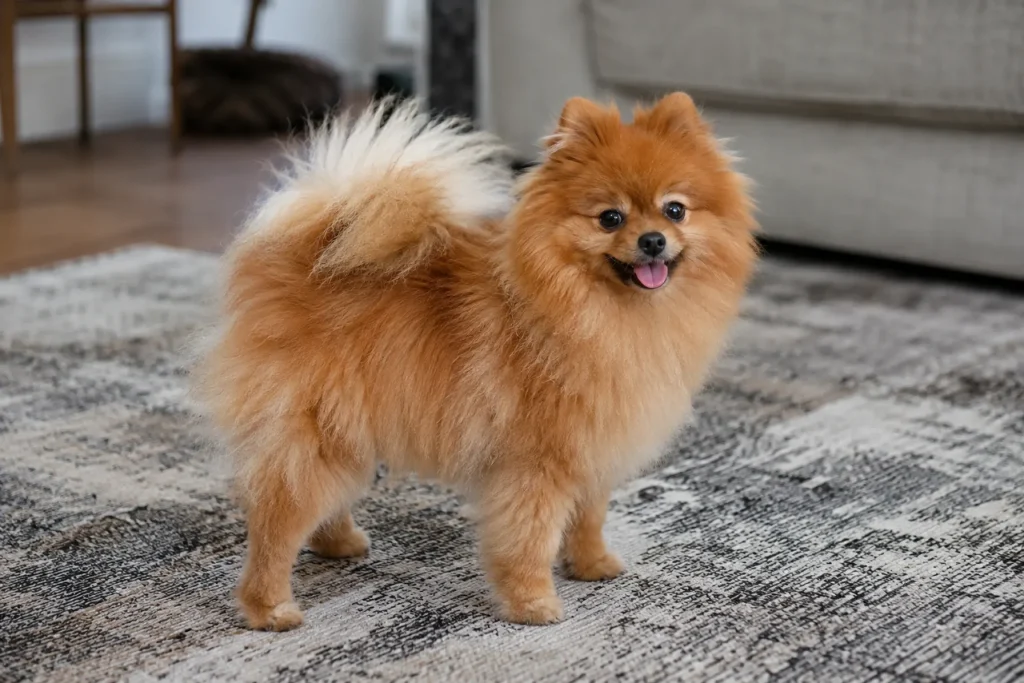
The fox cut keeps the full coat and the breed’s natural shape. The groomer rounds the feet, trims the ears to small, neat points and evens out stray hairs, so the face and body look fox-like. It is the easiest style to keep up and the gentlest on the coat.
Teddy Bear Cut
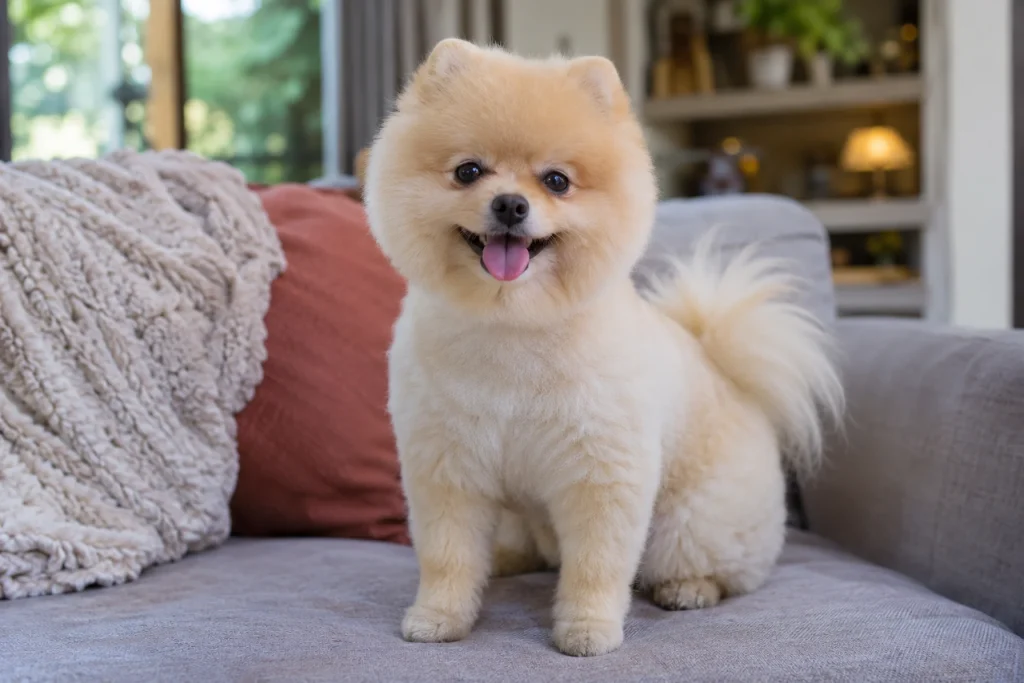
The teddy bear cut rounds the head and face and trims the body coat shorter and even, so your Pom looks like a plush toy. Ask for it to be scissored, or cut with long guards, and for enough coat to be left to cover the skin fully. Shorter hair still tangles, so keep brushing at least twice a week.
Boo Cut
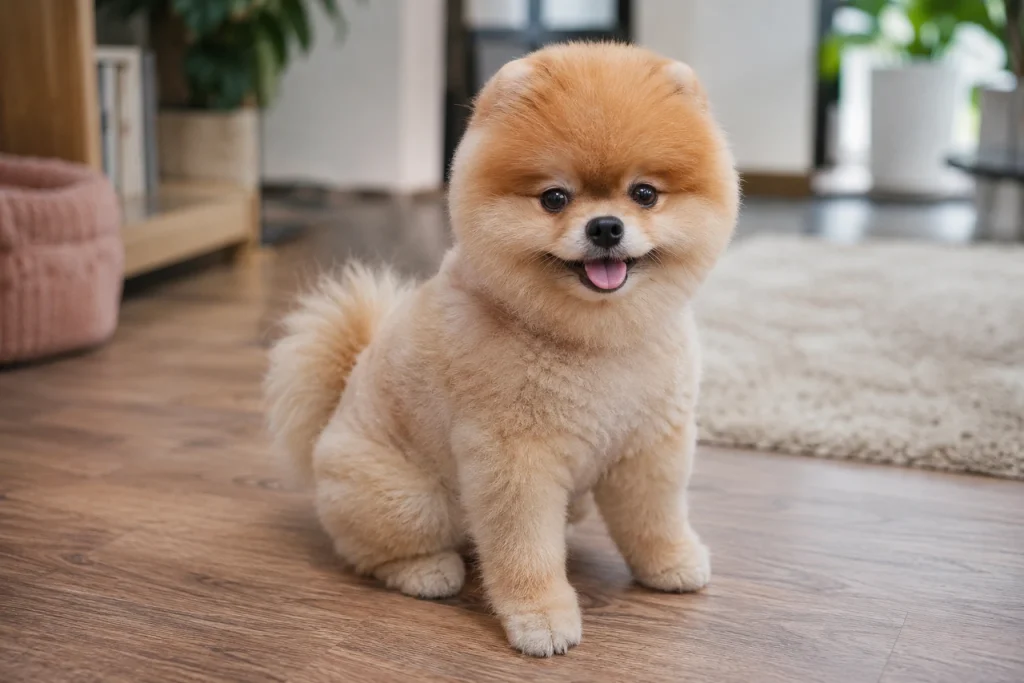
The boo cut is a short, round, all-over version of the teddy bear look. Because it takes the body coat short, it carries some of the same risks as shaving. If you love the look, ask for the longest version your groomer can do with scissors.
Lion Cut
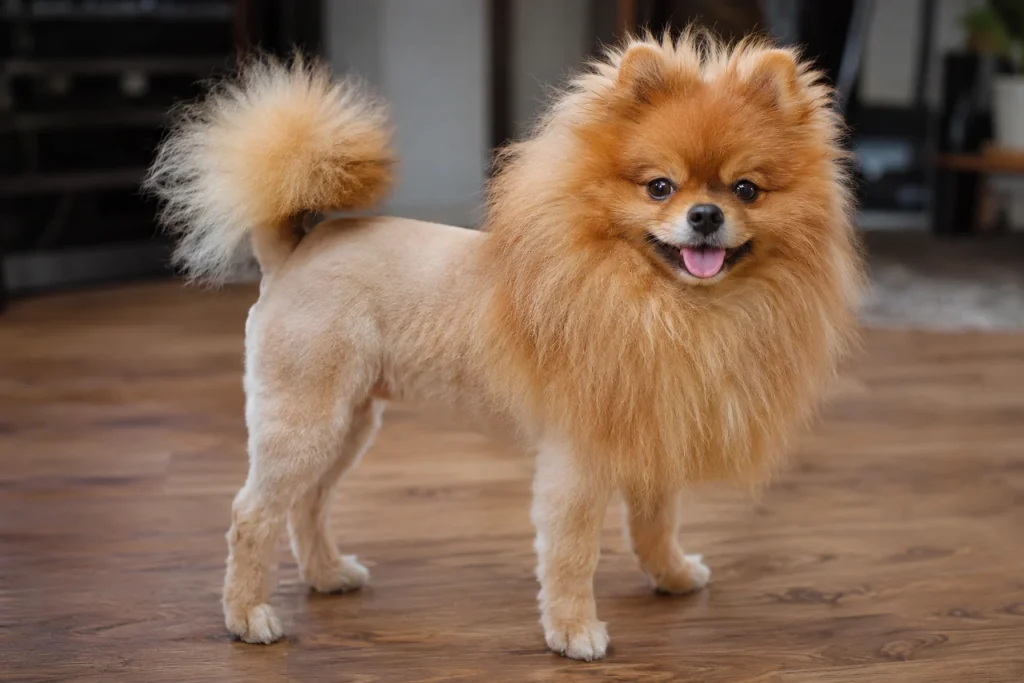
The lion cut clips the body close and leaves a mane around the head and chest and a tuft on the tail. It removes the coat down near the skin, so it carries all the risks in the next section and is the style most likely to grow back patchy. We do not recommend it for Pomeranians.
Should You Shave a Pomeranian?
No, unless a vet or groomer has to remove a coat so matted that the skin underneath cannot dry. Shaving a double coat does not keep a Pom cooler. The coat insulates against heat as well as cold and protects the skin from sunburn, and shaving does not stop shedding.
A shaved coat can also grow back badly. The undercoat grows faster than the outer guard hairs and can crowd them out, leaving a fuzzy, uneven coat. In some dogs the hair fails to regrow normally after clipping. Regrowth usually takes 3 to 4 months, but in some dogs it takes 12 to 24 months, and thick-coated breeds are affected more often.
To keep a Pom comfortable in summer, brush out the loose undercoat so air can move through the coat, offer shade and fresh water, and walk in the coolest part of the day. Our guide to small dog heat safety has more summer tips.
Pomeranian Hair Loss, Bald Patches and Skin Problems
Check the skin every time you brush. See your vet if you find redness, rashes, scabs, flaking, a strong smell, constant scratching, or patches of thin or missing hair.
Pomeranians are one of the breeds most often affected by alopecia X, sometimes called black skin disease. It causes hair loss on both sides of the body, usually starting on the flanks and areas where the coat rubs, then spreading to the neck, trunk, tail and thighs. The bare skin often darkens, while the head and lower legs are usually spared. It typically starts in young adulthood and is not painful, itchy or contagious.
Thyroid problems, Cushing’s disease and other conditions can look similar, so your vet has to rule them out before diagnosing alopecia X. Do not try to treat hair loss at home, and do not shave the coat to “reset” it. Read more about breed health in our Pomeranian lifespan and health guide.
Coat looking thin or patchy? Grooming cannot fix a coat problem that starts inside the body. Book a vet check, then read our Pomeranian lifespan and health guide to learn which conditions affect the breed and the early signs to watch for.
Grooming at Home vs a Professional Groomer
Most Pom owners handle brushing, nails and teeth at home and book a groomer for full baths, styling trims and tidy-ups. A groomer is the better choice for:
- Tight or large mats
- A first haircut or any style that needs clippers
- A dog that panics during nail trims
- A heavy shed you cannot keep up with
Choose a groomer who works with double-coated breeds, ask how they dry small dogs, and say clearly that you do not want the coat shaved. Prices vary a lot by town and country, in the UK, Canada and Australia as much as in the US, so ask for a quote that covers bath, dry, trim, nails and ears.
Pomeranian Grooming FAQ
Do Pomeranians shed a lot?
Yes. Pomeranians shed more than most toy breeds because of their thick double coat. Expect light shedding all year and heavier sheds, often in spring and fall, when the undercoat comes out in clumps. Brushing at least twice a week with a slicker brush and a comb, and more often during a shed, keeps loose hair off your floors and prevents mats.
Are Pomeranians hypoallergenic?
No. No dog breed is 100% hypoallergenic, and the Pomeranian is not on the American Kennel Club’s list of breeds often suggested for allergy sufferers. Most dog allergies come from dander that clings to shed hair, and Poms shed a fair amount. If you have allergies, spend time around a Pom before you decide, and compare breeds in our small dog breeds directory.
Should I give my Pomeranian a haircut?
Your Pom does not need one. The natural coat only needs regular brushing and a light tidy of the feet, ears and hygiene area. A trim is fine if you prefer a neater or teddy bear look, as long as it is done with scissors or long clipper guards and the undercoat stays in place. Avoid shaving, which can leave the coat patchy for months.
What is the best haircut for a Pomeranian?
For most Pomeranians, the best haircut is a light natural trim, often called a fox cut, that keeps the full double coat. It protects the skin, keeps the breed’s shape and is the easiest to maintain. If you want a rounder look, a teddy bear cut that leaves enough coat to cover the skin is the next safest choice. Skip the lion cut.
What is a Pomeranian fox cut?
A fox cut is a natural-looking trim that keeps the coat full while tidying the outline. The groomer rounds the feet, trims the ears to small, neat points and evens out stray hairs, so the face and body keep a fox-like shape. It needs the least upkeep of any Pom style and is the gentlest on the coat.
Are teddy bear cuts good for Pomeranians?
They can be, if done with care. A teddy bear cut rounds the face and shortens the body coat evenly. Ask your groomer to scissor it, or use long guards, and to leave enough coat to cover the skin. The shorter the cut, the higher the risk that the coat grows back unevenly. Keep brushing, because short hair still tangles.
Can you shave a Pomeranian?
You can, but you should not unless a vet or groomer has to remove a badly matted coat. Shaving does not keep a Pom cooler, removes the coat’s sun protection and does not reduce shedding. The hair can grow back fuzzy or patchy. It usually returns within 3 to 4 months, but in some dogs it takes 12 to 24 months.
How often should you bathe a Pomeranian?
Bathe a Pomeranian only when it is dirty or starts to smell. Frequent baths strip natural oils and dry out the skin and coat. Brush out every tangle first, use a gentle dog shampoo, rinse until the water runs clear, and dry the coat fully on a cool or low setting while brushing. Never leave the undercoat to air dry while damp.
How often should a Pomeranian be groomed?
Brush a Pomeranian at least twice a week, trim the nails about once a month and brush the teeth daily or every other day. Check the ears, eyes and skin at each brushing session, and bathe only when needed. Book a groomer when the coat needs a tidy, you want a styled trim, or mats get ahead of you.
Why is my Pomeranian losing hair?
Some hair loss is normal during a shed, but bald patches, thinning on both sides of the body or darkening skin need a vet check. Pomeranians are prone to alopecia X, a condition that causes hair loss without itching. Thyroid problems, Cushing’s disease and other conditions can look similar, so your vet needs to find the cause before any treatment starts.
More Pomeranian Care Guides
A well-groomed coat is one part of keeping a Pom healthy. Keep going with these guides:
- Pomeranian breed overview: size, colors, temperament and whether the breed suits your home
- Pomeranian lifespan and health: common health problems and what to watch for
- How to train a Pomeranian: handling, house training and good manners
- Small dog breeds directory: compare the Pom with other tiny breeds