

Home › Breeds › Miniature Dachshund › Grooming
How to Groom a Dachshund: Short-Haired, Long-Haired and Wire Coats
How you groom a Dachshund depends on the coat. A short-haired (smooth) Dachshund needs a quick brush about once a week, while long-haired and wire-haired Dachshunds need brushing more than once a week, plus light trims or hand-stripping. All three coats shed moderately, none is hypoallergenic, and every Dachshund needs nail trims about once a month, weekly ear checks and teeth brushing a few times a week.
This guide gives you a routine for each coat, a weekly schedule, and the safe way to handle a long-backed dog on the grooming table. For size, temperament and care basics, see our Miniature Dachshund breed guide.
Dachshund Coat Types Explained
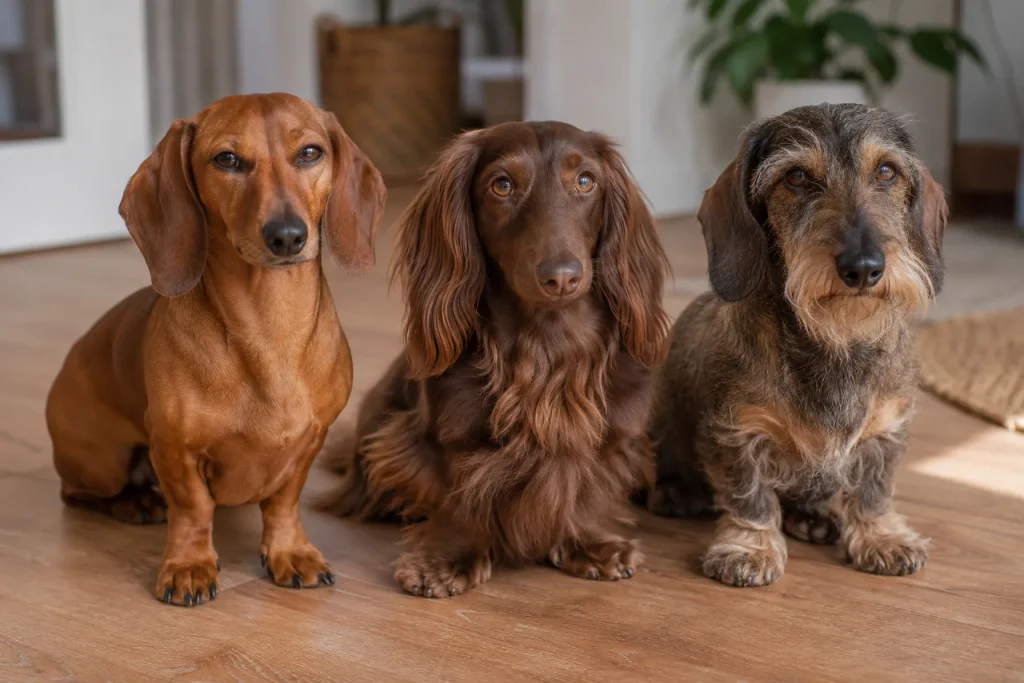
Miniature and standard Dachshunds both come in three coats: smooth (short-haired), long-haired and wire-haired. The coat, not the size, decides how much grooming your dog needs. In the UK, the Royal Kennel Club treats each size and coat as its own variety, so you will see six Dachshund breed listings there.
| Coat | How it looks and feels | Brushing | Extra care |
|---|---|---|---|
| Smooth (short-haired) | Short, sleek and shiny, close to the body | About once a week | Very little: nails, ears, teeth |
| Long-haired | Soft, silky, with longer feathering on ears, chest, legs and tail | More than once a week | Tidy trims on feet, ears and the sanitary area |
| Wire-haired | Harsh, wiry outer coat over a softer undercoat, with a beard and eyebrows | More than once a week | Hand-stripping or clipping to keep the coat tidy |
Do Dachshunds Shed?
Yes. Dachshunds shed moderately, and all three coat types shed. What changes is how you notice it. Short, stiff hairs from a smooth Dachshund work into fabric and show on dark clothes. Long-haired Dachshunds drop longer, softer hairs that collect in tufts and in the dog’s own feathering. Wire-haired Dachshunds hold dead hair in the coat until it is brushed or stripped out.
Regular brushing is the best way to keep hair off your sofa, because it catches loose hair before it falls. If your Dachshund suddenly sheds far more than usual, or you see bald patches, flaky or red skin, or constant scratching, book a vet visit. Ask your vet before adding coat supplements, and keep your dog at a healthy weight with a complete diet.
Grooming a Smooth (Short-Haired) Dachshund
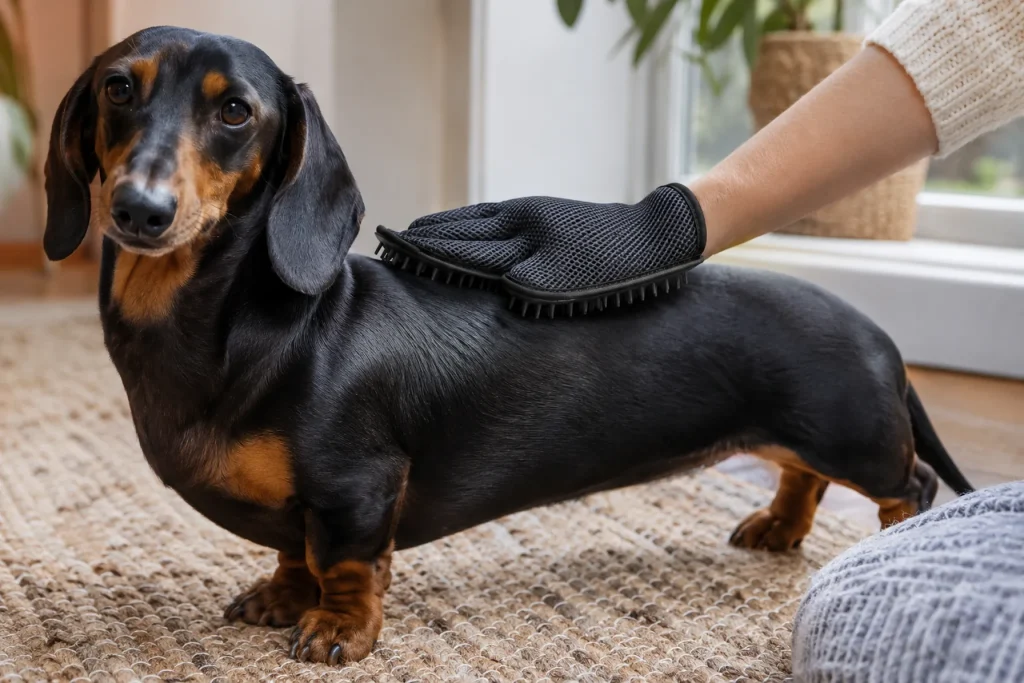
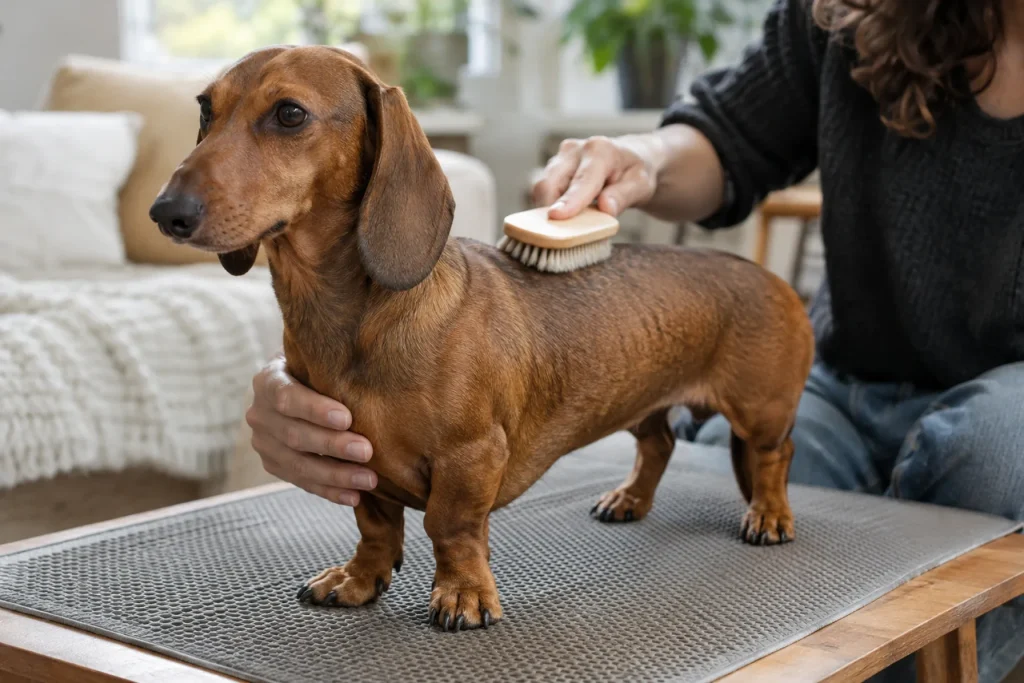
A smooth, short-haired Dachshund is the easiest coat to care for. Once a week, brush in the direction the hair grows with a soft bristle brush or a rubber grooming mitt. It takes five minutes, lifts dead hair and spreads the skin’s natural oils, so the coat stays glossy.
- Brush weekly, a little more often when you see more hair around the house.
- Check the skin while you brush. Short coats show scabs, lumps and flaky patches early.
- Dry the coat well after a bath or a wet walk.
Grooming a Long-Haired Dachshund
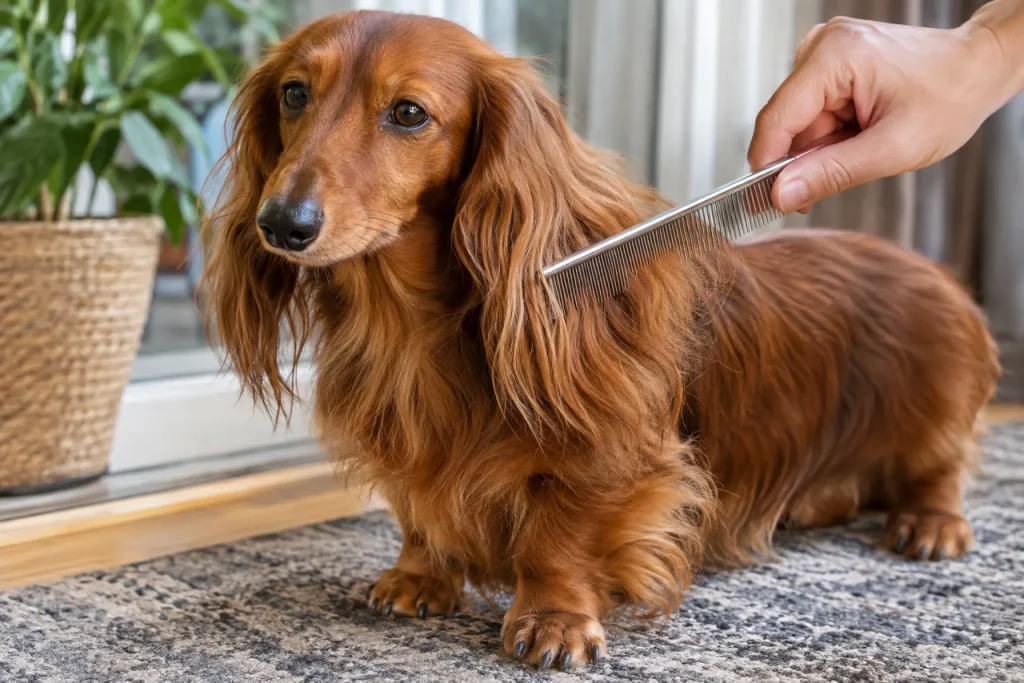
A long-haired Dachshund has a soft, silky coat that tangles in the same places every time: behind the ears, in the armpits, on the chest, the belly, the back of the legs and the tail. Brush more than once a week, and daily if your dog walks through long grass or wet ground.
- Start with a pin brush or slicker brush and work in sections, from the skin outwards, in the direction of growth.
- Go over the same areas with a metal comb. If the comb catches, there is a knot left.
- Tease small knots apart with your fingers or the end of the comb. Never cut a mat close to the skin with scissors; ask a groomer to remove large mats.
- Brush the whole coat before every bath. Water tightens tangles into mats.
Trims for a Long-Haired Dachshund
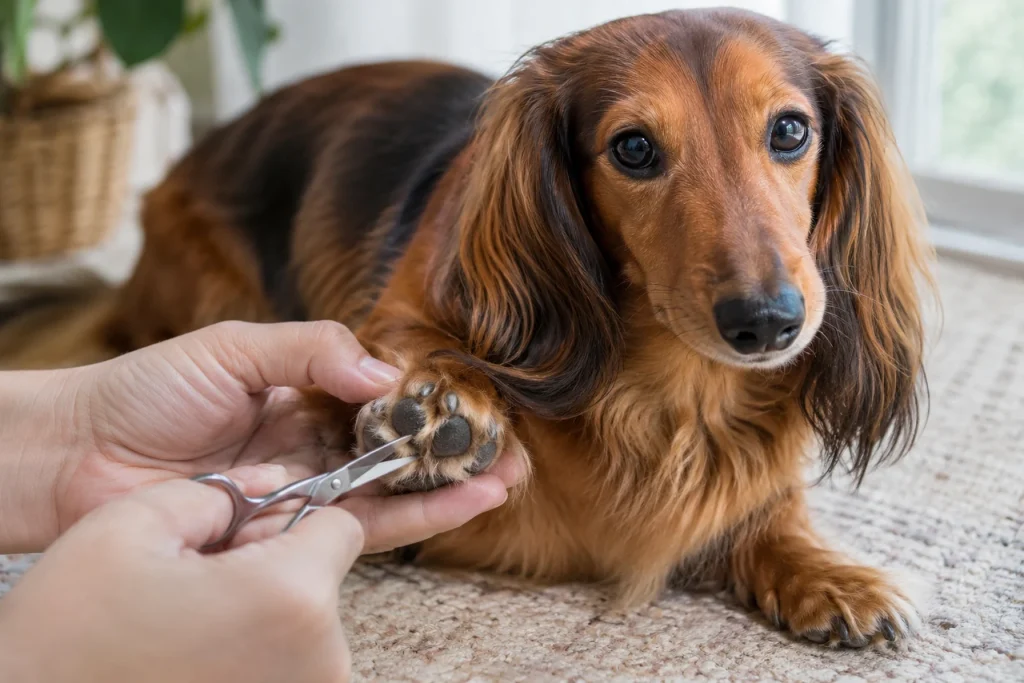
Long-haired Dachshunds do not need a full haircut. A few small trims keep them clean and comfortable:
- Feet: trim the hair under the feet level with the pads, so your dog does not slip and does not carry in mud.
- Ears: trim hair growing under the ear and any hair sticking out of the ear canal, so air can circulate.
- Sanitary area: trim long hair around the bottom to keep it clean.
We do not recommend shaving a long-haired Dachshund. Tidy trims every few weeks keep the coat practical, and a groomer can do them if you are not confident with scissors.
Grooming a Wire-Haired Dachshund
A wire-haired Dachshund has a harsh, wiry outer coat over a softer undercoat, plus a beard and bushy eyebrows. Brush more than once a week with a slicker brush, then a comb, paying attention to the beard, which catches food and water. Wipe the beard after meals so it stays clean and does not smell.
Hand-Stripping or Clipping?
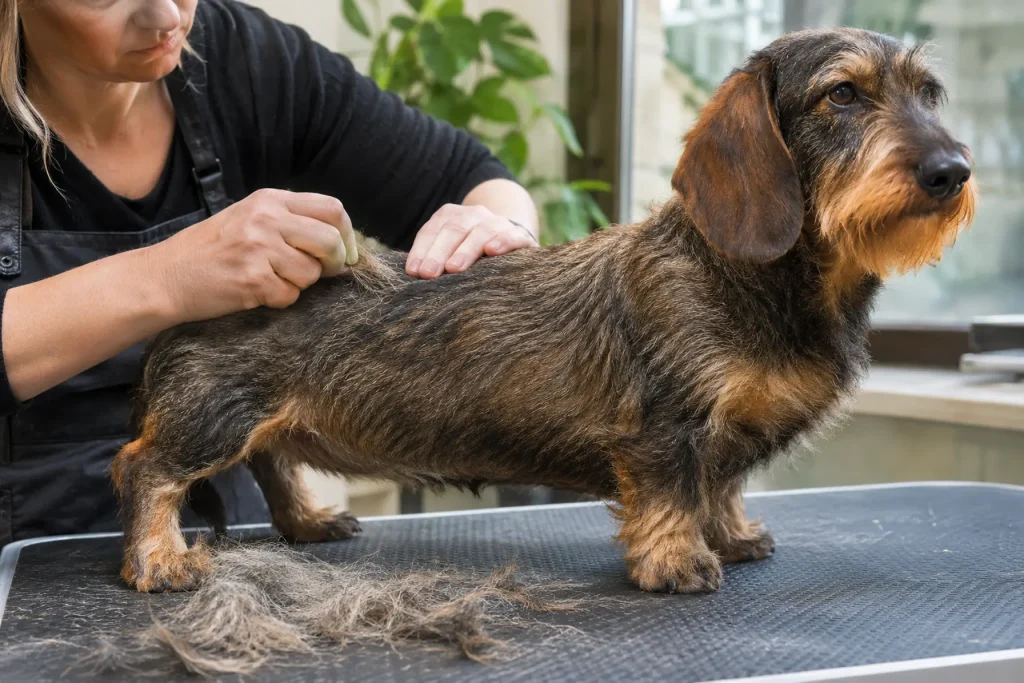
The wire coat does not shed out on its own the way other coats do. Dead hair stays in the coat until it is removed, so the coat looks shaggy and open. There are two ways to deal with it:
- Hand-stripping: the dead hairs are plucked out by hand or with a stripping knife, always in the direction of growth. This keeps the coat’s harsh texture and color. Most dogs accept it on the body, but an untrained strip can hurt, so book a groomer who offers hand-stripping. Between full strips, plucking the longest hairs about once a week keeps the coat neat.
- Clipping: faster and cheaper, and fine for many pet Dachshunds. It does soften the coat and can change its color over time. Many groomers use a #7 blade (leaves about 1/4 inch, 6 mm) or a #5 blade (about 1/2 inch, 13 mm) on the body.
Either choice is fine for a pet. If you want the classic wiry look, choose hand-stripping. Trim the eyebrows and beard with scissors, and keep the hair under the feet level with the pads.
Bath Time and a Simple Grooming Schedule
Dachshunds have little body odor, so most only need a bath when they are dirty or start to smell. Bathing too often dries the skin. Use a shampoo made for dogs, never a human shampoo, and ask your vet for a medicated one if your dog has itchy or flaky skin.
- Brush the whole coat first to remove loose hair and tangles.
- Put a non-slip rubber mat in the tub or sink, and use lukewarm water.
- Wet the coat, lather, and keep water and shampoo out of the eyes and ears. Use a damp cloth for the face.
- Rinse until the water runs clear. Leftover shampoo causes itching and flaking.
- Towel dry, then dry the coat fully. Long-haired coats need brushing straight as they dry. Dry inside each ear flap.
- Never bathe your dog outdoors in cool or cold weather.
| Task | Smooth (short-haired) | Long-haired and wire-haired |
|---|---|---|
| Brushing | About once a week | More than once a week |
| Combing for knots | Not needed | With every brushing |
| Trims or stripping | Not needed | Long-haired: tidy trims every few weeks. Wire-haired: stripping or clipping as the coat grows |
| Ear check and wipe | Weekly | Weekly |
| Teeth brushing | A few times a week, daily is best | A few times a week, daily is best |
| Nail trims | About once a month | About once a month |
| Baths | When dirty or smelly | When dirty or smelly, always brushed out first |
Dachshund Grooming Tools: What to Look For
You do not need a full grooming kit. Buy for your dog’s coat, in a size that fits a small dog:
- Smooth coat: a soft bristle brush or a rubber grooming mitt.
- Long-haired coat: a pin brush or slicker brush with gentle tips, and a metal comb with fine and wide teeth.
- Wire-haired coat: a slicker brush, a metal comb, and small scissors for the beard and eyebrows. Leave stripping knives to a trained groomer until you have been shown how to use one.
- Every coat: guillotine-style or scissor-style nail clippers sized for small dogs (or a quiet nail grinder), styptic powder, a dog shampoo, a dog toothbrush and dog toothpaste, and a non-slip mat.
For harnesses, beds and toys sized for a Dachshund, see our small dog gear guides.
Nails, Ears and Teeth
Nails. Trim your Dachshund’s nails about once a month. If you hear clicking on hard floors, they are too long. Long nails change how a dog stands and walks, which matters for a breed with a long back.
- Hold the paw gently and press the toe pad to push the nail forward.
- In pale nails, you can see the pink quick. Cut just in front of it.
- In dark nails, take tiny slices of 1 to 2 mm at a time and stop where the nail starts to curve.
- Do not forget the dewclaws, which never touch the ground and can grow into the pad.
- If a nail bleeds, press styptic powder onto the tip. Cornstarch or flour work if you have nothing else.
Ears. Dachshund ears hang down and trap warmth and moisture. Once a week, look inside and wipe the inside of the flap with a soft cloth or cotton pad and a vet-approved ear cleaner. Do not push cotton swabs into the ear canal. Redness, a bad smell, discharge or head shaking mean a vet visit, not more cleaning.
Teeth. Small dogs build up tartar fast. Brush a few times a week, daily if you can, with a dog toothbrush and dog toothpaste (human toothpaste is not safe for dogs). Your vet can check the teeth at each visit and advise on a professional clean.
Are Dachshunds Hypoallergenic?
No. Dachshunds are not a hypoallergenic breed, and no coat type is. In fact, no dog breed is 100% hypoallergenic. The allergens come from dander (skin flakes) and saliva, not only from hair, so a dog that sheds less can still trigger allergies.
If someone in your home has dog allergies, these steps help:
- Spend time with Dachshunds before you commit. People react differently to different dogs.
- Brush outdoors, or ask a non-allergic family member to do it.
- Bathe the dog when needed and wipe the feet and belly after walks.
- Vacuum often, use air filters, and keep the dog out of the bedroom.
Talk to your doctor about allergies before bringing a dog home.
Grooming Safely With a Long Back
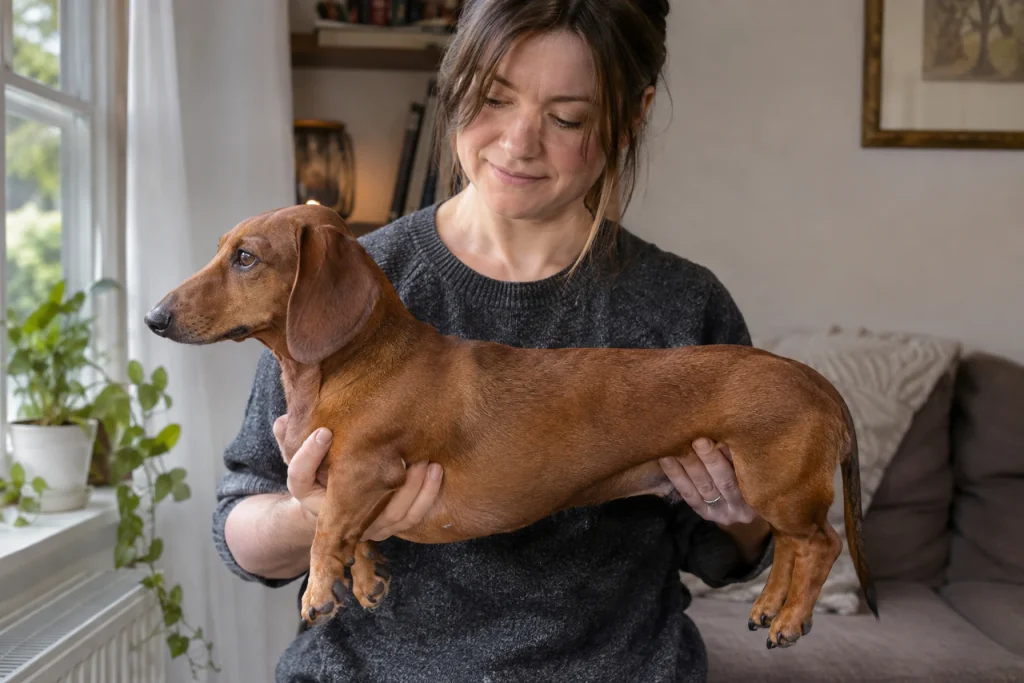
Back problems are the biggest health concern in Dachshunds, so how you lift and hold your dog matters as much as the brush you use. Learn more in our Dachshund breed guide and our guide to Dachshund lifespan and health.
- Lift with one hand under the chest and one under the hindquarters, keeping the spine level. Never lift by the front legs or let the back end hang.
- Groom on the floor, or on a low table with a non-slip mat, and never let your dog jump down.
- Keep sessions short and calm, with treats and praise. Do one paw or one side at a time if your dog gets restless.
- Use dog-specific products only. Human shampoos and creams can irritate a dog’s skin.
- If your dog cries out when lifted, hunches, or walks unsteadily, stop grooming and call your vet.
Long-haired and wire-haired Dachshunds benefit from a visit to a professional groomer every few months for mats, trims or stripping.
Dachshund Shedding and Grooming FAQ
Do mini Dachshunds shed a lot?
Miniature Dachshunds shed a moderate amount, the same as standard Dachshunds of the same coat. Size does not change shedding; the coat does. Short-haired hairs stick to fabric, long-haired hairs collect in tufts, and wire-haired coats hold dead hair until it is brushed or stripped. Brushing several times a week keeps most of it off your furniture.
Do long-haired Dachshunds shed?
Yes. Long-haired Dachshunds shed moderately, and their longer hairs are easy to see on floors and furniture. Brushing more than once a week with a pin or slicker brush, followed by a metal comb, removes loose hair before it falls and stops it forming mats behind the ears and in the armpits.
Which Dachshund coat sheds the least?
No Dachshund coat is shed-free, and all three shed moderately. The difference is in what you see. A wire-haired coat holds dead hair until it is stripped, so you see less on the floor. Short-haired hair is short but sticks to fabric. If allergies are the concern, coat type will not solve them; see the allergy section above.
Are Dachshunds hypoallergenic?
No. No Dachshund coat type is hypoallergenic, and no dog breed is 100% allergen-free. Allergens come from dander and saliva as well as hair. People with mild allergies sometimes manage with regular baths, brushing outdoors, air filters and a dog-free bedroom, but spend time with a Dachshund before you commit.
Do long-haired Dachshunds smell?
Not usually. Dachshunds have little body odor, and a clean, brushed long coat should not smell. A bad smell usually comes from the ears, the teeth, damp or matted fur, or the skin. Dry the coat fully after baths and walks in the rain, and see your vet if the smell comes back quickly after a bath.
How often should you brush a long-haired Dachshund?
Brush a long-haired Dachshund more than once a week, and daily after muddy or grassy walks. Work through the coat in sections with a pin or slicker brush, then check with a metal comb. Focus on behind the ears, the armpits, the chest and the tail, where mats form first.
Do wire-haired Dachshunds need stripping?
They do not need it, but it keeps the coat at its best. Hand-stripping removes dead hair and keeps the harsh texture and color. Clipping is faster and fine for a pet, but it softens the coat over time. Choose a groomer trained in hand-stripping, because a poorly done strip can hurt.
Can you shave a long-haired Dachshund?
We do not recommend it. A long-haired Dachshund does not need a full haircut, only tidy trims on the feet, around the ears and the sanitary area. Shaving removes the coat’s natural look and does not stop shedding. If the coat is badly matted, a groomer may need to clip it short; then return to regular brushing.
How often should you bathe a Dachshund?
Bathe a Dachshund only when it is dirty or starts to smell. The breed has little body odor, and frequent baths dry the skin. Use a dog shampoo, brush the coat out first, rinse thoroughly and dry completely. Ask your vet about a schedule if your dog has a skin condition.
A good grooming routine takes a few minutes most days and keeps you close to your dog’s skin, ears and teeth, so you notice problems early. Next, read our Dachshund lifespan and health guide or compare other small dog breeds.