

Chinese Crested Dog: Breed Guide, Size, Temperament and Care
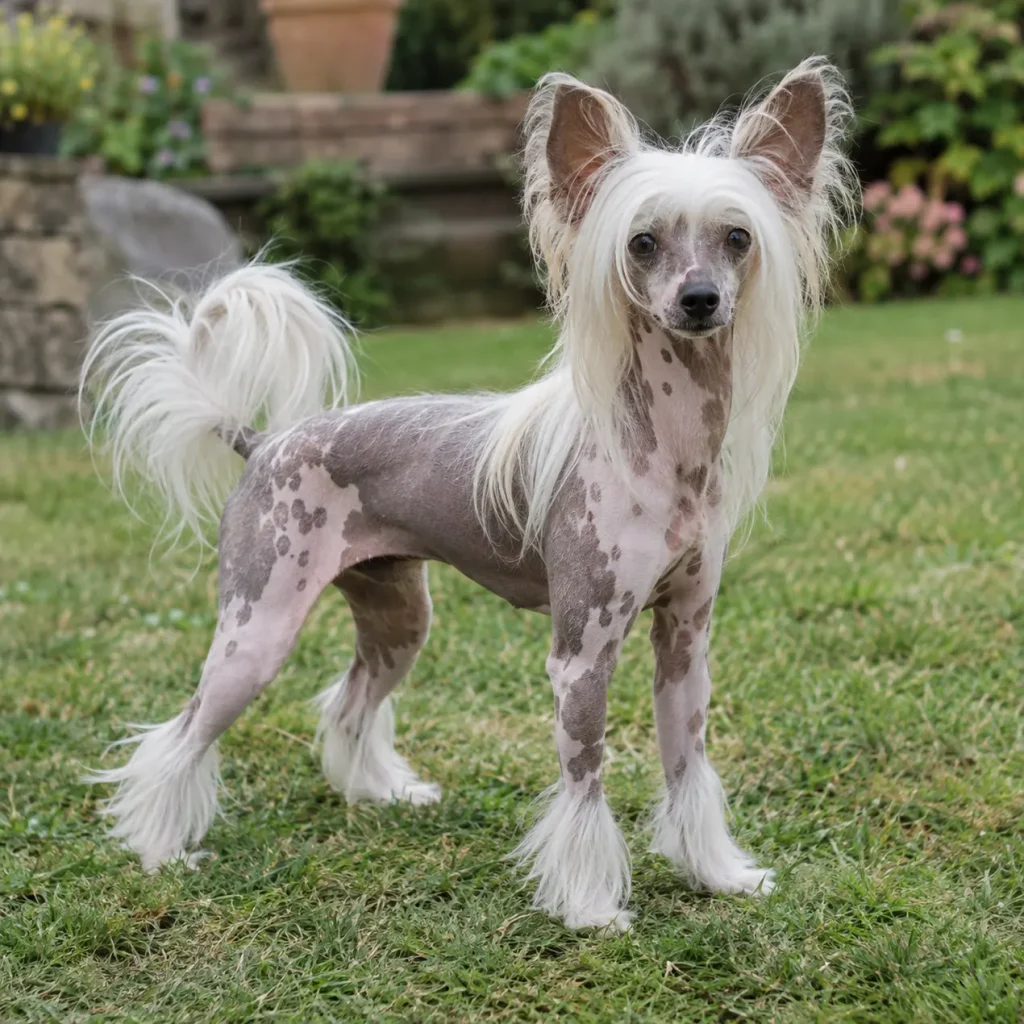
The Chinese Crested dog is a toy breed that usually weighs 8 to 12 lb (3.6 to 5.4 kg) and stands 9 to 13 inches (23 to 33 cm) at the shoulder. It comes in two coat types, the Hairless and the fully coated Powderpuff, and often lives 12 to 18 years. Expect an affectionate, playful lap dog that bonds closely with its people and needs regular skin, dental and weather care.
Comparing tiny breeds? See all small dog breeds in our breed directory.
Chinese Crested quick facts
| Fact | Chinese Crested |
|---|---|
| Size group | Toy breed |
| Weight | Usually 8 to 12 lb (3.6 to 5.4 kg). The UK breed standard says no more than 12 lb (5.4 kg) |
| Height at the shoulder | 9 to 13 in (23 to 33 cm). UK standard: males 11 to 13 in (28 to 33 cm), females 9 to 12 in (23 to 30 cm) |
| Lifespan | About 12 to 18 years |
| Coat types | Hairless (hair on head, tail and feet) and Powderpuff (full soft coat) |
| Shedding | Low. Hairless dogs shed very little; Powderpuffs shed lightly |
| Exercise | About 20 to 30 minutes a day, plus play |
| Temperament | Affectionate, playful, alert, people-focused |
| Key health checks | DNA tests for primary lens luxation (PLL) and progressive retinal atrophy (prcd-PRA); knees; teeth; skin |
| Best for | Homes where someone is around most of the day, apartments, adults and older children |
Hairless vs Powderpuff: what is the difference?
Hairless and Powderpuff Chinese Cresteds are the same breed. Both types can be born in the same litter, because the hairless look comes from a single dominant gene. A puppy with two copies of that gene does not survive, so breeders need Powderpuffs to keep the breed healthy.
- Hairless: soft, smooth skin over most of the body, with hair on the head (the crest), the tail (the plume) and the feet (the socks). Some Hairless dogs grow more body hair than others; these are still Hairless dogs, not mixes.
- Powderpuff: a full coat of soft, long hair over a light undercoat.
- Teeth: Hairless dogs often have crooked or missing teeth, so dental care matters even more for them.
- Care: Hairless dogs need skin care and protection from sun and cold. Powderpuffs need brushing to stop mats.
Size, temperament and lifespan are the same for both types. Choose by the care you can give: skin care for a Hairless, coat care for a Powderpuff. Another hairless breed that comes in small sizes is the Peruvian Inca Orchid.
Temperament, energy and family fit
Chinese Cresteds are affectionate, playful and alert. Most want to be close to their people all day, on a lap or under a blanket next to you. With strangers they can be shy at first, so early socialization helps them grow into confident adults.
- Attachment: they bond closely and can struggle when left alone for long hours. They suit homes where someone is around most of the day.
- Barking: most are not heavy barkers, but they will alert you to visitors.
- Playfulness: many keep a clownish, puppy-like streak into old age and enjoy short games and learning tricks.
With children and other pets
A Chinese Crested can be a lovely family dog in a calm home with older children who handle it gently. The fine-boned body is easy to injure if the dog is dropped or squeezed, so always supervise toddlers and teach children to sit on the floor to cuddle. Most Cresteds get along with other gentle dogs and cats, especially when raised with them. Take care with large, boisterous dogs.

Exercise and daily routine
This is a low-exercise breed. About 20 to 30 minutes a day of short walks and play keeps most adults fit, and indoor games count on cold or very hot days. That makes the Chinese Crested a good fit for apartments, as long as it gets company and some daily activity.
Size, weight and appearance
Adult Chinese Cresteds usually weigh 8 to 12 lb (3.6 to 5.4 kg). The UK breed standard sets the top weight at 12 lb (5.4 kg) and gives a shoulder height of 11 to 13 inches (28 to 33 cm) for males and 9 to 12 inches (23 to 30 cm) for females. Hairless and Powderpuff dogs are the same size.
The breed is slender and fine-boned, with large upright ears and an alert expression. Breeders describe two body types: a racy, fine-boned “deer” type and a sturdier “cobby” type. Skin and coat come in many colors, and Hairless dogs often have spotted skin. If you like the slim, fine-boned look in a short-coated dog, compare the Italian Greyhound.
Are Chinese Crested dogs hypoallergenic?
No dog is 100% hypoallergenic, because the allergens come from skin, saliva and urine as well as hair. Chinese Cresteds shed very little, though, so many people with mild dog allergies cope better with them than with heavy shedders.
- A Hairless dog sheds almost no hair, but its skin still carries allergens and it needs frequent baths, which can help.
- A Powderpuff sheds lightly and needs regular brushing, which spreads some allergens unless someone else does it.
- Spend time with the dog you plan to bring home before you commit, and talk to your doctor if your allergies are severe.
Still weighing up your options? Our small dog breed directory compares size, coat and care for every tiny breed we cover, including another hairless breed, the Peruvian Inca Orchid.
Chinese Crested health and lifespan
Chinese Cresteds often live about 12 to 18 years, which is long for a dog. Good breeding, dental care, a healthy weight and regular vet checkups all help your dog reach the upper end of that range.
Conditions to know about:
- Eye disease: the breed has a higher rate of primary lens luxation (PLL), where the lens slips out of place, and can inherit progressive retinal atrophy (PRA), which leads to blindness. DNA tests exist for both, so ask a breeder for the parents’ results.
- Patellar luxation: the kneecap slips out of place. Watch for skipping or holding up a back leg.
- Dental disease: early tooth loss and gum disease are common, especially in Hairless dogs with crowded or missing teeth.
- Skin problems: Hairless dogs can get sunburn, dry skin, blackheads and acne.
- Deafness: some puppies are born deaf. A reputable breeder can have puppies’ hearing tested.
See your vet if you notice cloudy or red eyes, squinting, limping, bad breath, sore or broken skin, or any sudden change in energy or appetite. A sudden painful, red or cloudy eye can be an emergency, so call your vet the same day.
Grooming, bathing and skin care
Neither type is low effort. A Hairless dog needs skin care and a Powderpuff needs coat care, and both need daily attention to their teeth.
Hairless skin care
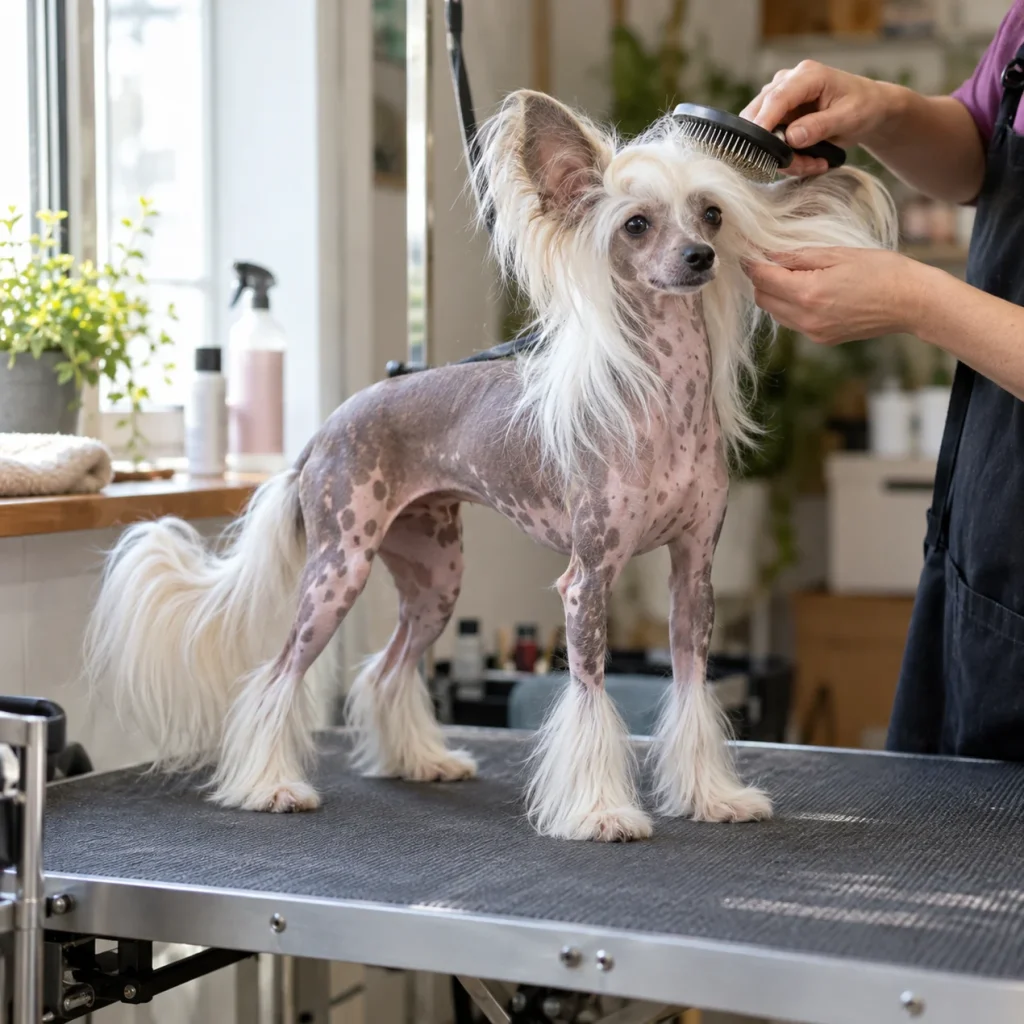
- Bathe often with a gentle, moisturizing dog shampoo, then rinse well. Ask your vet how often suits your dog’s skin.
- Use a dog-safe moisturizer if the skin gets dry.
- Do not squeeze blackheads or spots. This can cause infection and scarring. Ask your vet how to treat acne.
- Brush the crest, plume and socks gently a few times a week to stop tangles.
Powderpuff coat care
- Brush at least a few times a week with a pin or soft bristle brush to prevent painful mats.
- Bathe when the coat gets dirty and rinse out all shampoo.
- Many owners book a regular professional trim.
Sun, cold and heat
Bare skin burns, so use a sunscreen made for dogs on exposed skin, or a light shirt, before time outside in the sun. In cold or wet weather, both types need a sweater or coat, and Hairless dogs should not stay out long. Protect the breed from extremes of both heat and cold.
Teeth and nails
Brush your dog’s teeth every day with a dog toothpaste. Ask your vet to check the teeth at every visit. Trim the nails regularly with small-breed clippers, taking a little at a time, and keep styptic powder nearby in case you nick the quick.
Tiny Loving Canines may earn a commission when you buy through links on this page. It does not change what we recommend.
What to look for in Chinese Crested care products
- Sunscreen: made for dogs, fragrance-free, safe if licked.
- Shampoo and moisturizer: gentle, soap-free, made for sensitive dog skin.
- Harness: soft, padded, adjustable, with no rough seams.
- Dental kit: small-head or finger toothbrush and an enzymatic dog toothpaste.
- Sweater or coat: soft lining, covers the chest and belly, easy to wash.
Training, socialization and potty training
Chinese Cresteds are sensitive dogs that learn best with short, upbeat sessions, treats and praise. Harsh corrections make them anxious and slow training down. Keep sessions to a few minutes, end on a win, and be consistent with house rules.
Socialization
Because the breed can be shy, socialization matters more than for many dogs. Once your vet says it is safe, give your puppy calm, positive meetings with friendly people, gentle dogs and everyday sounds and places. Start in quiet spots, reward relaxed behavior and let your dog retreat if it is overwhelmed. A small puppy class with a reward-based trainer helps.
Practice short absences from the start, too. Leave for a few minutes, come back calmly, and build up slowly so your dog learns that being alone is safe.
Potty training
- Take your puppy out first thing in the morning, after meals, naps and play, and before bed.
- Use the same spot every time, outdoors or on an indoor pad in an apartment or in cold weather.
- Reward right away, within a few seconds of your dog finishing.
- If you catch an accident, calmly interrupt and take your dog to the spot. Never scold afterwards.
- Clean accidents with an enzyme cleaner so the smell does not draw your dog back.
A crate sized for your dog can help, because most dogs avoid soiling their bed. Keep crate time short at first.
Harness and leash
Use a soft, padded harness rather than a collar for walks, because the breed is small and Hairless skin rubs easily. Let your dog sniff the harness, reward it, then try it on indoors for short periods before the first walk.
Where the Chinese Crested comes from
Despite the name, there is no documented proof that the breed began in China. Hairless dogs appeared in several parts of the world, and genetic studies point to roots in the Americas, possibly Mexico. The modern breed was shaped in Europe and North America from the late 1800s, and the American Kennel Club recognized it in 1991.
The best-known Crested is Sam, a Hairless dog who won the World’s Ugliest Dog Contest three years running, from 2003 to 2005.
Find a Chinese Crested rescue or breeder
Tiny Loving Canines is not a rescue and does not rehome or sell dogs. This guide helps you find a dog through a shelter, a breed rescue or a responsible breeder.
Start with rescue. Adult Chinese Cresteds and Crested mixes do turn up in shelters and breed rescues. Search your local shelters and national breed rescues, and ask about the dog’s skin, teeth and how it copes alone. An adult rescue lets you see the finished size, coat and temperament.
If you buy a puppy, check the breeder:
- You can meet the mother, and ideally the father, in a clean home.
- The breeder shows DNA results for PLL and PRA for both parents, plus vet checks for knees and eyes.
- Puppies are not sent home too young, and each one has seen a vet before it leaves.
- The breeder asks you questions, gives a written contract and will take the dog back at any age.
Walk away from sellers who offer “teacup” or “micro” Cresteds, always have puppies ready, will not let you visit, or want a deposit before you have seen the puppy. These are common signs of puppy mills and online scams, and extra-tiny dogs carry more health risks.
Ready to look for your Chinese Crested? Check your local shelters and breed rescues first, and bring the breeder checklist above to every visit. Not sure yet? Browse more small dog breeds before you decide.
Chinese Crested FAQs
Do Chinese Crested dogs have health problems?
Chinese Cresteds are generally healthy and long-lived, but the breed has some known risks. The main ones are inherited eye diseases (primary lens luxation and progressive retinal atrophy), slipping kneecaps, dental disease and, in Hairless dogs, skin problems such as sunburn and acne. Choose a breeder who DNA tests for PLL and PRA, and keep up with dental care and vet checkups.
Are Chinese Cresteds high maintenance?
In grooming, yes, more than most toy breeds. Hairless dogs need frequent baths, moisturizer, sunscreen and coats in cold weather, while Powderpuffs need brushing a few times a week and regular trims. Both need daily tooth brushing. Exercise needs are low, about 20 to 30 minutes a day, and they want plenty of company.
Do Chinese Cresteds bark a lot?
Most Chinese Cresteds are not heavy barkers. They are alert and will usually bark when someone comes to the door, and a bored or lonely dog may bark more. Reward quiet behavior, give daily play and short training sessions, and avoid leaving the dog alone for long hours.
Is a Chinese Crested a good pet?
Yes, for the right home. A Chinese Crested is affectionate, playful and small enough for apartment life, and it suits adults, seniors and families with older, gentle children. It is a poor fit if the dog would be alone all day or if you cannot keep up with skin, coat and dental care. Compare it with other small dog breeds before you decide.
How big do Powderpuff Chinese Cresteds get?
Powderpuffs grow to the same size as Hairless Cresteds: usually 8 to 12 lb (3.6 to 5.4 kg) and 9 to 13 inches (23 to 33 cm) at the shoulder. Males tend to be a little taller than females. The full coat can make a Powderpuff look bigger than it is.
How long do Chinese Crested dogs live?
Chinese Cresteds often live about 12 to 18 years, and Powderpuffs have the same life expectancy as Hairless dogs. Good breeding, a healthy weight, daily tooth brushing and regular vet visits help your dog reach the upper end of that range.
Do Powderpuff Chinese Cresteds shed?
Yes, but only lightly. Powderpuffs have a soft, long coat that sheds less than many breeds, though it tangles easily. Brushing at least a few times a week removes loose hair and prevents mats. Hairless Cresteds shed very little from the crest, plume and socks.
Are Chinese Cresteds good for people with allergies?
They can be, but no dog is fully hypoallergenic. Chinese Cresteds shed very little, so some people with mild allergies react less to them. Allergens also come from skin and saliva, so a Hairless dog can still trigger symptoms. Spend time with the dog first, and ask your doctor if your allergies are severe.
Is a Chinese Crested a good dog for an apartment?
Yes. Chinese Cresteds are small, need only about 20 to 30 minutes of exercise a day and are not heavy barkers, so they adapt well to apartments. The bigger issue is company: they do best when someone is home for much of the day. Indoor play is useful on cold or very hot days.