

Home › Breeds › Miniature Poodle › Lifespan and Health
How Long Does a Miniature Poodle Live? Full-Grown Size, Weight and Health
A full-grown Miniature Poodle stands over 10 inches and up to 15 inches (25 to 38 cm) at the shoulder, weighs 10 to 15 lb (4.5 to 6.8 kg) and usually lives 10 to 18 years. It is the middle Poodle size: bigger than a Toy, much smaller than a Standard, with the same clever, people-focused nature and curly, low-allergen coat.
Below you will find size charts, growth notes, the health problems to watch for and the health tests to ask a breeder about. If your dog shows any of the signs described here, see your vet.
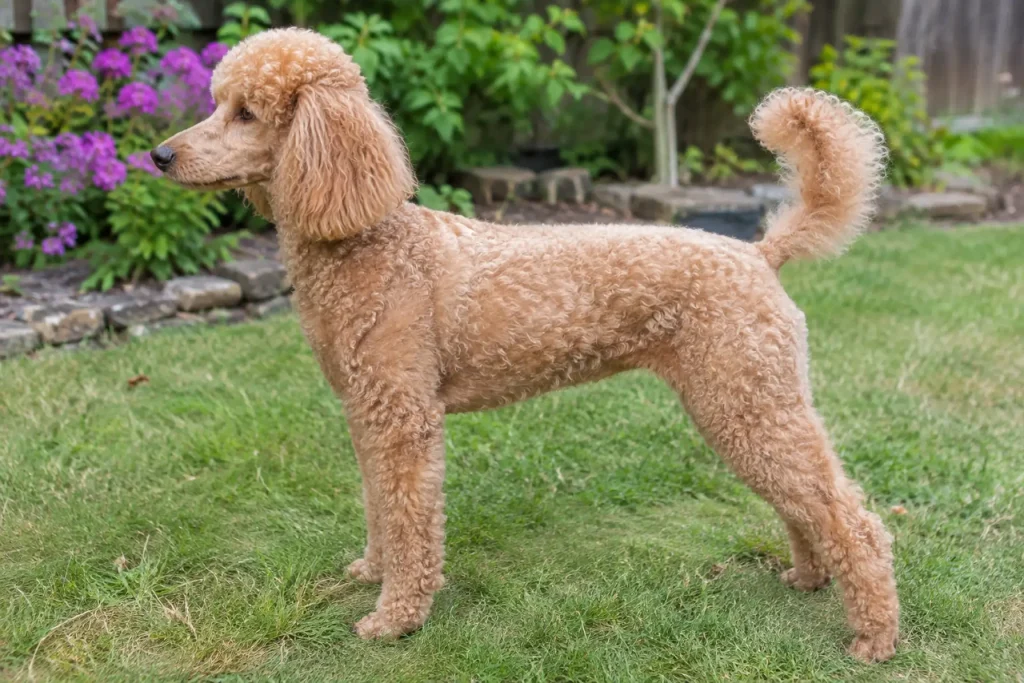
Miniature Poodle Size at a Glance
The key numbers for an adult Miniature Poodle, from the American Kennel Club (AKC) and the Royal Kennel Club (UK).
| Measure | Miniature Poodle |
|---|---|
| Height at the shoulder | Over 10 in, up to 15 in (25 to 38 cm) |
| Adult weight | 10 to 15 lb (4.5 to 6.8 kg), males and females |
| Full grown | About 12 months |
| Life expectancy | 10 to 18 years (AKC); over 12 years (Royal Kennel Club) |
| Daily exercise | Up to 1 hour (Royal Kennel Club) |
| Coat care | Daily brushing if the coat is kept long, plus regular clipping |
Full-Grown Miniature Poodle Weight and Height
Height, not weight, decides whether a Poodle is a Miniature. The AKC breed standard sets the Miniature at 15 inches or under at the highest point of the shoulders, and over 10 inches. A Poodle of 10 inches or less is a Toy, and one over 15 inches is a Standard.
Most adult Minis weigh 10 to 15 lb (4.5 to 6.8 kg). The AKC gives the same range for males and females. A tall dog with a long frame sits near the top of the range, and a short, fine-boned dog near the bottom. Both can be a healthy weight.
Owners in the UK, Canada and Australia will see weights in kilograms on vet records and food labels: 4.5 to 6.8 kg is the same 10 to 15 lb range.
How to Measure Your Poodle’s Height
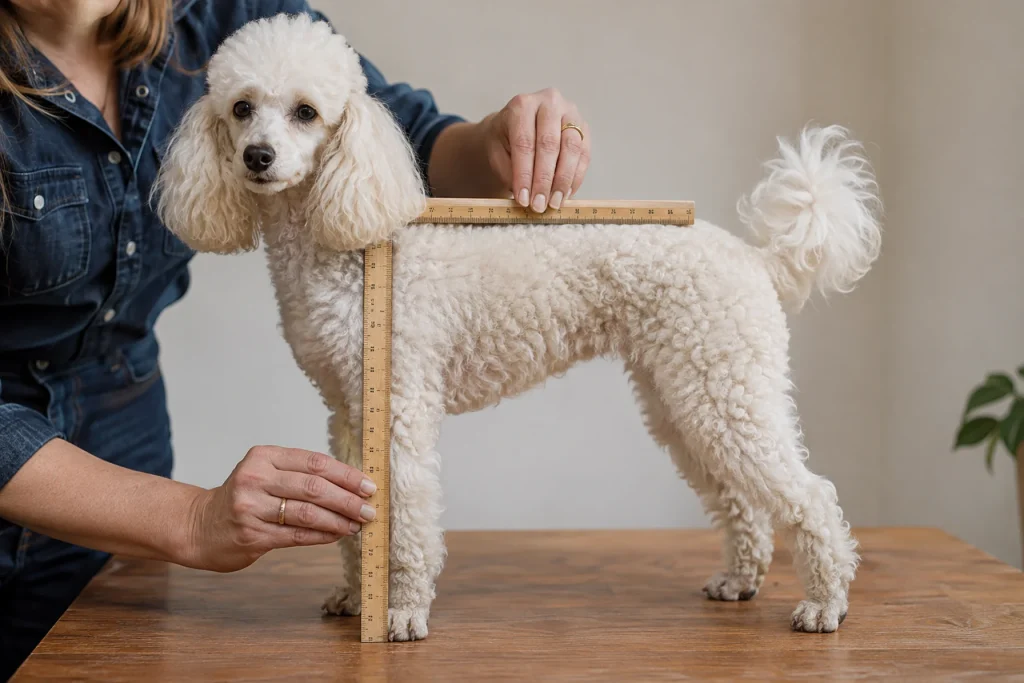
- Stand your dog on a flat, hard floor with all four feet square under the body.
- Find the withers, the highest point of the shoulder blades, just behind the neck.
- Lay a ruler or a book flat across the withers and measure straight down to the floor.
- Do not include the head, the neck or the topknot of hair. Press the coat down to reach the bone.
When Is a Miniature Poodle Full Grown?
A Miniature Poodle is about fully grown by its first birthday, according to the AKC. Toy Poodles finish growing on the same timeline, while Standard Poodles can take 15 to 24 months.
Puppies gain height fastest in the first months, then fill out. Weigh yours every two to four weeks and write the numbers down: steady gains matter more than any single figure. Sudden jumps, weight loss or a puppy that stays much smaller than its littermates are reasons to see your vet. Keep feeding a food made for puppies until your vet says it is time to switch.
Checking Body Condition at Any Age
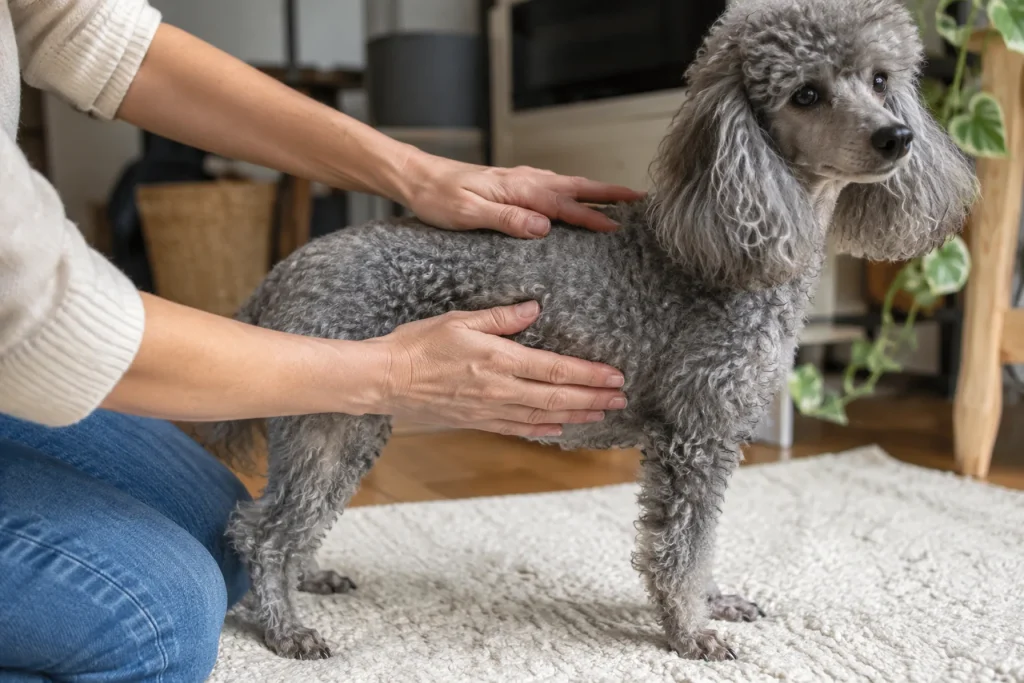
Run your hands along your dog’s sides. You should feel the ribs easily under a thin layer of fat, see a waist from above and a tuck behind the ribs from the side. A curly coat hides a lot, so feel rather than look, especially when the coat is long. Your vet can score body condition at every visit and tell you if your dog should gain or lose weight.
How Long Do Miniature Poodles Live?
Miniature Poodles usually live 10 to 18 years. That is the life expectancy the AKC gives for all three Poodle sizes, and the Royal Kennel Club in the UK lists the Miniature at over 12 years. Plan for a dog that will be with you for well over a decade.
Where your dog lands in that range depends on things you cannot change, such as its genes and whether its parents were health tested, and things you can: weight, teeth, exercise and vet care.
What Helps a Miniature Poodle Live Longer
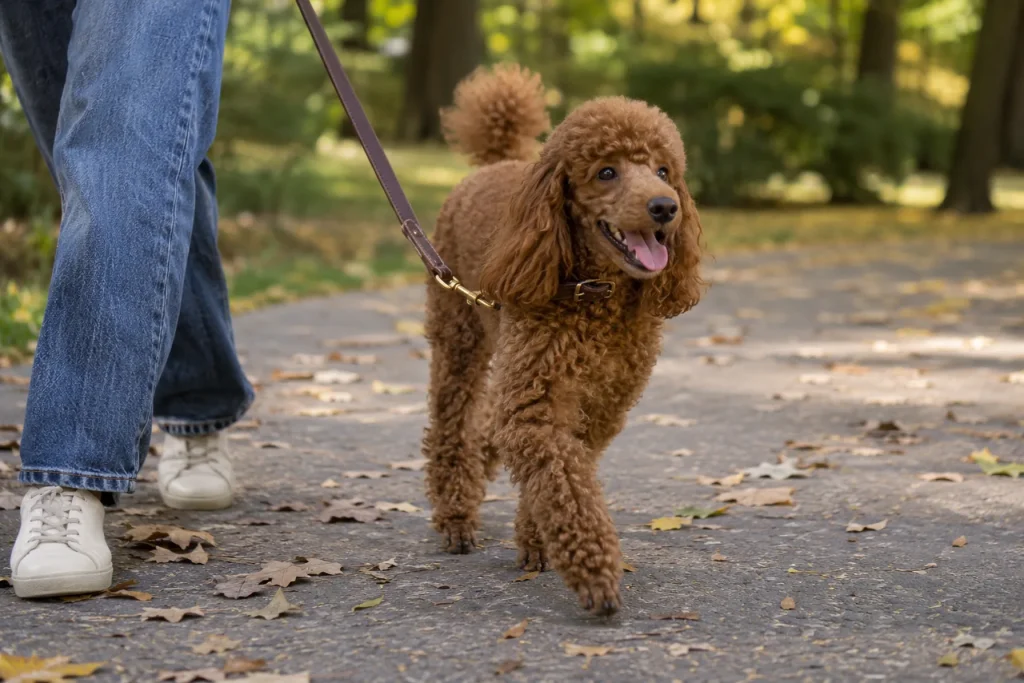
- Keep your dog lean. Extra weight strains small knees and hips. Measure meals and count treats as part of the daily food.
- Brush the teeth every day. Small breeds have more gum disease than large breeds. If your dog will not accept a brush, wiping the teeth with gauze every 2 to 3 days still helps. Our small dog dental care guide shows how to start.
- Move every day. Aim for up to an hour of walks and play, plus short training sessions. Poodles are clever and get bored without work for their brains, so add sniffing games and puzzle feeders.
- See your vet at least once a year, and more often once your dog is a senior. Regular checks catch dental, eye and joint changes early.
- Keep the coat brushed and clipped. Mats pull on the skin and hide lumps, sores and weight changes. See our Miniature Poodle grooming guide.
- Make your home safe for small joints. Steps or ramps to sofas and beds, non-slip rugs on smooth floors, and gates at the top of stairs reduce jumps and falls.
Common Health Issues in Miniature Poodles
Several of the conditions below are inherited, which is why health-tested parents matter so much. If you notice any of these signs, book a vet visit rather than waiting to see if they pass.
Dental Disease
Small breeds have more trouble with gum disease than large breeds, and gum disease is the main reason dogs lose teeth. Watch for bad breath, red or bleeding gums, brown tartar, dropping food or chewing on one side. Daily brushing at home and professional cleanings when your vet recommends them keep it under control. In puppies, ask your vet to check for baby teeth that do not fall out when the adult teeth come in.
Luxating Patella (Slipping Kneecap)
The kneecap slides out of its groove at the end of the thigh bone. Poodles are among the breeds prone to it. The typical sign is a sudden skip in the step, or running on three legs for a few strides, then walking normally again. Vets grade it from I (mild) to IV (severe). Mild cases may only need monitoring, while higher grades often need surgery to reduce the risk of arthritis.
Progressive Retinal Atrophy (PRA)
PRA is an inherited disease in which the light-sensing cells of the retina slowly wear out. The first sign is usually night blindness: your dog hesitates on stairs, in dim rooms or on evening walks. It is not painful, but there is no cure and it leads to blindness over time. A DNA test (prcd-PRA) lets breeders avoid producing affected puppies, so ask for the parents’ results.
Legg-Calvé-Perthes Disease
In this hip condition, the top of the thigh bone loses its blood supply and breaks down. It affects young small-breed dogs, usually between 4 and 11 months old. Signs are limping on a back leg, a thinner thigh muscle on that side and pain when the hip is moved. See your vet promptly if a puppy under a year old starts limping.
Hip Dysplasia
The hip joint forms loosely and wears unevenly over time, which leads to arthritis. Both the Poodle Club of America and the Royal Kennel Club recommend hip screening for Miniature Poodles before breeding. Stiffness after rest, reluctance to jump onto furniture and a swaying walk are signs to mention to your vet.
Other Conditions Seen in Poodles
The Poodle Club of America also lists Addison’s disease, Cushing’s disease, epilepsy, a heart defect called atrial septal defect, chronic active hepatitis and bloat as health concerns in the breed. Signs of Addison’s disease are often vague and can come and go, so tell your vet about any illness that keeps returning, even if your dog seems fine in between.
Treating a slipping kneecap or an eye condition can be expensive. If you are weighing up insurance for a young Poodle, start with our guide to pet insurance for small dogs.
Health Tests to Ask a Breeder About
A responsible breeder can show you written results for both parents. These are the tests recommended for Miniature Poodles in the US and the UK:
| Test | US: Poodle Club of America | UK: Royal Kennel Club |
|---|---|---|
| PRA DNA test (prcd-PRA) | Recommended | Recommended |
| Eye exam by a veterinary eye specialist | Every year from age 1 (ACVO exam) | Recommended (BVA/KC/ISDS Eye Scheme) |
| Hips | OFA or PennHIP evaluation | BVA/KC Hip Dysplasia Scheme |
| Kneecaps (patella) | Vet evaluation from age 1 | Not listed |
| Osteochondrodysplasia DNA test | Not listed | Recommended |
Wherever you live, ask to see the certificates, not just a verbal promise. Walk away from anyone selling “teacup” Poodles, offering puppies with no health records, or asking you to pay before you have seen the puppy with its mother. If you adopt from a shelter or breed rescue, ask for any vet records and book your own vet check in the first week.
Caring for a Senior Miniature Poodle
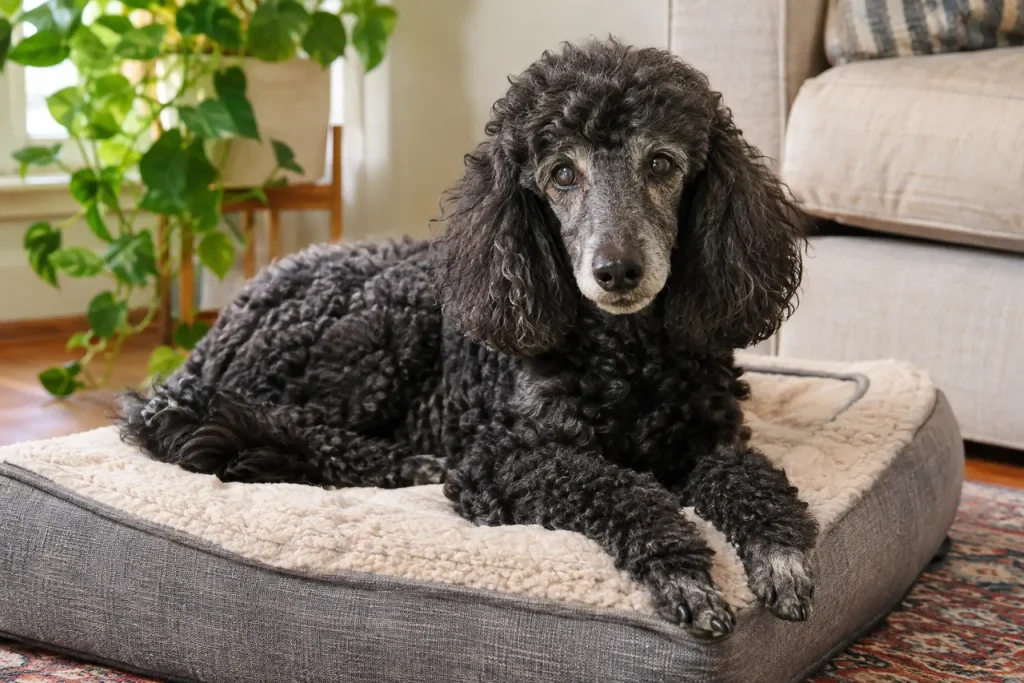
Because Minis can live into their late teens, many owners spend years caring for an older dog. Common signs of aging are a graying muzzle, more sleep, stiffness after rest, cloudy eyes and slower walks.
- Book vet checks as often as your vet advises for an older dog, and ask about dental cleanings and blood tests.
- Keep weight steady as activity drops: adjust portions rather than cutting walks altogether.
- Add ramps, non-slip rugs and a warm, padded bed away from drafts.
- Any sudden change in thirst, appetite, weight, toilet habits or behavior needs a vet visit.
Our aging small dog care guide covers daily care for older small dogs in more detail.
Miniature vs Toy Poodle: Size and Lifespan

| Miniature Poodle | Toy Poodle | |
|---|---|---|
| Height at the shoulder | Over 10 in, up to 15 in (25 to 38 cm) | 10 in or under (25 cm or under) |
| Adult weight | 10 to 15 lb (4.5 to 6.8 kg) | 4 to 6 lb (1.8 to 2.7 kg) |
| Full grown | About 12 months | About 12 months |
| Life expectancy | 10 to 18 years (AKC, all Poodle sizes) | 10 to 18 years (AKC, all Poodle sizes) |
Toy, Miniature and Standard Poodles are one breed judged to one standard; only height separates them. A Toy is easy to carry and suits a quiet home, while a Mini is sturdier, which helps on longer walks and around older children. Read more in our Toy Poodle breed guide and our guide to how long Toy Poodles live.
Miniature Poodle Size and Lifespan: FAQ
How big do Mini Poodles get full grown?
A full-grown Miniature Poodle stands over 10 inches and up to 15 inches (25 to 38 cm) at the shoulder and usually weighs 10 to 15 lb (4.5 to 6.8 kg). Height is what defines the variety, so a tall, lean Mini can weigh more than a short, compact one and still be healthy. Ask your vet to judge body condition rather than aiming for one number.
How long do Miniature Poodles live?
Miniature Poodles usually live 10 to 18 years. The AKC gives that range for all Poodle sizes, and the Royal Kennel Club lists the Miniature at over 12 years. Genes, weight, dental care and regular vet checks all affect where a dog falls in that range, so health-tested parents and good daily care both count.
How much should a Miniature Poodle weigh?
An adult Miniature Poodle should usually weigh 10 to 15 lb (4.5 to 6.8 kg), the range the AKC gives for both males and females. The right weight for your dog depends on its height and frame. You should feel the ribs easily under a thin layer of fat and see a waist from above. If not, ask your vet for a weight plan.
When is a Miniature Poodle full grown?
A Miniature Poodle is about fully grown by its first birthday, according to the AKC. Most of the height comes in the first months, and the dog fills out a little after that. Weigh your puppy every few weeks to check for steady growth, and keep feeding a puppy food until your vet says it is time to switch to adult food.
Is a Miniature Poodle bigger than a Toy Poodle?
Yes. A Miniature Poodle is over 10 inches and up to 15 inches tall at the shoulder, while a Toy Poodle is 10 inches or under. Minis usually weigh 10 to 15 lb (4.5 to 6.8 kg) and Toys 4 to 6 lb (1.8 to 2.7 kg). They are the same breed with the same coat, in different sizes. Compare them in our Toy Poodle breed guide.
What health problems do Miniature Poodles have?
The main concerns are dental disease, slipping kneecaps (luxating patella) and an inherited eye disease called progressive retinal atrophy. Legg-Calvé-Perthes disease, hip dysplasia, epilepsy and Addison’s disease are also seen in Poodles. Choosing health-tested parents, keeping your dog lean, brushing its teeth and booking yearly vet checks help you catch problems early.
How much does a Miniature Poodle cost?
The cost depends on where you live and where the dog comes from, so check shelters and breed rescues first. Adoption fees often include vaccinations and neutering. If you buy a puppy, choose a breeder who shows health test results for both parents and lets you meet the mother. Avoid “teacup” sellers, puppies with no records and anyone who wants payment before you visit.
How can I help my Miniature Poodle live longer?
Keep your dog lean, brush its teeth daily and see your vet at least once a year. Extra weight strains small joints, and gum disease is more common in small breeds than large ones. Give up to an hour of walks and play each day, plus training games, and book a vet visit for any limping, night blindness or change in appetite.
Still deciding if a Miniature Poodle is right for you? Read our full Miniature Poodle breed guide for temperament, coat care and daily life, or compare other tiny breeds in our small dog breed directory.