

Shih Tzu Grooming Guide: Haircuts, Shedding, Bathing and Tools
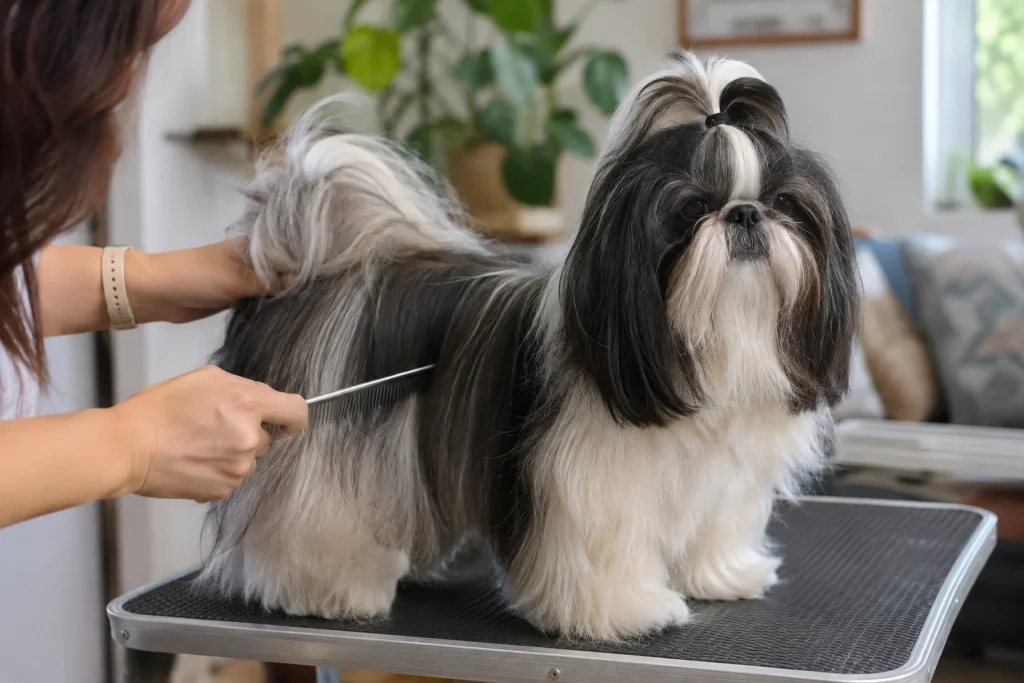
Most Shih Tzus need brushing daily or every other day, a bath every 2 to 4 weeks and, in a short pet trim, a professional groom every 4 to 6 weeks. The easiest Shih Tzu haircuts to live with are the puppy cut and the teddy bear cut. A long coat is beautiful, but it needs daily brushing to stay free of mats.
This guide compares the popular cuts, gives you a simple grooming schedule, and walks you through grooming at home, step by step. For size, temperament and colors, see our Shih Tzu breed guide.
How Often to Groom a Shih Tzu
A Shih Tzu has a double coat: a long, silky topcoat over a soft, fleecy undercoat. The hair keeps growing, and loose hairs get trapped in the coat instead of falling out, so short, regular sessions beat one long weekly battle. Use this schedule as your baseline.
| Task | How often | Tip |
|---|---|---|
| Brush and comb the whole coat | Daily for a long coat; every other day for a short trim | Brush in layers so the brush reaches the skin. |
| Comb the mustache and topknot, wipe the eye corners | Daily | Use a soft, damp cloth for the eyes. |
| Bath and full blow-dry | Every 2 to 4 weeks | Brush out tangles before the bath. |
| Professional trim | About every 4 to 6 weeks in a puppy cut | Long coats need fewer cuts but more brushing at home. |
| Check the ears | Weekly | Look for redness, smell or discharge. |
| Trim the nails | When you hear them click on hard floors | Take off small slivers at a time. |
| Brush the teeth | Daily is ideal | Use a dog toothpaste, never human toothpaste. |
Shih Tzu Haircuts Explained
Haircut names are not standardized, so two groomers can give you two different “teddy bear cuts”. Choose the style by how much time you have and your climate, then show your groomer a photo and agree on the length for the body, legs, face and ears.
Puppy Cut
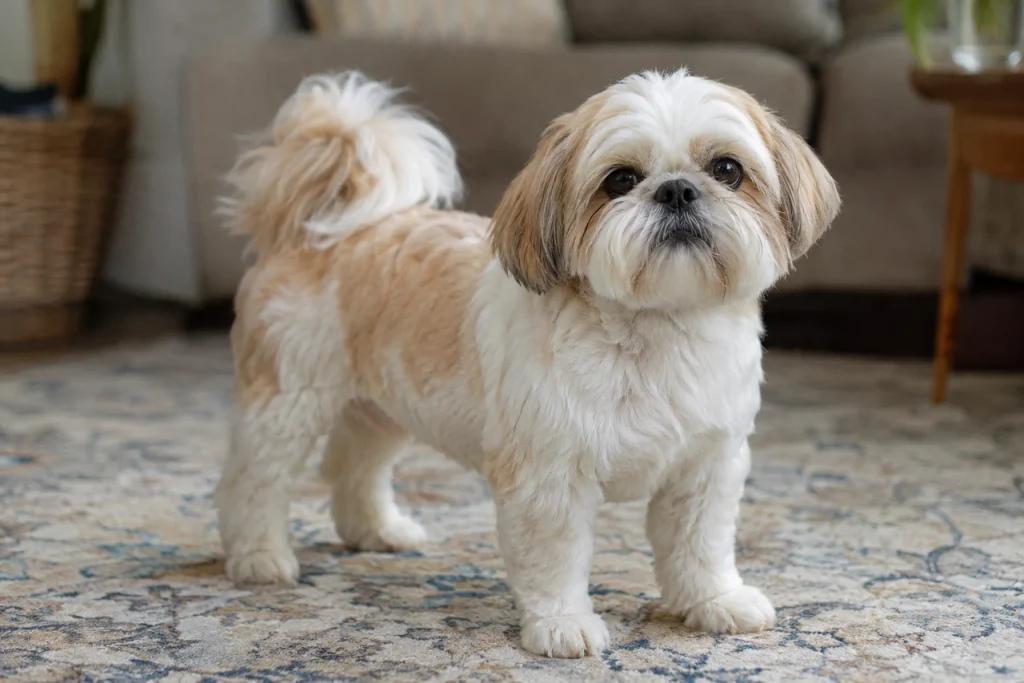
The whole dog, face included, is trimmed to one short, even length. It is the easiest cut to brush and keep clean, which makes it the most practical choice for most pet owners.
Teddy Bear Cut
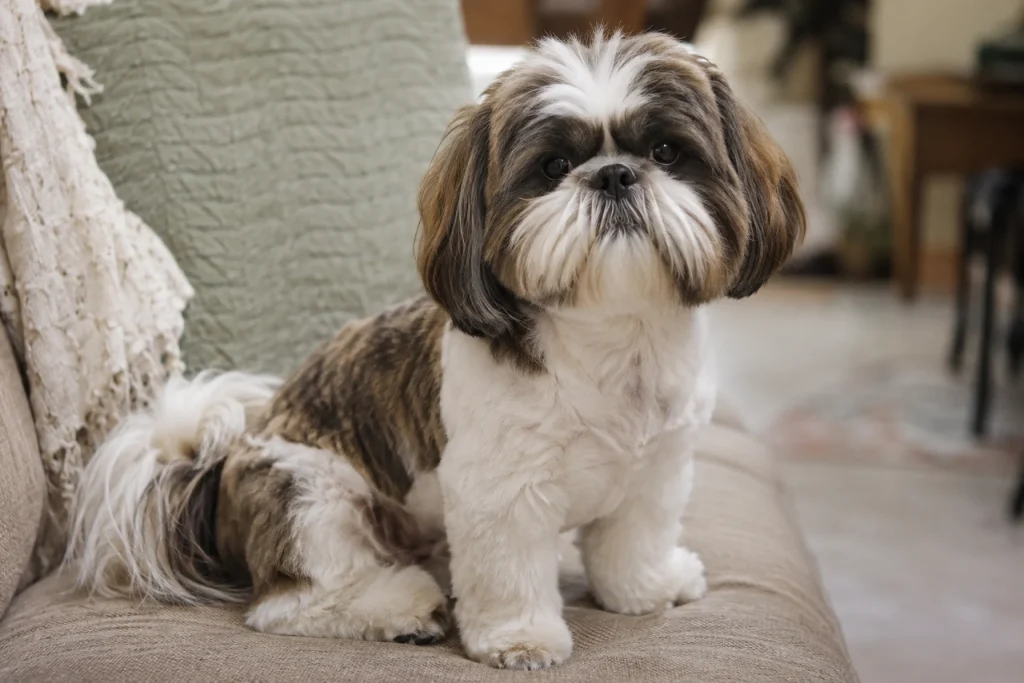
The body is usually trimmed much like a puppy cut, but the face is left fuller and shaped into a round, plush look, with longer hair on the muzzle and ears. The face needs daily combing to stay tidy.
Summer Cut
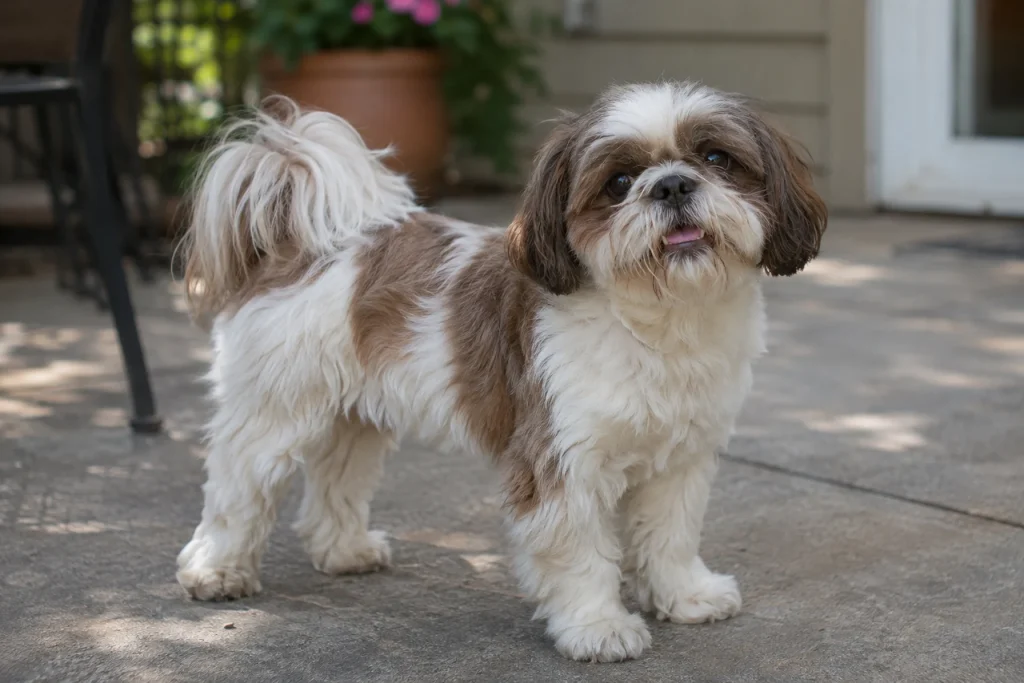
A shorter trim for hot weather. Ask for at least 1 inch (2.5 cm) of hair to stay on the body. Shaving down to the skin removes the coat’s insulation and sun protection, so it does not keep a Shih Tzu cooler.
Lion Cut
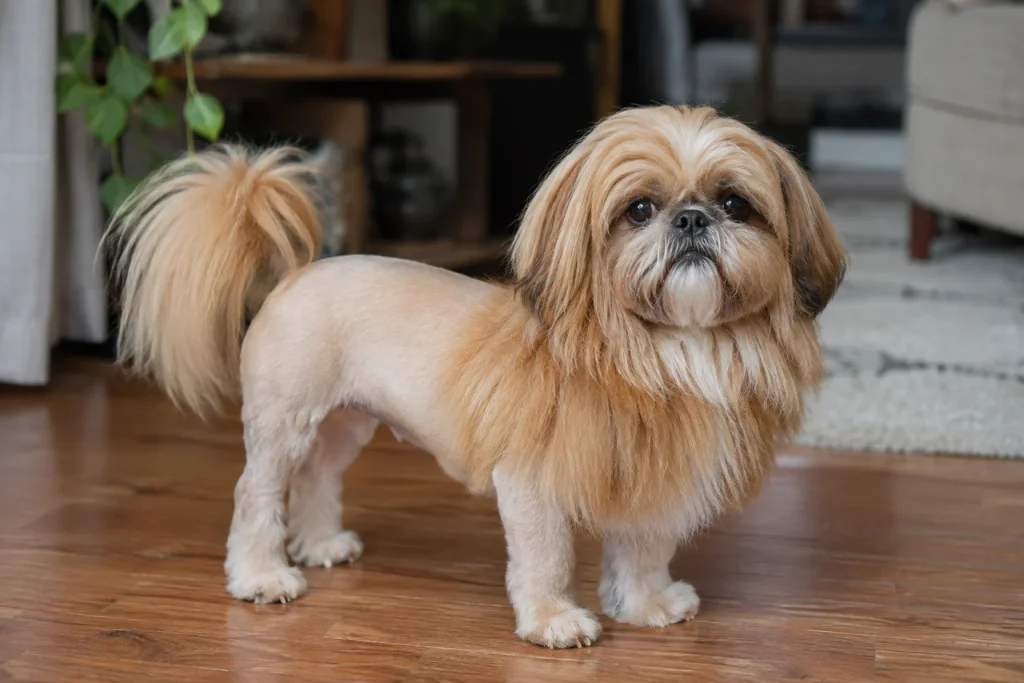
The body is clipped short while the hair around the head, chest and tail is left longer, like a mane. It is a fun look, but the longer areas still need regular brushing, and the short body loses some sun protection.
Long Coat With a Topknot
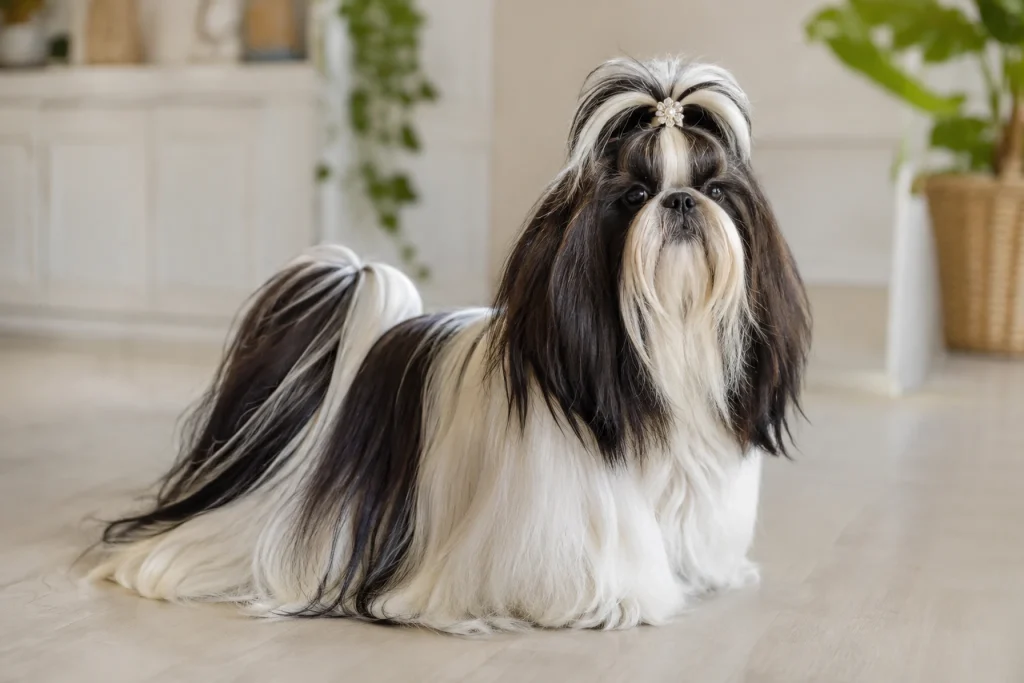
The classic floor-length look. The hair above the eyes is tied up in a topknot to keep it out of the eyes. It needs daily brushing and combing, and the topknot should be taken down and redone every day.
| Cut | Looks | Daily work at home | Best for |
|---|---|---|---|
| Puppy cut | Short, even length all over | Low | Busy owners, first-time owners, dogs that mat easily |
| Teddy bear cut | Short body, round fuller face | Low to medium | Owners who want a softer face and can comb it daily |
| Summer cut | Short, at least 1 inch (2.5 cm) left | Low | Hot climates and summer months |
| Lion cut | Short body, mane and tail plume | Medium | Owners who like a statement look |
| Long coat with topknot | Long, flowing coat | High | Owners with time for daily brushing |
How to Groom a Shih Tzu at Home
You can do most Shih Tzu grooming at home with a brush, a comb and a few calm minutes a day. Set up on a non-slip surface at a comfortable height, keep treats nearby, and stop before your dog gets fed up. Short, positive sessions build a dog who is happy to be handled. Our guide on how to train a Shih Tzu covers handling practice.
Brushing and Detangling
- Start at the feet and work up. Lift the coat with one hand and brush the layer underneath down and out, a few rows at a time, so the brush reaches the skin. This is called line brushing.
- Use a pin brush on the long topcoat and a slicker brush on the undercoat, with light strokes. Pressing hard with a slicker can scratch the skin.
- Check your work with a metal comb. If the comb glides from skin to tip, that layer is done.
- For a tangle, hold the hair between the knot and the skin so you do not pull, then tease it apart with your fingers or the end of the comb. A detangling spray helps.
- Leave tight mats that sit against the skin to your groomer. Never cut a mat with scissors pointed toward the skin: it is easy to cut the skin hiding underneath.
Bathing and Drying
- Bathe every 2 to 4 weeks, and brush out every tangle first. Water tightens mats.
- Use lukewarm water and a gentle shampoo made for dogs. Human shampoo can irritate a dog’s skin.
- Wet the coat from the neck back, keeping water and shampoo out of the eyes and ears. Clean the face last with a damp cloth.
- Massage the shampoo down to the skin, then rinse until the water runs clear. Leftover shampoo can itch.
- Apply a dog conditioner to help the long coat comb out, then rinse again.
- Squeeze and blot the coat with a towel instead of rubbing, which tangles it.
- Blow-dry on low heat while you brush, section by section, until the coat is dry right down to the skin. A damp undercoat mats quickly.
Nails, Feet and Hygiene Trims
- Trim the nails when you hear them click on hard floors. Use small dog nail clippers and take off a thin sliver at a time.
- Stop before the quick, the living part of the nail. On light nails it shows as a pink area. On dark nails, stop when a dark dot appears in the center of the cut surface.
- Keep styptic powder ready. If you nick the quick, press a pinch onto the nail tip to stop the bleeding.
- Trim the hair between the paw pads level with the pads using blunt-tip scissors. Long foot hair collects dirt and makes a small dog slip on hard floors.
- Keep the hair around the bottom trimmed short and clean, so nothing sticks to it.
Not sure where to start, or grooming more than one small dog? Our small dog grooming guide covers the basics for every coat type, from tools to building a routine.
Face, Eyes, Ears and Teeth
A Shih Tzu’s face needs a little care every day. Hair grows around large eyes, the mustache picks up food and water, and the drop ears hold moisture.
Face and Topknot
Comb the mustache and the hair on top of the head every day. Either tie the head hair loosely in a topknot with a small, soft band, taking it down and redoing it daily, or ask your groomer to keep the hair above the eyes short. Wipe the mustache after meals so food does not dry into it.
Eyes
Wipe the inner corners of the eyes every day with a soft, damp cloth, using a clean part of the cloth for each eye. Keep stray hairs and lashes out of the eyes. Do not cut hair near the eyes yourself unless you are confident: a groomer can trim it safely. If an eye looks red, cloudy or swollen, or your dog squints or paws at it, see a vet the same day.
Ears
Check the ears once a week. Healthy ears look pale pink and have little smell. If you see redness, dark discharge or a bad smell, or your dog shakes its head a lot, book a vet visit. Clean only the parts of the ear you can see, with an ear cleaner your vet recommends, and never push anything into the ear canal.
Teeth
Shih Tzus are prone to dental disease, and regular brushing goes a long way toward preventing it. Brush daily if you can, with a small dog toothbrush and dog toothpaste. Read more in our guide to dental care for small dogs.
Do Shih Tzus Shed? Shedding and Allergies
Shih Tzus are a very low-shedding breed. Their long hair keeps growing, and most loose hairs stay caught in the coat instead of landing on your sofa. That is good news for your floors, but it is also why a Shih Tzu mats when brushing is skipped: the loose hair has to come out with the brush.
Expect extra tangles around 10 to 12 months of age, when many Shih Tzu coats change texture as the puppy matures. Brush more often during this stage, or switch to a short puppy cut until the adult coat settles.
Are Shih Tzus hypoallergenic? No dog is fully hypoallergenic. All dogs produce allergens, mostly in dander that clings to hair. Less hair on the floor can mean less dander spread around the home, which some people with mild allergies find easier. If you have allergies, spend time with an adult Shih Tzu before you commit, and ask your doctor for advice.
Shih Tzu Grooming Tools Checklist
You do not need a full salon kit. These tools cover everything in this guide. Buy small or toy sizes: a Shih Tzu weighs about 9 to 16 lb (4.1 to 7.3 kg), and oversized tools are hard to control on a small dog.
- Pin brush: long, flexible pins for the topcoat. Look for pins with rounded or coated tips.
- Slicker brush: fine bent wires for the undercoat and early tangles. A soft or small one is kinder to thin skin.
- Metal comb: one with wide and fine teeth, to check for hidden tangles and to comb the face.
- Detangling spray: makes brushing a long coat easier and reduces breakage.
- Dog shampoo and conditioner: gentle, made for dogs, and free of strong fragrance.
- Nail clippers and styptic powder: small-dog scissor or guillotine clippers, plus powder in case you nick the quick.
- Blunt-tip scissors: for paw pads and tidy-ups, never for cutting mats near the skin.
- Quiet clippers (optional): only if you plan to trim the body yourself. Low noise and low heat matter for a nervous small dog.
- Dog toothbrush and toothpaste: a small head or finger brush.
- Soft hair bands: small, snag-free bands for the topknot.
When to Call a Groomer or a Vet
Home grooming handles the daily work. Some jobs are better left to a professional groomer:
- Mats that sit tight against the skin or cover large areas
- Full-body haircuts, if you have not used clippers before
- Trimming close to the eyes
- A dog that panics or snaps during grooming. A groomer, plus slow handling practice at home, can help.
Grooming is also your best chance to spot health problems early. Call your vet if you notice redness, sores, scabs, lumps, hair loss, constant scratching or licking, a bad smell from the skin or ears, or eye changes. Do not treat itchy or sore skin with human creams or home remedies before your vet has checked it. For the conditions Shih Tzus are prone to, see our Shih Tzu lifespan and health guide.
Shih Tzu Grooming FAQs
How often should you bathe a Shih Tzu?
Bathe a Shih Tzu every 2 to 4 weeks with a gentle dog shampoo. Long coats usually need the shorter end of that range, because dirt and oil make tangles worse. Always brush out tangles before the bath, since water tightens mats, and dry the coat fully with a low-heat dryer while you brush. If the skin gets dry or itchy, ask your vet before changing the routine.
What is the difference between a puppy cut and a teddy bear cut?
The face is the main difference. A puppy cut trims the whole dog, face included, to one short, even length. A teddy bear cut usually keeps a similar body length but leaves the face fuller and rounded, with longer hair on the muzzle and ears. Both need a groomer about every 4 to 6 weeks. Show your groomer a photo, because salons use these names differently.
What is the best haircut for a Shih Tzu?
For most pet owners, the puppy cut is the best haircut because it is the easiest to brush and keep clean. Choose a teddy bear cut if you like a rounder face and can comb it daily, a summer cut for hot weather, and a long coat with a topknot only if you can brush every day. The haircut comparison table above shows the work each style needs.
Do Shih Tzus shed?
Yes, but very little. A Shih Tzu has a double coat of long hair that keeps growing, and most loose hairs stay caught in the coat instead of falling on the floor. That trapped hair is why mats form when brushing is skipped. Expect extra tangles around 10 to 12 months of age, when many Shih Tzu coats change texture.
Are Shih Tzus hypoallergenic?
No dog is fully hypoallergenic, and that includes the Shih Tzu. All dogs produce allergens, mostly in dander that clings to hair. Because Shih Tzus shed very little, less hair carrying dander ends up around the home, which some people with mild allergies find easier. If you have allergies, spend time with an adult Shih Tzu first and ask your doctor.
How often does a Shih Tzu need a professional groom?
A Shih Tzu in a short pet trim, such as a puppy cut, typically needs a professional groom about every 4 to 6 weeks. A dog kept in a long coat needs fewer haircuts but much more brushing at home. Between visits, keep up brushing, face cleaning and nail checks, so each appointment is a trim and not a mat removal.
Should you shave a Shih Tzu in summer?
No. Do not shave a Shih Tzu down to the skin. The coat insulates against heat and protects the skin from sunburn, so shaving can leave your dog more at risk in hot weather. A short summer cut that leaves at least 1 inch (2.5 cm) of hair is a better choice. Shih Tzus do not tolerate heat well, so keep walks short and shaded on hot days.
Is a Shih Tzu high maintenance?
For grooming, yes. A Shih Tzu needs brushing daily or every other day, daily face and eye cleaning, a bath every 2 to 4 weeks and, in a short cut, a groomer about every 4 to 6 weeks. A puppy cut reduces the daily work a lot. Plan for this time and the grooming cost before you bring one home. Learn more in our Shih Tzu breed guide.
Do Shih Tzus have hair or fur?
Shih Tzus have what most owners call hair: a long, silky topcoat over a soft, fleecy undercoat that keeps growing until it is cut. That is why they need regular haircuts, and why loose hairs tangle into mats instead of dropping out. Puppies start with a softer coat that often changes texture around 10 to 12 months of age.
Related Shih Tzu and Grooming Guides
A well-groomed Shih Tzu is a comfortable Shih Tzu. Keep learning with these guides:
- Shih Tzu breed guide: size, temperament and colors
- Shih Tzu lifespan and health: common health problems to watch for
- How to train a Shih Tzu: handling, manners and potty training
- Small dog grooming guide: tools and routines for every small breed
- Maltese haircuts and grooming: cuts, tear stains and coat care for another long-coated toy breed
Still choosing a breed? Compare low-shedding coats and grooming needs in our small dog breeds directory.