

Maltese Grooming Guide: Haircuts, Shedding and Coat Care
Maltese haircuts range from a long, flowing coat to a short puppy cut, but every Maltese needs the same basics: daily brushing, regular baths and careful cleaning around the eyes. The breed has a single coat of long, silky white hair with no undercoat, so it sheds very little, yet loose hairs get trapped in the coat and turn into mats quickly. Below you will find the main cuts, a realistic grooming schedule and step-by-step home care for a dog that weighs under 7 lb (3.2 kg).
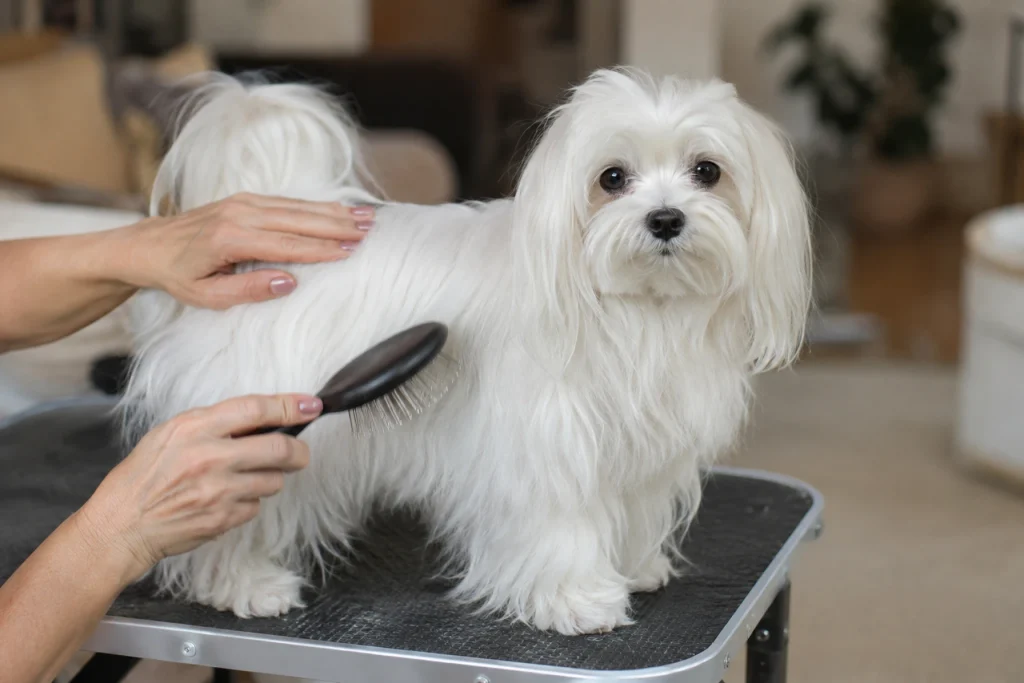
Maltese Coat Type: Long Hair, No Undercoat
The Maltese breed standard describes a single coat, which means there is no woolly undercoat underneath. The hair is long, flat and silky, and if it is left to grow it hangs almost to the ground. It should be straight, not curly or woolly.
- Color: pure white. Light tan or lemon on the ears is allowed but not preferred.
- Texture: fine and silky, which looks beautiful but tangles easily wherever there is friction: behind the ears, under the legs, the armpits, the belly and under a collar or harness.
- Growth: the hair keeps growing, so you choose the length. A long coat needs daily work. A short trim cuts brushing time but needs regular visits to a groomer.
Owners often ask whether a Maltese has hair or fur. People call it hair because it is long and fine and has no seasonal undercoat to blow out, but the practical point is the same either way: it needs brushing every day to stay free of mats.
Do Maltese Shed?
Yes, but very little. The American Kennel Club describes the Maltese coat as one that sheds minimally, and VCA Animal Hospitals rate the shedding level as low. Like every dog, a Maltese loses old hairs as new ones grow. Without an undercoat there is no big seasonal shed, and most loose hairs stay caught in the long coat instead of landing on your sofa.
That is also the catch. Trapped hairs twist around the coat and form mats, often close to the skin where you cannot see them. Daily brushing with a comb check is what turns low shedding into a clean house and a comfortable dog.
Are Maltese Hypoallergenic?
No dog is 100% hypoallergenic. The American Kennel Club and VCA Animal Hospitals both make this point. People react to proteins in a dog’s dander and saliva, not to the hair itself, and every dog produces them.
The Maltese does appear on the AKC’s list of breeds that often suit allergy sufferers, because its low-shedding coat leaves less hair and dander around the home. Many people with mild dog allergies cope well with one, but some still react.
- Spend time with an adult Maltese, ideally for a few hours and more than once, before you commit.
- Talk to your doctor or an allergist if you have asthma or strong allergies.
- Brush often and bathe regularly, wash the dog’s bedding every week and keep the dog out of the bedroom if you react at night.
Best Maltese Haircuts and Styles
The best haircut for a Maltese is the one you can keep up with. A long coat is the classic look, but most pet owners choose a shorter trim that is easier to brush, stays cleaner on walks and mats less. Show the groomer a photo and agree on the length for the body, legs, face and ears before they start.
Puppy Cut
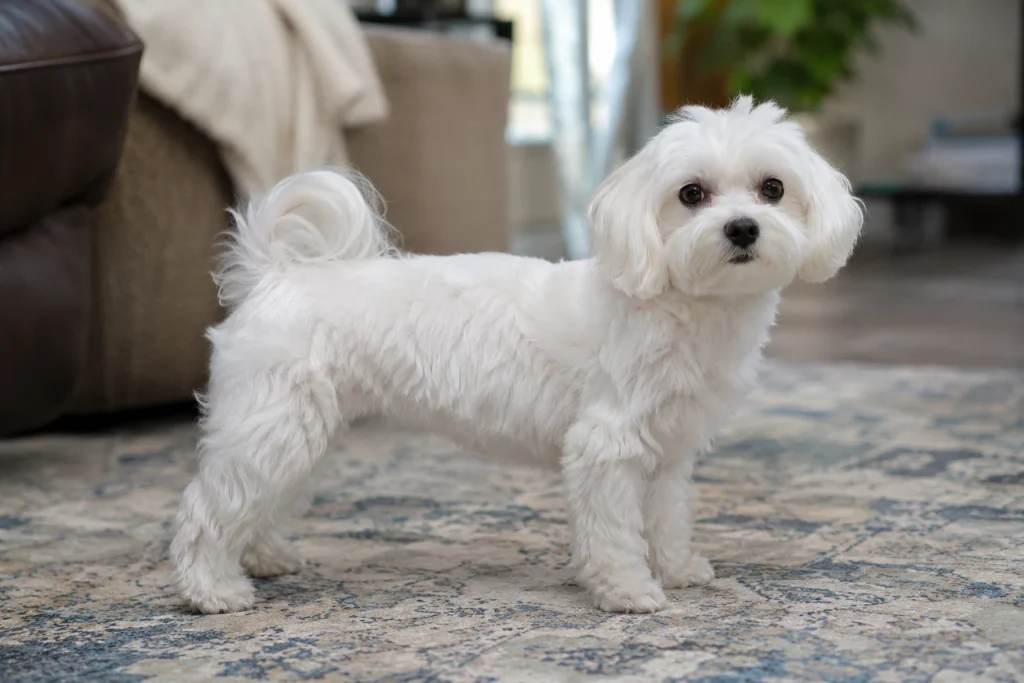
The most popular pet trim. The coat is cut to the same short to medium length all over the body and legs, which gives a neat, young look. It is the easiest cut to brush at home and a good choice for first-time owners and busy households.
Teddy Bear Cut
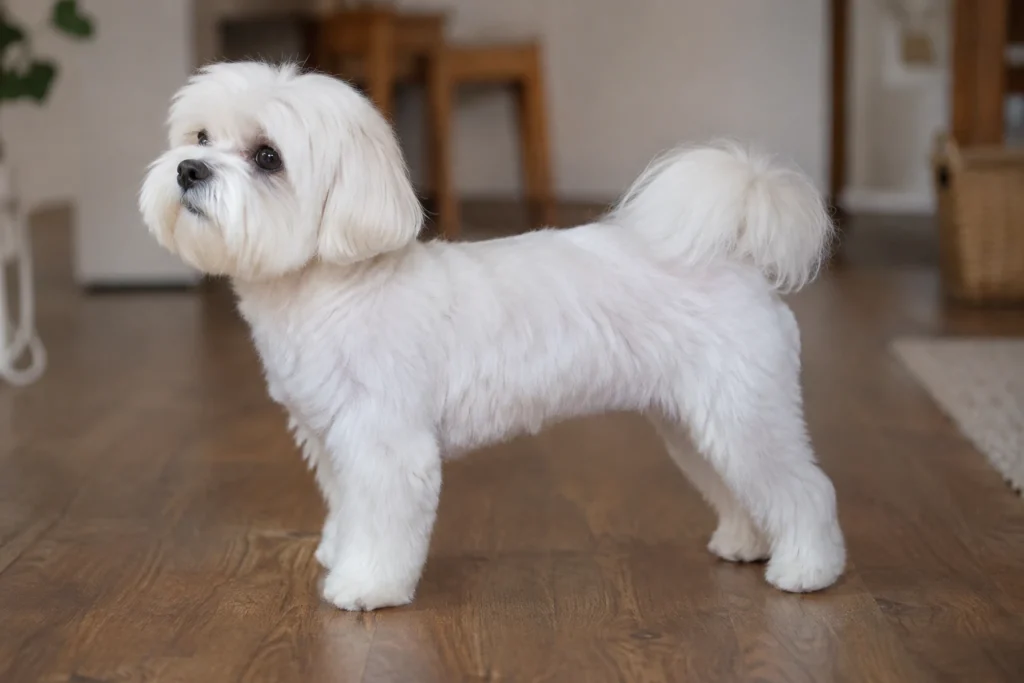
Similar to a puppy cut on the body, but the face is scissored round and full, with a soft muzzle and rounded ears, so the dog looks like a stuffed toy. The face hair needs daily combing and a regular wipe under the eyes, because the longer face hair can hold tears and food.
Long Coat with a Topknot
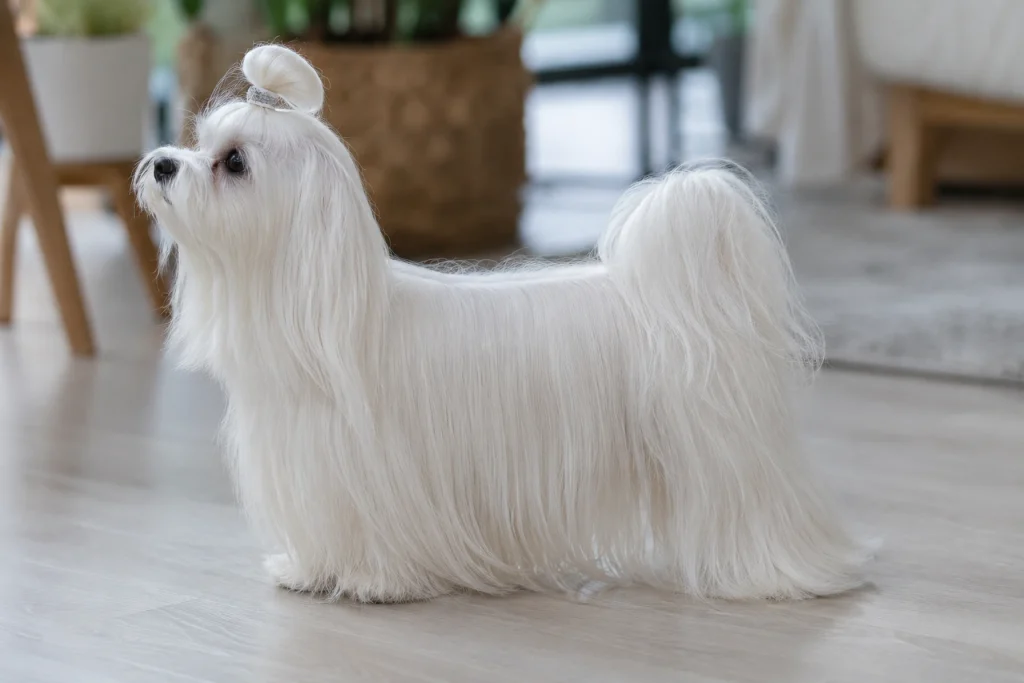
The traditional look: the body coat is left long and the head hair is tied up in one or two topknots so it stays out of the eyes. It is beautiful but takes the most time. Plan on daily brushing, frequent baths and a gentle elastic band made for dog hair, changed often so it does not pull.
Summer and Short Cuts
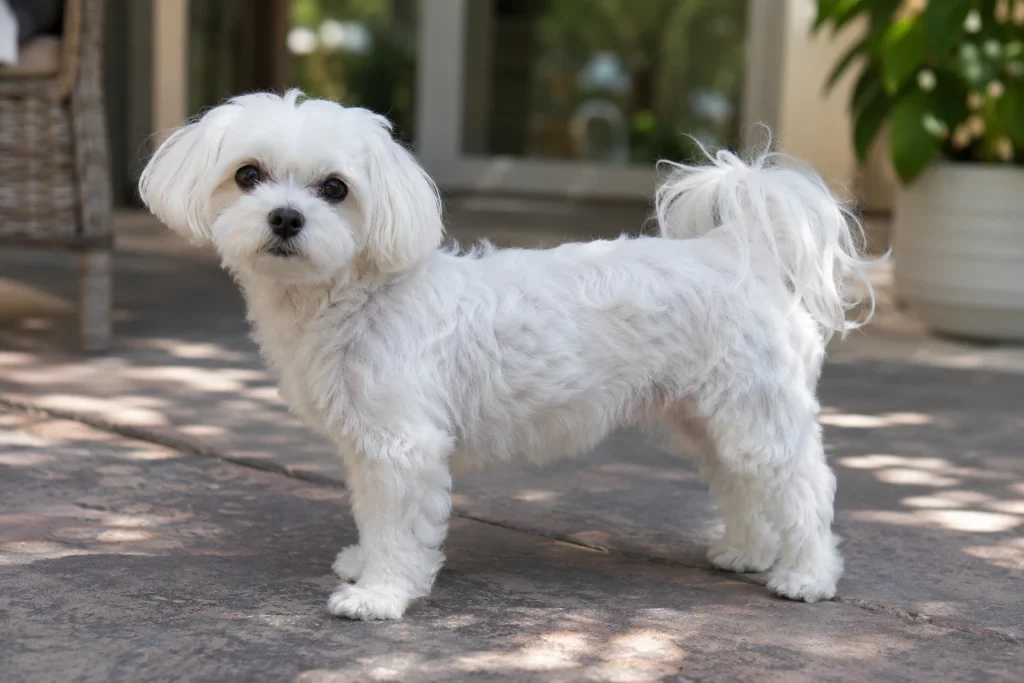
A shorter all-over trim for hot weather or very active dogs. It cuts down on tangles from grass and burrs and dries faster after a bath. A short coat gives less cover against cold and strong sun, so use a sweater in winter and shade in summer.
Should You Shave a Maltese?
A very short trim is fine, but clipping right down to the skin is usually a last resort for a badly matted coat. The American Maltese Association notes that when mats build up, a groomer may have no choice but to cut the coat very short. Daily brushing is the way to avoid that. If your dog has to be shaved, check the skin for redness and keep the dog warm and out of strong sun while the coat grows back.
Picked a cut? Keeping it neat between appointments comes down to the right brush and comb. Check the home grooming kit list further down this page, then book your groomer with a photo of the style you want.
Maltese Grooming Schedule
Use this as a starting point and adjust it for your dog’s cut, lifestyle and skin. Ask your groomer and your vet what suits your dog.
| How often | Task | Notes |
|---|---|---|
| Daily | Brush and comb the whole coat; wipe under the eyes | Comb behind the ears, armpits and under the collar every time |
| Daily (or at least a few times a week) | Brush the teeth | Use a dog toothpaste only |
| Every week | Check ears, feet and the hair between the pads; look over the skin | Trim pad hair if it covers the pads |
| Weekly to every 4 to 6 weeks | Bath and blow-dry | Brush out every mat first |
| About once a month | Clean the ears | More often if your vet advises it |
| When you hear clicking on hard floors | Trim the nails | Small bits at a time |
| On a regular schedule agreed with your groomer | Haircut or tidy trim | Short cuts grow out within weeks; long coats need regular trims of the feet, face and rear |
Brushing a Maltese and Preventing Mats
Brush your Maltese every day. The American Maltese Association recommends a daily once-over with a pin brush or steel comb to catch mats while they are still small. A short cut takes a few minutes; a long coat takes longer.
- Lightly mist the coat with a spray of coat conditioner diluted in water. Brushing a dry coat breaks the hair.
- Work in sections from the head to the tail. Lift the hair with one hand and brush the layer underneath, down to the skin.
- Use a pin brush for the long coat and a soft slicker brush on small tangles. Brush gently: the skin of a tiny dog is thin and a slicker pressed too hard can scratch it.
- Finish with a metal comb. If the comb catches, there is a tangle you missed.
- Pay extra attention to the mat-prone spots: behind the ears, under the legs, the armpits, the belly, the tail and wherever a collar or harness rubs.
To loosen a small mat, hold the hair at the base so you do not pull the skin, and tease it apart with your fingers or the end of the comb. Do not cut a mat out with pointed scissors close to the skin. If the mats are large or tight against the skin, book a groomer.
How to Bathe and Dry a Maltese
There is no fixed rule for how often to bathe a Maltese. Groomers quoted by the American Kennel Club suggest anywhere from weekly to every four to six weeks for long-coated dogs, depending on coat length and lifestyle. Many owners of white toy dogs settle on every two to four weeks. Bathing too often can dry out the skin, so stretch the gap if you see flaking or scratching.
- Brush out every mat first. Water tightens mats and makes them much harder to remove.
- Use lukewarm water and a gentle shampoo made for dogs. A shampoo for white coats and a conditioner for long hair help, as the American Maltese Association recommends. Never use human shampoo.
- Wet and lather the body gently, in the direction the hair grows, without rubbing in circles. Wash the face with a damp cloth so no shampoo gets in the eyes, and keep water out of the ears.
- Rinse until the water runs clear. Leftover shampoo can irritate the skin.
- Squeeze and blot the coat in a towel. Do not rub.
- Blow-dry on a cool or low setting while you brush, section by section, until the coat is dry to the skin. A Maltese left to air-dry often tangles and does not look its best.
Tiny dogs lose heat fast, so bathe in a warm room and dry your dog fully before going outside.
Tear Stains and White Coat Care
Tear staining is the reddish brown color on the hair under the eyes, and it is common in Maltese. According to VCA Animal Hospitals, the color comes from iron-containing molecules in tears called porphyrins, and it shows most on white coats. Some dogs make more tears than others, and the shape of the eyelids can send tears onto the face instead of into the tear ducts.
- See your vet first if staining is new or heavy, or if you see redness, squinting, rubbing or thick or smelly discharge. Extra tears can be a sign of an eye problem that needs treatment.
- Wipe daily with a soft cloth dampened with warm water, plain sterile saline or vet-recommended eye wipes, moving away from the eye. Use a fresh piece for each eye, then dry the area.
- Keep the hair around the eyes short or tied up in a topknot so it does not wick tears or poke the eye. Use round-tipped scissors or ask your groomer.
- Avoid hydrogen peroxide, alcohol, soaps, essential oils and homemade remedies near the eyes. Check with your vet before trying any tear stain product or supplement.
Mouth and paw staining works the same way: saliva can turn white hair pink or brown. Wipe the beard after meals and, if your dog licks its paws a lot, ask your vet to check for allergies or skin problems.
Nails, Ears and Teeth
Nails. If you can hear your dog’s nails click on a hard floor, they are too long. Use small dog nail clippers (guillotine or scissor style) and trim a little at a time. Stop when you see a color change or a small dark dot in the center of the cut nail, because the quick, the blood vessel inside the nail, is close. Keep styptic powder nearby and press it on the nail straight away if it bleeds. Trim the hair between the pads at the same time so your dog does not slip.
Ears. The Maltese has drop ears covered in long hair, which can trap moisture and wax. Check the ears every week. Most dogs do well with an ear clean about once a month using a cleaner your vet recommends; never push cotton swabs into the ear canal. See your vet if you notice a smell, redness, discharge or head shaking.
Teeth. Dental disease is one of the most common problems in the Maltese and often starts early, according to VCA Animal Hospitals. Brush the teeth daily if you can, and at least a few times a week, with a small soft brush and toothpaste made for dogs. Ask your vet to check the teeth at every visit. Read more in our small dog dental care guide.
For size, temperament and the breed’s history, see our full Maltese breed guide.
Grooming a Maltese Puppy
Start the day your puppy comes home. The goal at first is not a perfect coat but a puppy who is relaxed about being handled, because you will groom this dog every day for 12 to 15 years.
- Handle the paws, ears, mouth and tail for a few seconds at a time, and reward with a small treat.
- Brush with a soft brush for a minute or two on your lap or a non-slip mat, then stop while the puppy is still calm.
- Let the puppy hear and feel a quiet dryer on low from a distance before you use it on the coat.
- Wipe the eyes and face daily so it becomes routine.
- Ask your vet when your puppy is protected enough by vaccines for a first visit to a groomer, and ask the groomer for a short, gentle introduction rather than a full cut.
Never leave a tiny puppy alone on a table or counter. A fall from that height can break a leg.
Your Maltese Home Grooming Kit
You do not need much, but quality matters on a fine coat.
- Pin brush with smooth, rounded pins and no plastic balls on the ends that snag the hair.
- Soft slicker brush, small enough for a toy dog, for tangles on the legs and feet.
- Metal comb with wide and fine teeth, for the final check and the face.
- Gentle dog shampoo and a conditioner for long or white coats, plus a light detangling spray.
- Small nail clippers and styptic powder.
- Round-tipped scissors for the eyes, feet and pads.
- Quiet clippers with guard combs if you plan to keep a short cut at home. Look for low noise and a blade that stays cool.
- Dryer with a low-heat or cool setting.
- Dog toothbrush and dog toothpaste.
Many owners keep a puppy cut themselves between groomer visits. If you want to try, learn on the body first, leave the face and feet to a professional until you are confident, and stop if your dog gets stressed.
Maltese Grooming FAQ
What is a teddy bear cut for a Maltese?
A teddy bear cut keeps the body short like a puppy cut but leaves the face full and rounded, with a soft muzzle and rounded ears, so the dog looks like a stuffed toy. It is a pet style, not a show trim. The longer face hair needs daily combing and a wipe under the eyes to stay clean.
What is the best haircut for a Maltese?
For most pet owners the best haircut is a puppy cut, because a short, even coat is quick to brush and mats less. A teddy bear cut adds a rounder face, and a long coat with a topknot suits owners who enjoy daily grooming. Choose the cut you can maintain at home, then show your groomer a photo.
How often does a Maltese need a haircut?
It depends on the cut. A short puppy or teddy bear cut grows out within weeks, so most owners book regular groomer visits and agree the interval with their groomer. A long coat needs fewer full cuts but regular tidy trims of the feet, face, eyes and rear. Daily brushing at home matters more than the haircut schedule.
Do Maltese shed?
Yes, but very little. The Maltese has a single coat with no undercoat, so it has no heavy seasonal shed, and the American Kennel Club describes it as shedding minimally. Most loose hairs stay trapped in the coat rather than falling out. That is why daily brushing matters: trapped hair forms mats close to the skin.
Are Maltese good for people with allergies?
Often, but not always. No dog is 100% hypoallergenic, because people react to proteins in dander and saliva that every dog produces. The Maltese is a low-shedding breed that the AKC lists among dogs that often suit allergy sufferers. Spend time with an adult Maltese before committing, and talk to an allergist if your allergies are strong.
Is a Maltese high maintenance?
For grooming, yes. A Maltese needs brushing every day, regular baths, daily eye wipes and dental care, plus trims by a groomer if you keep a short cut. In size and exercise needs the breed is easy: adults weigh under 7 lb (3.2 kg). If daily grooming sounds like too much, a short puppy cut makes it much easier.
How often should you bathe a Maltese?
Most Maltese do well with a bath every few weeks. Groomers quoted by the American Kennel Club suggest anywhere from weekly to every four to six weeks for long-coated dogs, depending on coat length and lifestyle. Always brush out mats before the bath and blow-dry the coat fully afterwards. Bathe less often if the skin gets dry or flaky.
Why do Maltese get tear stains?
Tears contain iron-containing molecules called porphyrins that turn white hair reddish brown, and the color shows strongly on a Maltese. Some dogs produce more tears, and eyelid shape can send tears onto the face. Have your vet rule out eye problems first, then wipe under the eyes daily and keep the hair there short or tied up.
Can I groom my Maltese at home?
Yes. Daily brushing, eye wipes, baths, tooth brushing and nail trims are all easy to learn at home. Many owners also keep a short body trim between groomer visits. Leave the face, the area around the eyes and badly matted coats to a professional until you are confident. Short, calm sessions with treats work best.
A well-kept Maltese coat starts with a few minutes of brushing every day. For more on the breed, read about Maltese lifespan and health, compare routines in our Shih Tzu grooming guide and small dog grooming guide, or browse more tiny dog breeds.