

Chihuahua Lifespan and Health: Weight, Common Problems and Senior Care
The typical Chihuahua lifespan is 14 to 16 years, and many live into their late teens with good care. Chihuahuas are the smallest recognized breed, about 5 to 8 inches (13 to 20 cm) tall, and the breed standard sets an upper weight of 6 lb (2.7 kg). Their biggest health risks are dental disease, heart valve disease, knee and windpipe problems, and weight gain.
This guide covers what shortens or lengthens a Chihuahua’s life, the health problems to watch for, when your dog counts as a senior, and how to care for an older Chihuahua. For size, temperament and daily care, see our Chihuahua breed guide.
How Long Do Chihuahuas Live?
Most Chihuahuas live 14 to 16 years, which puts them among the longest-lived dog breeds. Veterinary and kennel club sources give slightly different ranges, from over 12 years to as long as 18, and some well-cared-for dogs live beyond that.
- Typical lifespan: 14 to 16 years
- Reported range: about 12 to 18 years
- Senior from: roughly 10 to 12 years (see below)
- Main causes of shortened life: heart valve disease in older dogs, untreated dental disease, obesity, and injuries from falls or larger dogs
Where your dog lands in that range depends less on luck than on weight, teeth, safety at home and how early problems are caught.
What Affects a Chihuahua’s Lifespan
Weight and Diet
A few extra ounces matter on a dog this small. Extra weight puts strain on the heart, knees and windpipe, which are already the breed’s weak spots. Weight gain is easy to miss, especially under a long coat, so check by feel: you should be able to feel the ribs under a thin layer of fat, and see a waist from above.
- Feed measured meals on a schedule instead of leaving food out all day.
- Count treats and table scraps. Small snacks add up fast for a dog this size.
- Ask your vet to score your dog’s body condition at every visit.
Exercise and Safety at Home
Chihuahuas need up to about 30 minutes of activity a day, split into short walks and indoor play. Injuries are a bigger threat than lack of exercise. Falls from furniture or arms, rough play with larger dogs, and being stepped on can all cause serious harm. Use a harness instead of a collar on walks to protect the windpipe, and keep your dog warm: Chihuahuas lose body heat quickly.
Genetics and Breeding
Some problems are inherited, including luxating patella, heart valve disease and certain eye conditions. A responsible breeder health-tests parent dogs and shares the results. Very small “teacup” Chihuahuas sold as a special size are not a separate type, and the tiniest puppies are more prone to low blood sugar and other problems.
Vet Checkups and Dental Care
Yearly checkups for adults, and at least twice-yearly visits once your dog is a senior, catch problems like a new heart murmur or failing teeth early. Keep vaccinations and parasite prevention current. Brush your Chihuahua’s teeth daily if you can, and book professional dental cleanings when your vet recommends them.
Healthy Chihuahua Size and Weight
The AKC breed standard says a Chihuahua should not exceed 6 lb (2.7 kg). Most stand about 5 to 8 inches (13 to 20 cm) at the shoulder. There is no single standard for height, and pet Chihuahuas, especially mixes, can be larger than show dogs and still be healthy.
The number on the scale matters less than body shape. Use these checks at home:
- Ribs: easy to feel with light pressure, but not sharply visible.
- Waist: visible when you look down from above.
- Belly: tucks up slightly behind the ribs when seen from the side.
If you cannot feel the ribs, or the waist has disappeared, talk to your vet about a weight plan. If the hips and spine stick out, or your dog is losing weight without trying, book a vet visit. In puppies, weigh weekly and ask your vet whether growth is on track. Tiny puppies that skip meals can develop low blood sugar quickly.
Common Health Issues in Chihuahuas
Chihuahuas are generally hardy, but a handful of conditions show up often in the breed. Knowing the early signs lets you act before a small problem shortens your dog’s life. This is general information: see your vet for any symptom.
Dental Disease
Small mouths mean crowded teeth, and puppy teeth that do not fall out trap plaque. Untreated gum disease causes pain and tooth loss and can affect overall health. Daily brushing, dental checks and cleanings when advised are the best protection. Bad breath, red gums or chewing on one side are signs to get checked.
Heart Valve Disease
Degenerative mitral valve disease is very common in older small dogs, usually after age 8, and it is a leading cause of heart failure and death in older Chihuahuas. A heart murmur is often the first sign and can be heard months or years before symptoms. Later signs include coughing, tiring easily, faster breathing at rest and fainting. Ask your vet to listen to the heart at every visit.
Luxating Patella
The kneecap slips out of place, so the dog skips or holds up a back leg for a few steps. Mild cases may need no treatment beyond weight control. Severe or frequent slipping can need surgery, so have any recurring skip checked.
Collapsing Trachea
The windpipe weakens and flattens, causing a dry, honking cough that is often worse with excitement, pulling on a collar, or after eating or drinking. It most often appears between about 4 and 14 years of age and tends to get worse over time. A harness, a healthy weight and no smoke in the home help.
Low Blood Sugar in Puppies
Very small and young Chihuahuas can develop hypoglycemia if they go too long without food. Signs include weakness, trembling, a wobbly walk, collapse or seizures. Frequent small meals help prevent it. Treat a weak or collapsing puppy as an emergency and call a vet right away.
Hydrocephalus and Moleras
Many Chihuahuas have a molera, a soft spot on top of the skull that never fully closes. On its own it is usually harmless and is allowed in the breed standard. Rarely, it comes with hydrocephalus, a build-up of fluid in the brain. Circling, trouble walking, seizures or behavior changes in a puppy need a vet visit. Protect the soft spot from bumps.
Eye Problems
Chihuahuas’ large, prominent eyes are prone to injury and dry eye, and the breed can inherit glaucoma and cataracts. Redness, squinting, discharge, cloudiness or pawing at an eye can be painful and needs a vet’s attention the same day.
Not sure whether your dog’s size, coat or energy is normal for the breed? Compare with our Chihuahua breed guide, and write down any symptoms from this list to bring to your next vet visit.
When Is a Chihuahua Considered Old?
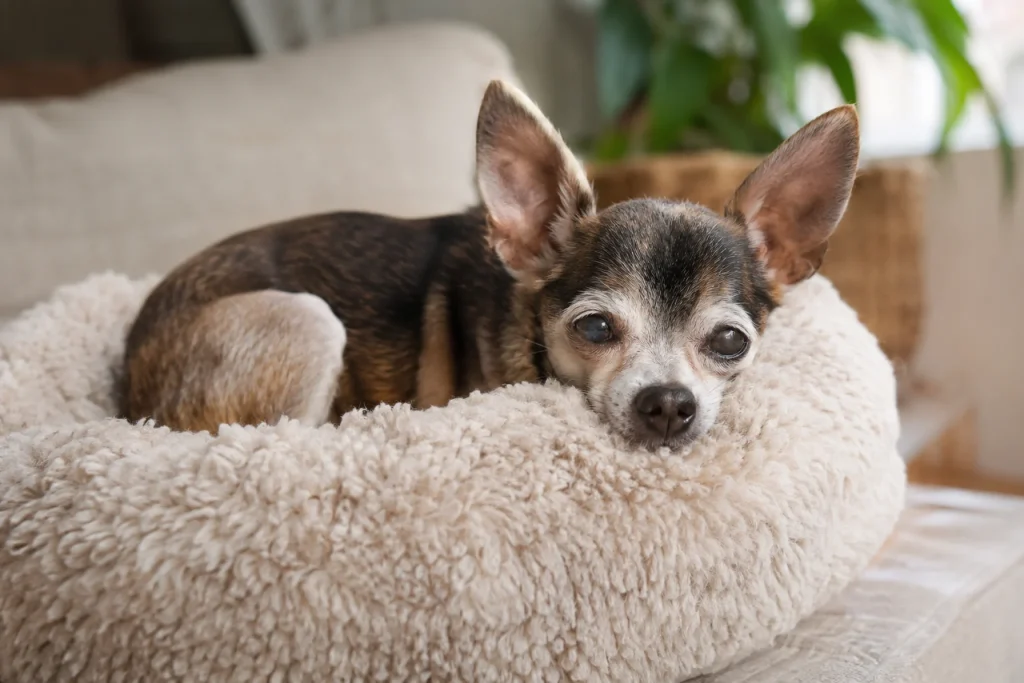
Veterinary guidelines call a dog a senior in the last quarter of its expected lifespan. For a Chihuahua that usually lives 14 to 16 years, that means around 10 to 12 years old. Many Chihuahuas stay lively well past that, so watch your dog rather than the calendar.
Common signs of aging in Chihuahuas:
- Graying around the muzzle and eyes
- Sleeping more and tiring sooner on walks
- Stiffness when getting up, or reluctance to jump
- Cloudy eyes or reduced hearing
- More tartar, bad breath or missing teeth
- Changes in appetite, thirst or house-training
Some of these are normal aging, but several are also signs of treatable disease. Mention every change at your dog’s next checkup.
Senior Chihuahua Care Tips
Older Chihuahuas need the same basics as younger ones, with a few adjustments.
- See the vet at least twice a year. Include a heart check, dental check and weight check, and ask about blood and urine tests.
- Keep them lean. Older dogs burn fewer calories. Adjust portions with your vet instead of guessing.
- Keep teeth clean. Dental disease often gets worse with age. Keep brushing, and do not delay recommended cleanings because of age alone: discuss the risks and benefits with your vet.
- Make the home easier. Add ramps or steps to beds and sofas, non-slip rugs on smooth floors, and keep food, water and the bed on one level.
- Keep them warm. A sweater outdoors and a warm bed away from drafts help older joints and small bodies.
- Keep moving gently. Shorter, more frequent walks and gentle play keep muscles and minds working.
- Adapt routines. Offer more frequent potty breaks, and be patient with accidents, which can also be a sign to see the vet.
Warning Signs That Need a Vet
Call your vet the same day, or an emergency clinic out of hours, if your Chihuahua shows any of these:
- Trouble breathing, fast breathing at rest, or blue or gray gums
- Fainting, collapse, seizures or sudden weakness
- A honking cough that will not settle
- Not eating for a day, or a puppy that misses a meal and seems weak
- Repeated vomiting or diarrhea
- A painful, red or cloudy eye
- Sudden lameness or crying when picked up
Do not give human pain relievers or other medicines without your vet’s advice. Many are toxic to dogs, especially at this size.
Chihuahua Lifespan FAQ
How long do Chihuahuas live?
Most Chihuahuas live 14 to 16 years, and sources report a range of about 12 to 18 years. That makes them one of the longest-lived breeds. Keeping your dog at a healthy weight, looking after their teeth and having the heart checked regularly give the best chance of reaching the upper end of that range.
At what age is a Chihuahua considered old?
A Chihuahua is usually considered a senior at around 10 to 12 years old. Vets define a senior as a dog in the last quarter of its expected lifespan, and Chihuahuas typically live 14 to 16 years. From that age, plan vet visits at least twice a year and watch for changes in energy, teeth, weight and breathing.
What is the leading cause of death for Chihuahuas?
Heart valve disease is the leading cause of heart failure and death in older Chihuahuas. The mitral valve slowly wears and leaks, often after age 8. A heart murmur usually appears long before symptoms, so a yearly heart check, and twice-yearly checks for seniors, lets your vet spot it early and start monitoring or treatment.
How long do Chihuahuas live indoors?
An indoor Chihuahua with good care can expect the breed’s typical 14 to 16 years. Living indoors protects a small dog from cold, traffic, larger animals and predators. Indoor dogs still need daily walks and play, a safe home without high jumps, and regular vet and dental care to reach their full lifespan.
Do apple head and deer head Chihuahuas live different lengths of time?
There is no reliable evidence that apple head and deer head Chihuahuas have different lifespans. Both are Chihuahuas with a different head shape. Health depends far more on the individual dog’s parents, weight, teeth and care. Many Chihuahuas of either type have a molera, a soft spot on the skull that is usually harmless but worth protecting from bumps.
How long do teacup Chihuahuas live?
“Teacup” is a sales term, not a separate type of Chihuahua, and there is no reliable lifespan figure for these extra-small dogs. The smallest puppies are more prone to low blood sugar and injuries, which can shorten their lives. Be wary of anyone selling teacup puppies at a premium, and choose a health-tested breeder or a rescue.
How old is a 17-year-old Chihuahua?
A 17-year-old Chihuahua is a very senior dog, past the breed’s typical 14 to 16 years. Simple formulas for converting dog years into human years are not accurate, especially for small breeds, so focus on your dog’s comfort. At this age, regular vet checks, soft bedding, warmth, easy access to food and water, and short gentle walks matter most.
Why do Chihuahuas live so long?
Small dog breeds generally live longer than large breeds, and the Chihuahua is the smallest recognized breed. Their lifespan still depends on care: dental disease, obesity, heart disease and injuries are the main things that cut it short, and most of them can be prevented or managed.
Why is my Chihuahua shaking?
Chihuahuas often shake because they are cold, excited or nervous, since small dogs lose body heat quickly. Shaking can also signal pain, illness or, in puppies, low blood sugar. If the shaking comes with weakness, wobbliness, vomiting, a hunched posture or loss of appetite, or does not stop once your dog is warm and calm, call your vet.
Related Chihuahua Care Guides
Good daily care is what turns a typical lifespan into a long one. Keep going with these guides:
- Chihuahua breed guide: size, temperament and daily needs
- How to groom a Chihuahua: coat care, baths and nail trims
- How to train a Chihuahua: house-training and calm behavior at any age
- Tiny dog breeds directory: compare the Chihuahua with other small breeds
Thinking about adding a Chihuahua to your family? Many adult and senior Chihuahuas wait in shelters and breed rescues. An older dog with a known health history can be a wonderful match. Browse the tiny dog breeds directory to compare breeds first.